
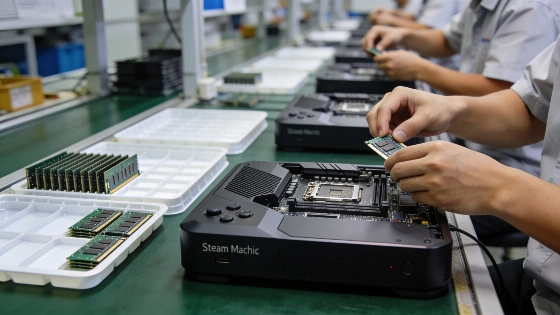
Valve has confirmed that the Steam Machine's steep price is unlikely to drop soon, with ongoing global memory shortages continuing to drive up costs for both production and consumers
The Steam Machine remains one of the most expensive mainstream gaming PCs on the market, with the entry-level 512GB model currently listed at $1,049 in the United States-excluding a controller. Despite hopes for a price reduction, Valve has indicated that no relief is expected in the near future, as the global memory supply crisis continues to intensify. The situation is affecting not only Valve but also the wider PC and console hardware industry, with memory and storage components in particularly short supply.
Memory shortages drive up hardware costs
Valve's engineering team has confirmed that the ongoing shortage of memory chips is directly impacting both the price and availability of the Steam Machine. The crisis is being fuelled by the rapid expansion of artificial intelligence data centres, which are absorbing vast quantities of memory and storage components that would otherwise be destined for consumer devices. As a result, manufacturers are facing higher costs and limited access to essential parts, which are then passed on to players through elevated retail prices.
Industry figures have echoed these concerns. Xbox CEO Asha Sharma recently suggested that memory costs could double again before the end of 2027, while Lenovo has described the current situation as a "new normal" for RAM pricing. Valve's own engineers have stated that the price pressure is not expected to ease in the short term, with retail prices lagging behind bulk supply costs by several months.
Production capacity limited by supply chain
The memory crisis is not only affecting pricing but also the number of Steam Machines Valve can manufacture. According to Valve's hardware team, production is currently constrained by the availability of memory chips, meaning the company is unable to meet all potential demand. This limitation is not unique to Valve, as other hardware makers are also struggling to secure enough components to maintain or expand their output.
Valve has indicated that, for now, the Steam Machine is not being treated as a mass-market product. Instead, it is positioned as an additional entry point into open-source PC gaming and Valve's broader ecosystem. The company appears to be prioritising long-term platform growth over short-term hardware sales, accepting that supply constraints will limit the number of units available for the foreseeable future.
What this means for players
For players considering a Steam Machine, the current pricing environment means that waiting for a significant price drop is unlikely to pay off in the near term. The entry-level model's $1,049 price tag reflects both the cost of components and the realities of the global supply chain. While some may hope for improved affordability as the market stabilises, industry commentary suggests that high memory prices could persist for several years.
Players looking for alternatives may find similar pricing pressures across other PC and console hardware, as the memory shortage is affecting the entire sector. Those seeking to build or upgrade a gaming PC should be aware that RAM and storage costs remain volatile, and availability can change rapidly depending on broader industry demand.
Memory shortages are a recurring challenge in the technology sector, but the current crisis is being driven by unprecedented demand from artificial intelligence infrastructure. Unlike previous cycles, where consumer electronics were the primary market for memory chips, AI data centres are now absorbing a significant share of global production. This shift has created a persistent gap between supply and demand, leading to higher prices and limited availability for gaming hardware. Until the supply chain adapts or demand from AI stabilises, players should expect continued volatility in hardware pricing and availability.