
North Sun Games will release Siege of Akanor for Windows PC via Steam on November 6 2026. The debut game combines wave-based castle strategy with direct combat and supports solo play or online co-op for four players.
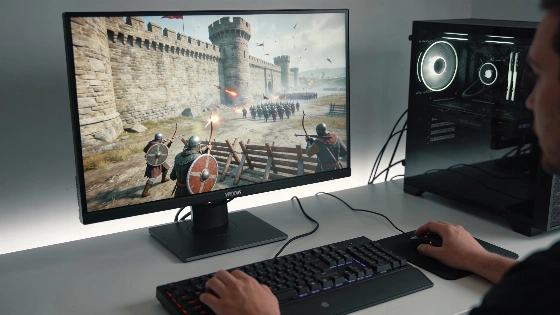
When the next attack begins in Siege of Akanor, players will not direct the defence from a safe distance. North Sun Games has built its debut game around the link between preparation and danger. Players spend resources on troops, traps and barricades before each wave. Then the commander enters the fight with a sword, bow or mana ability.
A November release
Siege of Akanor launches for Windows PC via Steam on November 6 2026. North Sun Games has set the price at USD 8.99 and will offer a 15% launch discount for the first ten days.
The price gives the game an easy entry point. The bigger question is whether its two connected layers work as one system, rather than feeling like a tower defence game with a separate action mode attached.
The release is confirmed for Windows PC. The announcement does not list console versions. It also gives no PC system requirements, performance targets or technical specifications. Those gaps matter for a game that combines battlefield simulation with direct third-person action. The final experience will depend on more than the number of listed mechanics.
The current public opportunity is a limited 10-wave Creator Preview / Steam Playtest for press and content creators. Access can be requested from North Sun Games. This is an advance preview, not evidence of final launch performance. The supplied information does not confirm independent review access or a completed retail build.
SteamDB lists the preview as a separate Windows playtest build from North Sun Games. Its records show an early SteamDB entry on September 15 2026 and a playtest release entry on September 28. That gives the limited preview a documented development timeline before the November retail launch.
Two sides of the wall
Between waves, players recruit and position troops. They decide which sections need reinforcement and place traps or barricades where an attack is most likely to break through. Limited resources force a choice between extending the defensive line and strengthening a vulnerable position.
Once the horns sound, the view shifts to third-person combat. Players can use melee weapons and bows, block, parry and dodge, and use nine mana abilities.
That structure makes personal survival part of the defensive calculation. A weak position is not just a problem on a tactical map. It may become the place the player has to hold when the enemy reaches the wall.
The announcement also confirms that Siege Mode can be played from either side of the conflict. Players may defend the castle or join the attacking horde. They can choose where to create the breach.
Solo play is supported. Online co-op allows up to four players in Siege Mode. The source does not specify how roles are divided between co-op participants or whether the attacking side uses the same progression systems as the defenders. Those details will shape how much strategic depth remains when several players share the battlefield.
The September 29 playtest update gives a clearer view of how that multiplayer structure is being tested. According to SteamDB, the developers added four difficulty options: Easy, Normal, Captain and Legend. They also revised the cooperative lobby. Each player now displays a ping, and empty slots include a Steam friend-invite button.
These are preview-build features, not confirmation of every launch configuration. They do address two practical issues directly: choosing a difficulty and forming a group.
Campaign and replay systems
Siege Mode is only part of the package. The full game includes a six-chapter story campaign and replayable siege battles. North Sun Games also lists multiple battlefields with changing terrain and weather, sixteen enemy types with distinct battlefield roles, troop progression, siege engines and a relic-based mode that changes each run.
Day and night cycles and seasonal systems are included as well. These features suggest that the battlefield can change the value of a defensive layout instead of acting as a fixed backdrop. The available information confirms that the systems are present, but does not explain how weather affects combat, how seasons alter resources or how relics change individual runs.
That systems-led approach is closer to a game built around interacting decisions than a standard sequence of combat arenas. It also fits the repeatable resource logic discussed in our earlier breakdown of a different systems-driven title. Siege of Akanor has its own castle defence structure and multiplayer focus.
What players know
The confirmed offer is clear in broad terms. Siege of Akanor is a Windows PC release on November 6 2026, priced at USD 8.99, with a ten-day 15% discount. It supports solo play and four-player online co-op. It includes a six-chapter campaign and a Siege Mode that supports both defence and assault.
North Sun Games is based in Buenos Aires, Argentina. The studio describes itself as independent and focused on player choice and interacting systems.
What is not confirmed matters just as much. There are no disclosed system requirements, measured frame-rate results or independent assessments of combat responsiveness and online performance. The Creator Preview / Steam Playtest can show how the central loop works for its participants. It cannot establish launch stability, content balance or the quality of the complete campaign on its own.
The available SteamDB patch record does document targeted technical work in the preview. In the September 29 update, developers reported reduced stuttering when a ram or catapult hits a wall and while aiming with a bow.
The same update says the game now starts at Medium quality and automatically raises settings when performance headroom is available. Those notes show specific optimization changes. They are not published system requirements or a measured guarantee of launch performance.
The strongest reason to watch Siege of Akanor is not a broad claim that it reinvents either genre. Its appeal comes from the risk of making planning and execution answer to each other. Poor placement can create a personal combat crisis. A strong fighter may still be unable to rescue a weak overall defence.
At USD 8.99, the proposition is easy to understand. The preview and the November launch will need to show whether the hybrid remains coherent under pressure.
Wave-based defence is a timing system, not just a sequence of attacks. The pause between waves creates the planning window. The assault tests whether that plan survives contact with enemies and changing conditions.
Siege of Akanor has enough confirmed structure to make that loop credible. Its combination of castle management and direct combat gives the debut a clear identity instead of relying on empty genre hype.