
Resonant Blade is now available on Nintendo Switch, introducing a sonic-powered combat system and dystopian sci-fi world. Developed by Wise Wombat Games and published by RedDeer.Games, the release targets players seeking fast 2D action and environmental puzzles
Players looking for a new twist on 2D action can now find Resonant Blade live on Nintendo Switch, where sound is not just an effect but the core of every attack, puzzle and secret. The game's arrival on eShop marks a rare attempt to fuse frequency-based combat with environmental exploration, setting it apart from the usual platformer crowd.
Gameplay and Sonic Mechanics
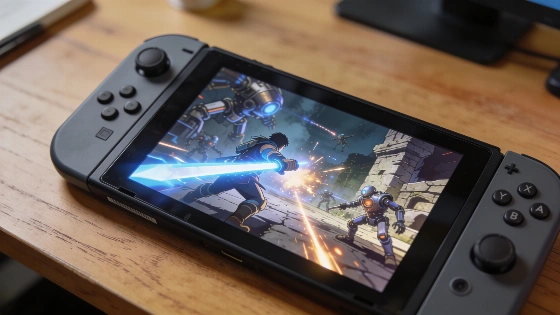
Resonant Blade puts players in control of Atlas, a scientist forced into battle after his city falls to the Dark Synths-machines that have turned humanity's last refuges into cages. The central mechanic is the Resonant Blade itself, which channels sonic energy to slash, parry and break through enemy defences. Players must actively tune the blade's frequency to counter evolving machine threats, while also using resonance to reveal hidden paths and solve sound-based puzzles scattered throughout the ruins of Terra.
Combat is designed for precision and timing, with dashing and parrying required to survive increasingly adaptive enemies. The game's single-player campaign promises a blend of fast-paced action, exploration and environmental challenges, all set in a dystopian sci-fi world. Boss encounters and enemy waves are structured to test both reflexes and the player's ability to manipulate sound as a weapon.
Release Details and Platform Context
Resonant Blade is available now as a digital download on Nintendo eShop, published by RedDeer.Games. The Switch version is positioned as a full-featured release, with no mention of missing content or delayed features compared to other platforms. Wise Wombat Games, the developer, has focused on delivering a single-player experience without live-service elements or multiplayer modes. The game joins a growing list of indie action titles on Switch, following a trend seen with other recent launches such as those reported earlier in the year.
RedDeer.Games, the publisher, has built a reputation for supporting indie developers and has previously been recognised by Forbes as one of the top 50 Polish game studios. Their portfolio includes over 100 indie titles, with Resonant Blade representing their latest push into the action-platformer space. The game is currently exclusive to Nintendo Switch on console, with no confirmed plans for other platforms at launch.
Evidence and Remaining Questions
Official materials confirm that Resonant Blade features a single-player campaign, frequency-based combat, and environmental puzzles. The eShop listing and publisher statements do not specify file size, performance targets or resolution modes for Switch, leaving technical details unaddressed. There is no mention of physical editions, special versions or pre-order bonuses. Pricing is set through the eShop, but regional differences and discounts have not been detailed.
While the publisher highlights the game's sonic mechanics and dystopian setting, there is no independent evidence yet regarding performance, input latency or stability on Switch hardware. No review embargo or early-access period has been announced, and there is no indication that the game has been made available to independent reviewers ahead of launch. Players should expect the standard eShop refund and support policies to apply.
Publisher and Developer Background
RedDeer.Games has operated as an independent publisher and developer since 2019, with a focus on bringing original indie projects to major platforms including Nintendo Switch, Steam, Xbox and iOS. Their business model centres on digital distribution, and they have been recognised for rapid growth in Central Europe. Wise Wombat Games, the studio behind Resonant Blade, is a smaller developer with a focus on experimental mechanics and atmospheric world-building.
The partnership between Wise Wombat Games and RedDeer.Games reflects a broader trend of indie studios leveraging established publishers to reach the Switch audience. With Resonant Blade, both companies are betting on the appeal of a sound-driven combat system and a dystopian narrative to stand out in a crowded eShop marketplace. The absence of multiplayer or live-service features signals a commitment to a focused, single-player experience, but also means the game will live or die on the strength of its core mechanics and execution.
Frequency-based combat systems, like the one at the heart of Resonant Blade, require players to adjust their attacks by tuning to specific sonic frequencies in real time. This mechanic adds a layer of strategy and timing beyond traditional button-mashing, as players must read enemy patterns and adapt their approach to break through defences. On Nintendo Switch, the effectiveness of such systems depends heavily on input responsiveness and frame pacing, both of which can be affected by hardware limitations or optimisation choices. Until independent performance analysis is available, players should be aware that the advertised mechanics may feel different in practice depending on the platform's technical delivery.