
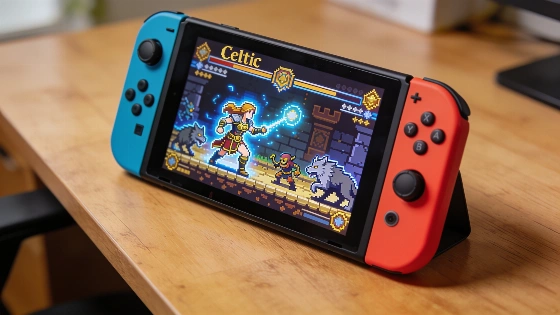
SoulQuest arrives on Nintendo Switch, introducing its performance-based hack-and-slash combat and Celtic myth-inspired story to console players for the first time. The game challenges players to impress, not just survive, with every encounter
Defeating gods is no longer enough-now you're marked on style. SoulQuest, the side-scrolling action game from SoulBlade Studio, has launched on Nintendo Switch, bringing its performance-graded combat system and Celtic mythos to console for the first time. Every fight is scored, and only the most creative players will see the elusive SSS rank, turning each battle into a test of both skill and spectacle.
Performance-Driven Combat
SoulQuest's core hook is its grading system, which transforms encounters from simple survival into a relentless pursuit of mastery. Players are evaluated after every skirmish, with grades ranging from F to SSS. Achieving the top rank demands variety-repeating the same moves will see your score plummet. The combat system is built around chaining light and heavy attacks into fluid, improvisational combos, with magic and ultimate abilities opening up new tactical options. Inputs are accessible, but the path to high scores is anything but trivial.
For those seeking a genuine challenge, higher difficulty settings ensure that the gods of Celtic legend are more than mere set dressing. The game's design rewards experimentation and punishes complacency, making each room a stage for player expression rather than a simple obstacle course.
Story and Setting
The narrative follows Alys, whose quest to reclaim her husband Gwydre's soul leads her across the British Isles. After Gwydre's death during the burning of Cetonia, Alys refuses to accept the gods' verdict. Guided by the druid Abanus, she sets out to confront Morrigan, the goddess of death, and must face each deity from Celtic and Arthurian tradition along the way. The journey is rendered in detailed pixel art, accompanied by a medieval-inspired soundtrack that reinforces the game's mythic atmosphere.
Each god presents a unique challenge, both narratively and mechanically, ensuring that the journey is as much about adaptation as it is about vengeance. The game's commitment to folklore grounds its fantastical elements in a recognisable tradition, distinguishing it from more generic hack-and-slash offerings.
Release Details and Platform Context
SoulQuest is available now on Nintendo Switch, priced at $19.99 USD, with a 20% launch discount for a limited period. This marks the game's first appearance on console, following a Steam release in May that has maintained a Very Positive player rating. The Switch version arrives without any announced platform-exclusive features or content, but brings the full experience to handheld and docked play.
Published by indie.io, SoulQuest joins a growing list of independently developed action games that prioritise mechanical depth and replay value. The studio, based in Argentina and founded in 2023, positions this as its second title, aiming to blend fast-paced gameplay with a strong narrative core. For players interested in the broader landscape of indie action RPGs, the recent release roundup highlights how smaller studios are increasingly delivering ambitious, genre-blending experiences.
What Sets SoulQuest Apart
Unlike many hack-and-slash games that reward only survival or raw efficiency, SoulQuest's grading system demands creativity and adaptability. The emphasis on performance, not just completion, will appeal to players who enjoy mastering systems and pushing for perfection. The Celtic and Arthurian setting, delivered through pixel art and a period soundtrack, provides a distinct identity in a crowded genre.
While the game's core mechanics are accessible, the real depth emerges for those willing to experiment and refine their approach. The absence of platform-specific enhancements on Switch may disappoint some, but the portability and flexibility of the console make it a natural fit for the game's replay-driven structure. SoulBlade Studio's decision to prioritise expressive combat over spectacle alone is a welcome shift, and SoulQuest's arrival on Switch is a clear signal that indie action games can still surprise with both ambition and execution.
Grading systems in action games serve as a feedback loop, encouraging players to improve not just their survival skills but their mastery of the mechanics. Unlike simple pass/fail outcomes, these systems reward experimentation, variety, and timing. In SoulQuest, the SSS rank is not just a badge of honour-it's a measure of how well players have internalised the game's systems and adapted to its escalating challenges. For players, this means that replay value is tied directly to personal growth and mechanical understanding, rather than content volume alone.