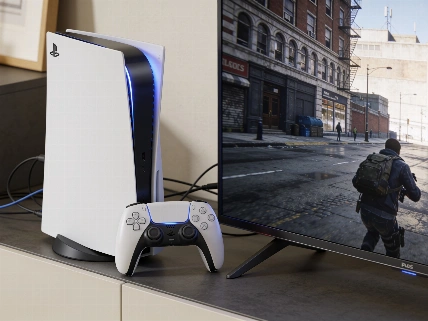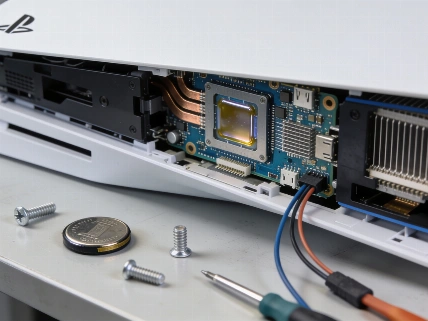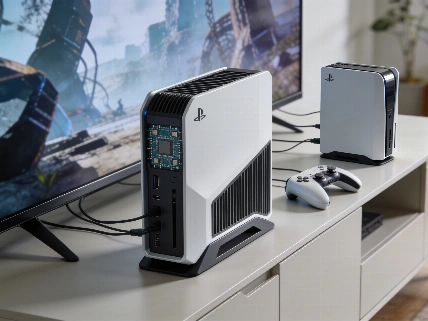

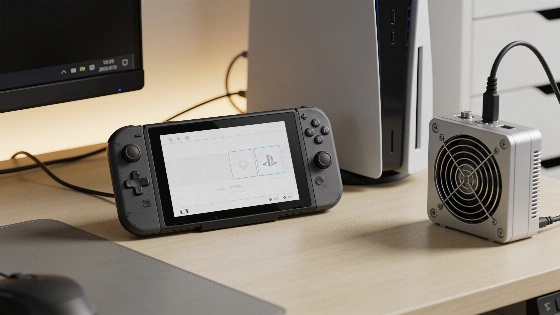
A reported document links Sony's Canis handheld APU to TSMC's N3P process, while the rumoured PS6 home console uses N3C. The split suggests a smaller design focused on efficiency.
Sony's rumoured PlayStation 6 handheld may be built around a simple goal that many powerful portable systems have missed: staying genuinely portable. A reported document places the Canis APU on TSMC's power-efficient N3P process instead of the cheaper N3C variant reportedly expected for the PlayStation 6 home console. Sony has not announced either a PlayStation 6 console or a new PlayStation handheld. The reported chip allocation remains unconfirmed.
The N3P clue
The information comes from Tom of Moore's Law Is Dead. He reported that Canis appears to use N3P after earlier leaks had only identified a broader TSMC 3-nanometre process.
The distinction matters. N3P is described as more power-efficient and performance-focused, while N3C is presented in available reports as another 3-nanometre option used in separate design and certification flows. The reported document calls N3C the more affordable option for mass production. That remains a leak claim, not a specification confirmed by Sony or TSMC.
Industry coverage adds some context. Materials from Advanced Manufacturing on Siemens and TSMC's collaboration, along with reporting by EE Times, describe N3P as a higher-performance and more energy-efficient 3-nanometre variant. N3C appears as another process option.
EE Times also reported in late September 2026 that N3P was already being used in test chips and IP validation at TSMC. That suggests the process is available for new APU projects. It does not prove that Canis is one of them.
The same document reportedly lists Gainesboro, which is associated with the rumoured Steam Deck 2 APU, on N3P. Magnus, which is associated with the PlayStation 6 and Helix home-console designs, is listed with N3C.
The split suggests that portable chips are being given the more efficiency-focused process, while larger home-console hardware is being built with a cheaper manufacturing option. The reported figures are limited but clear: Canis and Gainesboro are tied to N3P, while Magnus is tied to N3C. N3P is described as more expensive to produce, though the smaller size of a portable APU could narrow the difference.
Portability over heat
A process node does not define a handheld by itself. It does show where Sony may be willing to spend money. Lower power use can reduce the cooling hardware needed inside the device. It can also help keep down the size and weight that have become common in modern handheld gaming systems.
That does not mean Canis will automatically deliver long battery life or desktop-class performance in a compact shell. The report points instead to a design target in which Sony may avoid pushing the handheld into the high-power range associated with especially bulky rivals. Earlier leaks about conservative clock speeds fit that reading, but they do not prove the final thermal or battery results.
For players, the trade-off is straightforward. A handheld built for sustained portability may offer less raw performance than one with a larger cooling system. It could still be easier to carry and use away from a desk. Sony's reported choice would matter even if the chip is not the fastest portable hardware available.
What the leak shows
Canis remains part of a rumoured PlayStation 6 hardware plan, not an officially announced product. The material does not confirm a launch date, final specifications, battery capacity, screen, operating system, software library or retail price. It also does not explain how the handheld would work alongside the home console beyond the reported positioning of the two systems.
Sony's wider hardware plans are still unsettled, as our earlier PlayStation report noted. This leak should not be treated as a formal product announcement. The Canis name, N3P allocation and conservative clock-speed claims may offer clues about the alleged strategy. They are not final specifications approved for consumers.
The Wall Street Journal reported after an August interview with Sony president and chief operating officer Hiroki Totoki that decisions about the next PlayStation's timing and price had not yet been made. Independent gaming reports published on 29 and 30 September 2026 have repeated unconfirmed insider expectations of a 2027-2028 timeframe. Sony has not confirmed those dates.
Price could become the biggest obstacle if the device uses a more expensive manufacturing process and premium portable components. The source says a $600 price could be difficult because demand from AI datacentres is affecting LPDDR memory. That leaves open the possibility that Sony's handheld could cost more than many prospective buyers expect. The pricing claim is part of the reported outlook, not a confirmed figure.
The officially documented technology link to Sony's future hardware is the Sony and AMD partnership known as Project Amethyst. It is often discussed as a foundation for the next generation. The partnership does not publicly confirm the Canis name, the N3P process or the existence of a retail handheld.
The rumoured device should also be kept separate from the product Sony is promoting now. The official PlayStation site lists PlayStation Portal Remote Player as a separate accessory and streaming device. It is not an announced new standalone PlayStation portable console. Sony's current PlayStation materials also contain no statement that a future handheld will use N3P, N3C or any other specific manufacturing process.
The real test
The reported approach will succeed only if Sony can turn efficiency into a practical benefit instead of a higher bill of materials. N3P gives the rumoured Canis APU a credible technical basis for a slimmer handheld with less heat to manage. It cannot answer the main questions until Sony discloses the device and its operating limits.
For now, the leak points to a clearer design idea than the raw specification alone. PlayStation 6 portable may be intended as a companion device that is easier to carry, rather than another oversized machine chasing maximum wattage. That is the problem Sony appears to be trying to solve. N3P is credible evidence that portability may be shaping the hardware at the silicon level.
A process node describes the manufacturing technology used to build a chip. It does not guarantee a specific level of performance. A more efficient node can reduce power use for a given workload or allow more performance within the same power envelope. The final result still depends on clock speeds, cooling, software and battery capacity. The reported N3P choice supports Sony's alleged portability goal without proving battery life or device size. On the available evidence, it is a promising design signal, not yet a product buyers can judge.