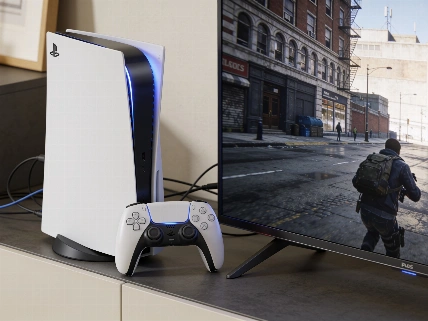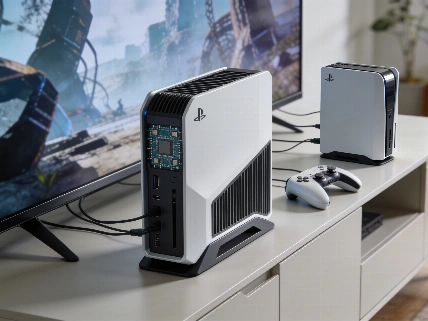

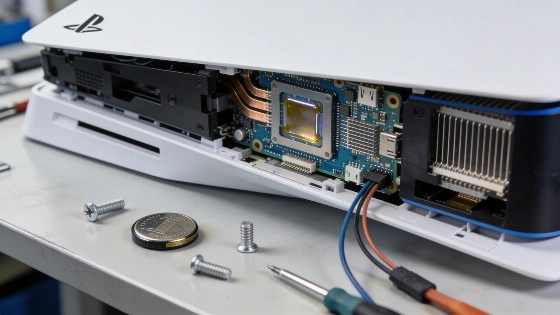
Sony has quietly introduced another PS5 Slim revision. It includes a redesigned motherboard, a replaceable CR2032 battery and a revised liquid-metal cooling system intended to improve long-term reliability.
Sony's latest PS5 Slim revision is more than a shell change. An internal teardown found a refreshed motherboard and a heavily revised thermal design intended to help the console remain serviceable for longer. The update appeared inside the Wolverine Limited Edition and carries the EDM-051 motherboard designation.
A deeper Slim revision
Console and controller technician @Modyficator89 found the changes during an examination of the new hardware. The available evidence comes from that teardown and related independent reporting, not from an official Sony announcement. Sony has not publicly confirmed the EDM-051 board or said that it has reached all retail PS5 Slim packages.
Sony has revised the PlayStation 5 several times since its 2020 launch. The company moved from smaller versions of the original console to the PS5 Slim, then refined the Slim again.
The EDM-051 board brings practical changes rather than a cosmetic refresh. Its internal layout is different. The CR2032 CMOS battery can be replaced. The HDMI retimer has also been updated with a newer implementation described as lower-cost and more optimised.
These changes do not affect what players see on screen today. They do change the maintenance picture. A replaceable battery is useful because CMOS battery failure has long been a concern with PlayStation hardware. A simpler internal layout may also make future servicing less awkward.
The independent teardown points to a broader redesign for serviceability and manufacturing optimisation. It does not point to a confirmed performance upgrade.
Liquid metal gets another revision
The biggest change is in the cooling system. Sony redesigned the area around the APU and die. The liquid-metal containment appears closer to the approach used in the PS5 Pro than to the arrangement found in earlier Slim revisions.
The protective surface exposes less area directly to the liquid metal. That should help keep the material contained around the processor. The teardown alone does not prove that the change improves reliability.
The heatsink is also noticeably different from those used in earlier Slim revisions. The available evidence points to a different construction or material. It does not establish a measured improvement in temperature, noise or performance.
No confirmed temperature, acoustics or benchmark figures for EDM-051 were available at the time of reporting.
Sony's liquid-metal solution has drawn concern because degradation and handling problems have been linked to malfunctioning systems. The company had already made a cooling update in 2025. This latest design suggests continued refinement rather than a final answer to the thermal challenge.
Liquid metal remains a sensitive part of the PS5's thermal architecture. Changes to its containment matter, even though their real-world effect has not been measured.
What the evidence shows
The timeline is short but useful. The PlayStation 5 launched in 2020. Sony issued a cooling update in 2025. This latest hardware revision uses the EDM-051 motherboard and a PS5 Pro-style liquid-metal interface.
The available report provides no temperature figures, failure-rate data or independent endurance results. The technician's teardown is direct physical evidence of the components found in the Wolverine Limited Edition. It is not a replacement for controlled testing across multiple units.
That distinction matters. The revision is not proof that older consoles are about to fail, nor does it show that the new Slim will last for a defined number of years.
The evidence supports a narrower conclusion. Sony has changed components tied to serviceability, battery replacement and thermal control. Claims that the revision is definitively quieter, cooler or longer-lasting remain unconfirmed.
The quiet launch is notable because the changes go beyond a new exterior finish. The Wolverine Limited Edition teardown provides direct evidence of the board and cooling changes. It does not show whether every current PS5 Slim package uses the same internal configuration.
Sony's official PlayStation materials had not announced the EDM-051 revision or confirmed its broad retail rollout at the time of checking.
Why Sony would make the change
Reliability matters more as console prices rise and buyers expect a system to remain usable throughout a generation. Sony has also faced criticism over its decision to sunset physical discs. The source says that move could still be revised. The expected high price of the PlayStation 6 could also make early adoption difficult.
Reducing avoidable hardware failures is a sensible platform priority. Sony's broader PlayStation hardware position was also examined in earlier reporting. This revision concerns the console already in buyers' homes, not a future machine.
The new design is best read as quiet risk management, not as a new performance model. It offers a more replaceable battery and a cleaner internal layout. Its cooling arrangement also appears better controlled, but the actual longevity benefit has not been measured.
For current owners, the revision is not a reason to replace a working console. For new buyers, it is the most technically reassuring PS5 Slim revision described so far. That assessment concerns the design, not a measured result.
Liquid metal is used as a thermal interface material because it can transfer heat efficiently between a processor and heatsink. It must remain precisely contained. Unlike conventional thermal paste, it is electrically conductive and can cause problems if it moves beyond the intended contact area.
A redesigned barrier may reduce that risk. Only long-term testing can show whether the revised arrangement delivers a meaningful reliability advantage in ordinary homes.