
Mystic Forge and Belgian indie developer Fables of Wits have released Packed Lair on Steam for $7.99, with a 10% launch discount for two weeks. Its main challenge is fitting buildings together before heroes invade.
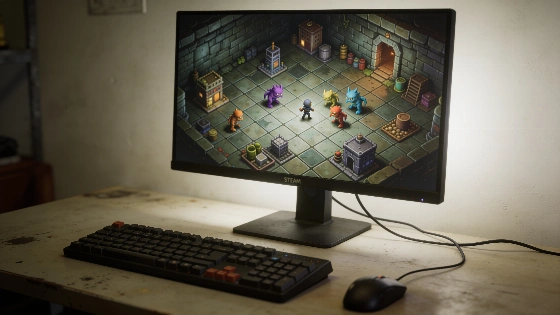
Heroes are invading, and the evil lord has run out of sensible places to build. Packed Lair is now available on Steam. Its auto-battler has one rule that sets it apart from the usual unit-drafting formula: every building must fit inside a cramped lair before the fighting starts.
Launch details
Mystic Forge and Belgian indie developer Fables of Wits released Packed Lair on 22 September 2026. The GamesPress launch announcement identifies Fables of Wits as the developer and Mystic Forge as the publisher. The PC game costs $7.99 or the regional equivalent. A 10% launch discount runs for two weeks.
A separate storefront listing recorded the planned Steam release time as 10:00 a.m. on 22 September 2026. The supplied announcement does not specify a separate edition structure, another platform release or a post-launch content plan.
Packed Lair combines a spatial puzzle, base building, roguelike systems and auto-battler combat. Players take the role of an evil lord defending a lair from waves of invading heroes. The first strategic problem is not choosing the strongest monster. It is deciding where every building should go before battle begins.
Players who want to explore the idea without treating promotional material as a review can look at its earlier genre coverage context and try the Steam demo mentioned in the announcement. The publisher also said that players could wishlist the game and request Steam keys before release.
Independent coverage published the day before launch described Packed Lair as a single-player PC game with Steam Achievements, Steam Cloud and Family Sharing. It also reported interface and subtitle support in eight languages. The clearest evidence now is the released game and its storefront listing, not an independently tested performance report.
Space is the first resource
Players can draft, rotate and arrange buildings across the limited lair. Placement is not cosmetic. The stated goal is to create combinations that generate resources and produce stronger synergies.
A badly placed structure costs more than a few empty squares. It can weaken the economy and leave a smaller army for the next invasion.
This arrangement phase gives Packed Lair its clearest identity. Traditional base-building games often reward expansion. Puzzle games usually make space the main obstacle. Packed Lair combines those pressures.
The player has to make a compact underground hideout work as a production chain, military base and preparation room at the same time.
New buildings can be unlocked across each run. Players can also discover new combinations and expand the lair. The roguelike structure puts those choices inside repeated attempts rather than one permanent campaign.
The announcement does not give the full building roster, the number of runs or the exact rules for expansion. Its long-term depth cannot be judged from the feature list alone.
Combat runs automatically
Once the lair is packed and the army is ready, minions fight waves of invading heroes in auto-battler combat. Players do not control every attack directly. The layout and army-building choices made earlier determine how the force performs once the battle starts.
The combat is not completely hands-off. The evil lord can cast spells during battles, giving the player a limited but important way to intervene.
Well-timed spells can influence the battlefield, rescue a failing strategy or turn a lost encounter into a win. The available material confirms the mechanic but does not list the spells, their resource costs or their timing rules.
The design divides play between preparation and intervention. Building placement handles the slow strategic work. Automatic combat shows whether the plan works. Spells give the player a chance to correct it under pressure.
That is a clearer proposition than simply watching numbers rise. The lair is meant to show where the army's strength comes from.
What the release proves
Packed Lair has passed the main threshold for interested PC players. It is no longer just a planned release or wishlist entry. It can be bought on Steam for $7.99, and the 10% launch discount is scheduled to last two weeks from launch.
The GamesPress announcement also says that press and creators can request Steam keys. Its pre-release information included a Steam demo and a wishlist option. It provides no review coverage, technical measurements or independently verified performance results.
That limit matters. The game's premise is specific enough to understand before purchase. Its value will depend on how many meaningful building combinations exist, how much variety the invading heroes provide and whether repeated runs create fresh decisions instead of familiar layouts.
The announcement alone cannot answer those questions.
Fables of Wits is led by a solo developer with more than a decade of software-industry experience and external collaborators. Mystic Forge describes itself as a boutique PC-first publisher focused on strategy, RPG and simulation games with distinctive gameplay hooks.
Those details place Packed Lair in the small-scale tactical PC space, where a focused mechanic matters more than a large content promise.
Auto-battlers are not passive games in the strict sense. Their battles may resolve automatically, but the meaningful decisions happen before and during each encounter through positioning, unit composition, upgrades and timely abilities.
Packed Lair's strongest idea is to make physical space part of that decision system. At $7.99 with a temporary launch discount, it looks like a concise tactical experiment rather than a sprawling strategy empire. The release gives players enough information to understand its hook. Only hands-on play can show whether the cramped lair creates lasting variety.