
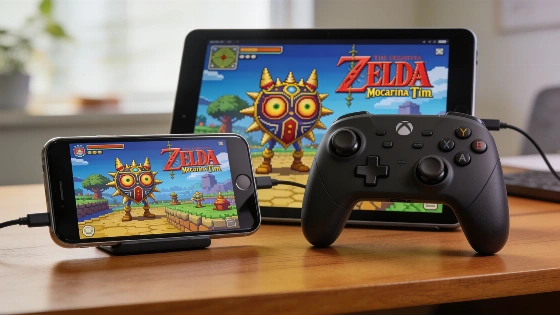
Fan-developed native ports of The Legend of Zelda: Ocarina of Time and Majora's Mask are now operational on iOS, offering full controller support and bypassing emulation for a more authentic experience
Two of Nintendo's most influential classics, The Legend of Zelda: Ocarina of Time and Majora's Mask, have been successfully ported to run natively on iOS and iPadOS devices. This development, led by Chris Sotraidis, follows the earlier fan-driven port of The Legend of Zelda: Twilight Princess and marks a significant step for retro gaming on Apple's mobile platforms. Unlike traditional emulation, these ports operate as native applications, enabling smoother performance and direct integration with iOS features.
How the Ports Were Achieved
The Ocarina of Time port was achieved using Ship of Harkinian, a well-known community project that decompiles the original game code into a format suitable for modern platforms. Sotraidis adapted this work for iOS, and within weeks, applied a similar approach to Majora's Mask using the community-driven 2 Ship 2 Harkinian project. Both titles now run as standalone apps, not emulators, which means they can take advantage of native hardware acceleration and input support.
Controller compatibility is a central feature of these releases. Players can pair a Bluetooth controller for a console-like experience, but touch, keyboard, and mouse inputs are also supported. This flexibility is designed to make the games accessible across a range of devices and play styles, reflecting the growing demand for high-quality retro experiences on mobile hardware.
Technical and Community Context
The ports are made possible by the ongoing efforts of the decompilation community, which reverse-engineers classic game binaries into human-readable code. This process, while technically demanding, has enabled a wave of ports and mods for titles such as Super Mario 64, Banjo-Kazooie, and Sonic Unleashed. The result is a new generation of classic games that can be played natively on platforms far removed from their original hardware.
For iOS users, this means access to two of the Nintendo 64's most celebrated adventures without the compromises of emulation. The games benefit from improved input latency, more stable frame rates, and the ability to use modern controllers. While these projects remain unofficial and are not distributed through the App Store, they demonstrate what is technically possible when community expertise and modern hardware converge.
Release Timing and Platform Implications
The Ocarina of Time iOS port was first demonstrated in late July 2026, with Majora's Mask following in early August. Both ports are currently available as side-loaded applications, requiring users to install them outside the official App Store ecosystem. This approach is common for fan projects that cannot be licensed through official channels, but it does limit accessibility for less technical users.
These developments arrive as Nintendo continues to expand its own platform offerings, with the Switch 2's upcoming line-up drawing attention to the company's approach to legacy content. For comparison, Square Enix's recent announcement that Final Fantasy 14 will require nearly half of the Switch 2's internal storage highlights the ongoing challenges of bringing classic and modern titles to new hardware generations (see our coverage of Switch 2 storage demands).
What Remains Uncertain
While the technical achievement is clear, the long-term availability of these ports is less certain. As unofficial projects, they are vulnerable to takedown requests and may face compatibility issues with future iOS updates. There is also no official support or guarantee of ongoing development. For now, however, these ports offer a rare opportunity to experience two of The Legend of Zelda's most acclaimed entries on Apple's mobile devices, with features and performance that go beyond what emulation typically provides.
To understand the significance of native ports versus emulation, it's important to recognise how native applications interact directly with a device's hardware and operating system. This allows for lower input latency, more consistent frame rates, and better integration with platform features such as controller support. Emulators, by contrast, must simulate the original hardware environment, which can introduce performance bottlenecks and compatibility issues. Native ports, when possible, deliver a closer approximation of the original gameplay experience on modern devices.