
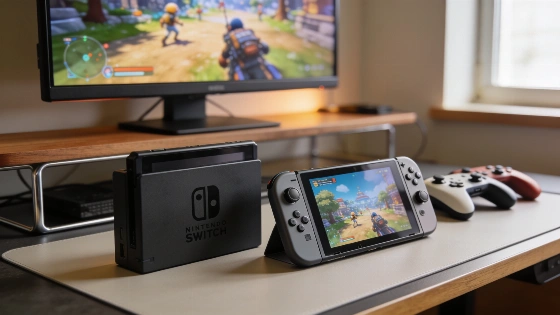
Nintendo has reported a 150% year-on-year rise in operating profit, largely due to a $300 million US tariff refund, but confirmed that these savings will not be passed on to Switch or Switch 2 buyers
Nintendo has posted an unusually strong operating profit for the latest quarter, despite a decline in overall sales, after receiving a substantial $300 million refund on US tariffs. The company's financial results show that while net sales fell by 9.5% year-on-year, operating profit surged by 150.5% to 142.5 billion yen. This sharp increase is directly attributed to the tariff refund, which Nintendo clarified will not result in lower prices for consumers purchasing current or upcoming hardware.
Tariff Refund Drives Profit Surge
The $300 million refund stems from tariffs imposed under the International Emergency Economic Powers Act (IEEPA), which Nintendo had previously recorded as part of its cost of sales. Following legal action against the US government earlier this year, Nintendo secured the refund, which has now been recognised as a reduction in costs. The company's gross profit margin rose to 54.3%, reflecting both the impact of the refund and a higher proportion of software sales in its revenue mix.
Nintendo's statement emphasised that the tariffs were primarily absorbed by the company itself, rather than being passed on to customers through higher product prices. This clarification comes amid ongoing scrutiny of hardware pricing, particularly as the industry faces persistent cost pressures and supply chain challenges.
No Price Relief for Switch Buyers
Despite the significant financial windfall, Nintendo has confirmed that the refund will not translate into price reductions for buyers of the Nintendo Switch or the anticipated Switch 2. The company maintains that customers paid the advertised prices for their consoles and accessories, regardless of the underlying tariff costs. This position was reinforced in a recent legal filing, where Nintendo argued that consumers received the products as described and were not entitled to restitution for any tariff-related overcharges.
The issue has attracted legal attention, with a class action lawsuit filed on behalf of US consumers who purchased Nintendo products during the tariff period. Plaintiffs argued that Nintendo effectively recovered the tariff costs twice-first through higher retail prices and again via the government refund. Nintendo, however, disputes this characterisation, stating that not all price increases were due to tariffs, and that other factors such as memory, shipping, and labour costs also played a role.
Industry Context and Player Impact
Nintendo's approach to the tariff refund stands in contrast to broader industry trends, where hardware manufacturers have faced mounting pressure to adjust pricing in response to fluctuating costs. For example, Microsoft recently raised the price of its Xbox Series X and S consoles across Europe and the UK, a move detailed in our coverage of Xbox's European price increases. Nintendo's decision not to pass on savings highlights the complex interplay between global trade policy, manufacturing costs, and retail pricing in the gaming sector.
For players, the immediate consequence is clear: the $300 million refund will bolster Nintendo's financial results but will not result in cheaper hardware or accessories. With the Switch 2 still unannounced and no indication of price adjustments, buyers should not expect any direct benefit from the company's improved margins.
Legal and Financial Uncertainty
The legal dispute over tariff-related pricing remains unresolved, with Nintendo seeking dismissal of the class action suit. The company's filings argue that its pricing decisions were justified by a range of cost factors, not solely tariffs. Until the courts reach a decision, the question of whether consumers are owed restitution for past price increases remains open.
Meanwhile, Nintendo's financial strategy appears focused on maintaining profitability amid shifting global conditions. The company's ability to absorb or offset external cost pressures without altering retail prices will likely remain a point of contention as the next generation of hardware approaches.
Understanding how tariffs affect console pricing requires a grasp of how international trade policy intersects with manufacturing and distribution. Tariffs are government-imposed taxes on imported goods, often intended to protect domestic industries or respond to geopolitical developments. When applied to gaming hardware, these costs can be absorbed by the manufacturer, passed on to consumers, or split between both. The decision depends on competitive pressures, supply chain dynamics, and broader market strategy. In Nintendo's case, the company has chosen to retain the benefit of the recent refund, rather than adjusting prices for players.