
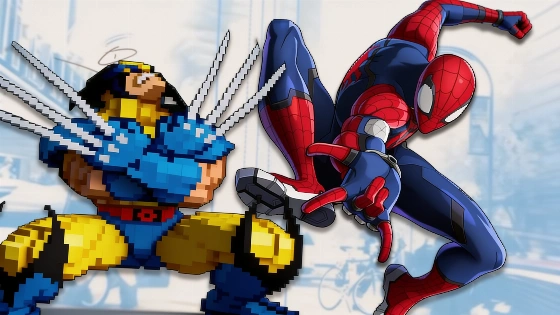
Arc Systemworks has revealed Marvel Tokon Fighting Souls, the first 4v4 Marvel fighting game, marking a new chapter for the franchise after nearly a decade without a major release
Marvel's history with fighting games spans more than three decades, evolving from early arcade experiments to genre-defining tag-team brawlers. The franchise's journey has been shaped by technical innovation, shifting partnerships, and changing player expectations, culminating in the recent announcement of Marvel Tokon Fighting Souls by Arc Systemworks. This new entry signals a significant shift for the series, introducing a 4v4 format and promising a fresh approach to Marvel's competitive fighting legacy.
Arcade Foundations and Early Innovations
The mid-1990s saw Marvel's first major foray into fighting games with X-Men: Children of the Atom, developed by Capcom. Released in 1994, it built on the Street Fighter 2 Turbo engine but introduced a faster pace, super jumps, and air combos, setting it apart from its predecessors. The game's technical depth and accessible design led to successful ports on PlayStation, Sega Saturn, and MS-DOS, and paved the way for Marvel Super Heroes, which expanded the roster beyond the X-Men.
In 1995, Data East released Avengers in Galactic Storm, notable for introducing the assistant character mechanic. While the game itself faded quickly due to limited appeal and dated visuals, its assist system laid the groundwork for future tag-team fighters. This mechanic would become central to the genre, influencing later titles even as Avengers in Galactic Storm itself slipped into obscurity.
Tag-Team Evolution and Competitive Growth
Capcom's partnership with Marvel deepened with X-Men vs. Street Fighter in 1996, which shifted the format to 2v2 battles and allowed players to switch characters mid-match. This innovation, combined with enhanced special moves and recoverable health, encouraged dynamic team strategies and helped establish a competitive scene around the game. The formula was further refined in Marvel vs. Capcom: Clash of Super Heroes (1998), which introduced randomised special partners and duo team attacks, adding new layers of tactical depth.
The year 2000 marked a turning point with Marvel vs. Capcom 2: New Age of Heroes. Capcom expanded the format to 3v3, removed special partners in favour of a new assist system, and increased the roster to 56 characters. The game's overhaul of controls and visual style initially divided fans, but its near-limitless team combinations and fast-paced gameplay eventually earned it a reputation as one of the greatest fighting games of all time. Marvel vs. Capcom 2 remains a staple of competitive play, even as the arcade era gave way to home consoles.
Modern Shifts and Franchise Challenges
After a period of relative quiet, Capcom returned with Marvel vs. Capcom 3: Fate of Two Worlds in 2011, targeting PlayStation 3 and Xbox 360. The game retained the 3v3 structure but introduced new mechanics such as aerial tag combos and the controversial X-Factor comeback system. While the initial release was well received, the rapid launch of Ultimate Marvel vs. Capcom 3-with additional characters and balance changes-frustrated early adopters. Despite this, Ultimate Marvel vs. Capcom 3 became the competitive standard, though Capcom eventually allowed the Marvel licence to lapse.
Marvel vs. Capcom: Infinite arrived in 2017, reverting to a 2v2 format and introducing the Infinity Stones system. The game featured a cinematic story mode and a reworked tag system, but its limited roster-lacking X-Men and Fantastic Four characters due to MCU alignment-and a shift to a semi-realistic art style drew criticism. The competitive community quickly gravitated towards other titles, especially after Arc Systemworks launched Dragon Ball FighterZ, which borrowed many mechanics from Marvel vs. Capcom and offered a more visually striking presentation.
Marvel Tokon Fighting Souls and the Future
In June 2025, Arc Systemworks announced Marvel Tokon Fighting Souls during PlayStation's State of Play, confirming it as the first 4v4 Marvel fighting game and the franchise's first major entry in nearly a decade. Early details suggest the game will blend classic tag mechanics with new team-based strategies, aiming to revitalise Marvel's presence in the fighting genre. Marvel Tokon Fighting Souls is scheduled for release on 6 August 2026, with a confirmed appearance at Evo France in October, indicating a strong push towards competitive play.
The confirmed 4v4 format sets Marvel Tokon Fighting Souls apart from previous entries, and Arc Systemworks' experience with tag-fighting systems-demonstrated in Dragon Ball FighterZ-positions the game as a potential new benchmark for the series. The announcement follows a period of uncertainty for Marvel fighting games, as discussed in our coverage of Insomniac's Marvel's Wolverine SDCC panel and its crossover with Marvel Tōkon: Fighting Souls (see our analysis of the crossover announcement).
Understanding the evolution of Marvel fighting games requires a grasp of how tag-team mechanics have shaped the genre. Tag systems allow players to switch between multiple characters during a match, enabling complex strategies and recoverable health. The introduction of assist characters and active tagging has driven both technical depth and accessibility, making these games a mainstay of competitive fighting communities. As Marvel Tokon Fighting Souls prepares to launch, the effectiveness of its new 4v4 structure will be closely watched by both long-time fans and newcomers to the series.