
Mandate Order's latest update highlights that food, population and weapons are not enough to prepare a city for war-true readiness depends on how well resources can be mobilised without crippling the settlement's economy
Mandate Order, the upcoming ancient Chinese city-building and war simulation, is challenging the familiar strategy-game logic that a well-stocked city is automatically ready for conflict. While many games treat food, population and weapons as the key indicators of military strength, Mandate Order's systems suggest that the real test is whether a city can mobilise those resources without undermining its own survival.
Resource Stockpiles Are Not Enough
In most strategy titles, players are encouraged to monitor their food reserves, population numbers and weapon output as a checklist for military expansion. However, Mandate Order's design makes clear that simply owning resources does not mean they are ready for immediate use. A weapon in storage is not a weapon in a soldier's hand, and a large population does not guarantee that enough workers can be spared for the army without disrupting farming, production or logistics.
This approach reframes war as a test of a city's resilience to disruption. Mobilising an army is not a separate phase from city management-it is an economic decision with direct consequences for every production chain. When workers are recruited, the city loses labour in agriculture, manufacturing and transport, which can slow or even halt essential services if not managed carefully.
Logistics and Mobilisation Systems
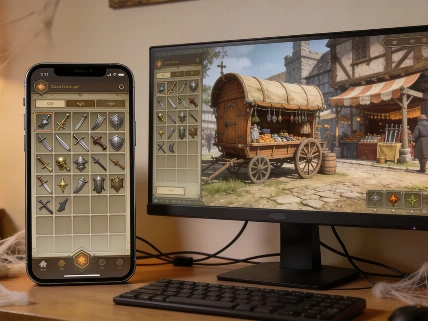
Mandate Order's recruitment mechanics have been reworked to emphasise the importance of logistics. Equipment must be physically stored in the armory before it can be used for recruitment, meaning that weapons in transit or scattered across the city do not count towards military readiness. This change forces players to consider not just how much they have produced, but where those resources are located and how efficiently they can be moved.
Players can also set recruitment priorities, such as selecting workers who can reach the armory quickly or those whose absence will cause the least disruption to ongoing production. This adds a layer of strategic depth, as every recruitment decision affects both the city's military strength and its economic stability. Logistics, therefore, becomes a core part of readiness, not just a background efficiency system.
War Begins Before the Battle
The outcome of a battle in Mandate Order is shaped long before enemy troops arrive. Players must ensure that equipment is produced and delivered to the right locations, that storage and production facilities are sensibly placed, and that the city can continue to function after a portion of its workforce has been mobilised. If these systems are neglected, a city that appears prosperous on paper may prove fragile under pressure.
This philosophy is consistent with the game's broader design, as previously discussed in our coverage of how city-building and warfare are deeply intertwined in Mandate Order. For more on how every decision shapes both survival and strategy, see our earlier analysis of the game's early access plans at our feature on Mandate Order's city-building and war systems.
Release Timing and Early Access Details
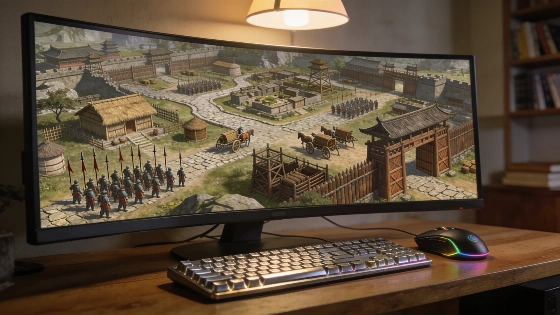
Mandate Order is scheduled to enter Early Access on Steam and Epic Games Store on 12 August 2026. The game will support 12 languages at launch and is set to be priced at US$19.99 internationally, with a 15% discount available during the first two weeks. Players will begin with a frontier settlement and develop it into a state through city construction, farming, logistics, diplomacy, recruitment and large-scale battles, all set during the Spring and Autumn and Warring States period of ancient China.
Every road, storehouse, wall and military decision will influence whether a city can survive and thrive in a fractured world. The game's focus on the interplay between economic management and military mobilisation sets it apart from more conventional city-builders and strategy games.
Early access is a release model where players can purchase and play a game before its full launch, often while it is still in active development. This approach allows developers to gather feedback, test systems and refine gameplay based on real player experience. For Mandate Order, early access means that core mechanics-such as logistics, recruitment and city management-may continue to evolve before the final release, and player input could directly influence future updates. It is important for players to recognise that early-access games may lack some features or polish found in finished releases, but they offer a chance to shape the game's direction and experience new systems ahead of launch.