
Mandate Order, set for Early Access on 12 August 2026, challenges players to balance city growth and military recruitment, with every decision affecting both survival and strategy in its ancient Chinese setting
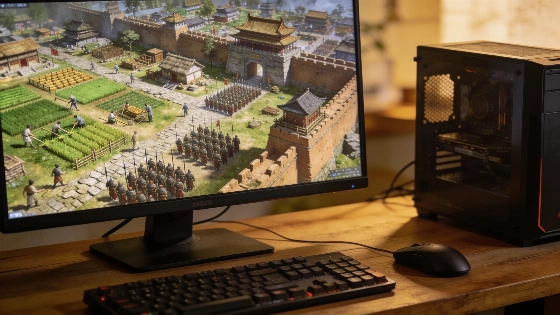
Mandate Order, an upcoming war city-builder set during China's Spring and Autumn and Warring States period, is preparing for Early Access on Steam and Epic Games Store from 12 August 2026. Unlike many city-builders where military and civic management are largely separate, Mandate Order directly intertwines the two, forcing players to weigh the consequences of every recruitment order on their city's economy and daily life. The game's design makes clear that raising an army is not a simple matter of clicking a button-it is a decision that can disrupt harvests, halt construction, and expose weaknesses in logistics.
Recruitment as a Citywide Disruption
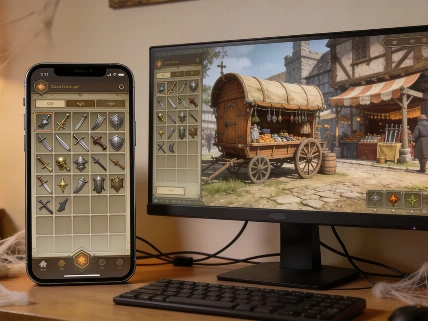
In Mandate Order, the city's population is organised into groups called Wu, each representing several civilians who handle all core tasks: gathering resources, building structures, transporting goods, and farming. When players recruit soldiers, they are not drawing from an abstract pool but directly removing workers from these essential roles. The recruitment interface allows players to choose between rapid assembly-pulling the nearest available workers-or minimising disruption by selecting those whose absence will least harm ongoing operations. This system means that every military decision has a visible economic cost, and a poorly timed recruitment can leave fields untended or workshops idle.
The impact is especially pronounced during periods of pressure, such as harvest season or when the city is under threat. Drawing too many workers into the army at the wrong moment can result in short-term military success but long-term economic decline, with food shortages or production bottlenecks emerging in the aftermath of battle. Mandate Order's approach ensures that the consequences of war are felt throughout the city, not just on the battlefield.
Logistics and Military Preparation
Military strength in Mandate Order is not determined solely by the number of troops or weapons produced. Equipment must be physically transported and stored in the military armoury before it can be used for recruitment. Weapons left in transit or in temporary storage do not count towards the city's military readiness. This design places logistics at the heart of military planning, requiring players to consider the placement of roads, warehouses, and armouries as part of their defensive strategy. A missing transport worker can be as damaging as a missing soldier if supplies fail to reach the front lines.
For players who enjoy optimising production chains, this system adds a layer of complexity: the city must be robust enough to continue functioning even as part of its workforce is diverted to military service. The game's mechanics reward careful planning and penalise overextension, making logistics a decisive factor in both survival and expansion.
Defence, Tribute, and Strategic Risk
Mandate Order extends its interconnected systems to city defence and external threats. Bandit invasions are not random events but targeted attacks that can focus on resource-rich buildings, damage infrastructure, and loot valuable stores. Players can choose to pay tribute to delay attacks or refuse and prepare for battle, but every choice carries risk. The placement of storage buildings, the strength of walls and gates, and the proximity of troops all become strategic considerations. Surviving an attack is not enough; players must also decide when to eliminate hostile camps to reduce future threats.
Walls and fortifications are only as effective as the city's internal layout and the player's earlier decisions about labour, logistics, and resource allocation. Once conflict begins, troop movement and formations are managed through line-drawing controls, but the outcome is often determined by the city's underlying resilience rather than battlefield tactics alone.
Release Timing, Platforms, and Pricing
Mandate Order is scheduled to enter Early Access on both Steam and Epic Games Store on 12 August 2026. The game will support 12 languages at launch and is priced at US$19.99 internationally, with a 15% discount available during the first two weeks. Players begin with a frontier settlement and must build a functioning state through city construction, farming, logistics, diplomacy, recruitment, and large-scale battles. Every infrastructure and military decision can shape the city's fate in a fractured world.
Mandate Order's Early Access release means that features and balance may evolve over time, and player feedback is likely to influence future updates. The game's focus on the interplay between city management and warfare sets it apart from more traditional city-builders, offering a more integrated and consequential approach to strategy.
Early access is a release model where players can purchase and play a game before its full launch, often while it is still in active development. This approach allows developers to gather feedback, test systems, and refine features based on real player experience. However, early-access games may lack some planned content, contain bugs, or undergo significant changes before their final release. Players considering early access should be aware that the experience may not represent the finished product, and updates can alter gameplay, balance, or technical performance over time.