
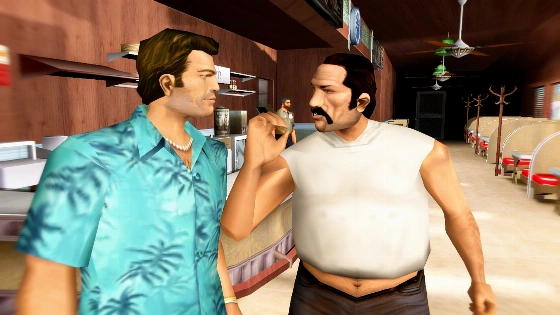
Grand Theft Auto Vice City arrived just one year after GTA III yet delivered a leap in style and ambition that still shapes the series. We examine how its 1980s setting, voiced protagonist and iconic soundtrack changed expectations for open world games
Few moments in gaming history land with the force of Grand Theft Auto Vice City's opening drive. The instant Michael Jackson's Billie Jean kicks in as you pull away from the kerb, the game's intent is unmistakable: this is not just a new city, but a new era for the series and for open world design. Rockstar North's 2002 release did not simply follow up GTA III's template-it detonated it, setting a benchmark for atmosphere, character and player agency that remains influential nearly a quarter-century later. According to Rockstar Games, Vice City launched on PlayStation 2 on October 29, 2002, and quickly surpassed 1 million copies sold in its first days, establishing a new standard for 3D open world games on consoles.
Vice City's leap beyond GTA III
Vice City's arrival on PlayStation 2 in 2002, just twelve months after GTA III, was a shock to the system. Where its predecessor had established the 3D open world as a viable playground, Vice City expanded the formula with a deluge of new vehicles, weapons and mission types. Notably, it was the first in the series to introduce motorcycles, helicopters, and seaplanes, as well as property purchases and outfit changes, which gave players a sense of ownership and progression previously missing from the franchise. These mechanics, as confirmed by Rockstar Games, marked a significant evolution in the series' approach to player agency. The addition of an in-game map-alongside the traditional paper version-marked a practical step forward for navigation in a city that felt alive and sprawling.
Crucially, Vice City abandoned the silent protagonist model. Tommy Vercetti, voiced by Ray Liotta, brought a sharp tongue and clear ambition to the narrative, transforming mission briefings from one-sided monologues into dynamic exchanges. This shift allowed Rockstar to lean into its cinematic inspirations, with a supporting cast featuring Tom Sizemore, Dennis Hopper, Burt Reynolds and Philip Michael Thomas. According to official game credits from Rockstar Games, this was the first GTA title with a fully voiced main character, setting a new bar for storytelling in the franchise. The result was a game that channelled the energy of Miami Vice and Scarface, not just in setting but in tone and characterisation.
Atmosphere and soundtrack as design pillars
Vice City's 1986 Miami-inspired setting is more than a backdrop-it is the game's identity. Neon-lit streets, pastel suits, palm-lined boulevards and a relentless sense of sun-drenched excess define every corner of the map. The city's visual palette stands in deliberate contrast to the greys of Liberty City, offering a world that is both inviting and dangerous, where glamour and violence coexist without apology. Rockstar Games has stated that the cultural framework of the game was deliberately built on the aesthetics of Miami Vice and Scarface, with the 1980s serving as a key lens for satire, music, and visual design, cementing Vice City as an "atmospheric" benchmark for the genre.
The soundtrack remains a masterstroke. Rockstar's curation of radio stations-ranging from soft rock on Emotion 98.3 to Latin jazz on Radio Espantoso-ensures that every mission, chase and idle drive is underscored by era-defining music. The effect is not just nostalgic; it is transformative, making each playthrough feel unique depending on which station is blaring from the car speakers. Even now, tracks like 99 Luftballons or Mister Mister's Broken Wings are inseparable from the memory of Vice City's streets. According to Rockstar Games, the game's setting in a fictional 1986 Vice City inspired by Miami was a central reason why the soundtrack and radio stations became such a core part of the project's identity.
Technical advances and persistent quirks
Vice City's technical improvements over GTA III are tangible. Vehicle handling is sharper, with motorcycles offering a new sense of speed and risk, and cars exhibiting a more convincing sense of weight. The city's lighting-particularly at sunrise and sunset-remains a highlight, with ocean reflections and subtle environmental details that pushed the PlayStation 2 hardware. The introduction of automated taxi rides after failed missions was a practical concession to player time, reducing frustration without undermining challenge. Rockstar Games notes that the introduction of new vehicle types and property mechanics in Vice City expanded the series' formula and contributed to its enduring legacy.
Yet not every system aged gracefully. The auto-targeting in combat, while effective in theory, could still lock onto allies or distant threats rather than immediate dangers, leading to avoidable mission failures. The absence of mid-mission checkpoints, a holdover from earlier design, remains a sticking point for modern players. Despite these quirks, Vice City's core systems established a template that would be refined in later entries, including the property and business mechanics that underpin much of the series' progression today.
Legacy and cultural impact
Vice City's influence extends beyond its technical and narrative innovations. As the first major project from the newly rechristened Rockstar North, it cemented the studio's reputation for world-building and cultural pastiche. While earlier games like Driver and Mafia had explored historical settings, Vice City's commitment to letting players inhabit the excesses of the 1980s-rather than merely observe them-set it apart. The game's success is often cited as a catalyst for the wave of '80s nostalgia that followed, though it is more accurate to see it as a key contributor within a broader cultural trend. Rockstar Games continues to reference Vice City as a historical milestone for the franchise and a defining influence on its approach to open worlds, characters, and mission design, as noted in their official materials.
Measured by its impact, Vice City remains a high-water mark for the franchise. Its innovations in vehicle variety, mission structure and character-driven storytelling continue to inform Rockstar's approach, as seen in subsequent releases and in the anticipation surrounding Grand Theft Auto 6. For those interested in how open world games have evolved, Vice City stands as a case study in how rapid iteration-just twelve months after a genre-defining predecessor-can still produce a leap in ambition and execution. For further context on how major franchises have handled evolution and player choice, see our recent analysis of Final Fantasy VII Revelation's open world overhaul.
Vice City's enduring appeal is not nostalgia alone. Its design choices, from the voiced protagonist to the curated soundtrack and property systems, represent a moment when Rockstar North was willing to take risks and move beyond the formula that had just made them a household name. The result is a game that, even in 2026, feels vital-less a relic than a foundation. The lesson is clear: when a studio refuses to coast on past success and instead reinvents its own rules, the entire medium benefits.
Understanding the difference between a remaster and a remake is essential when revisiting games like Vice City. A remaster typically updates visuals and performance for modern hardware while retaining the original game's structure and mechanics. A remake, by contrast, rebuilds the game from the ground up, often reimagining systems, visuals and sometimes even narrative elements. Vice City's legacy is rooted in its original form, but any future revisit will need to clarify which approach is being taken-especially as expectations for technical and design standards continue to rise.