
The original Grand Theft Auto is being re-examined ahead of GTA 6, highlighting its demanding controls, uncompromising difficulty and the unique freedom it offered players in the late 1990s
As anticipation builds for Grand Theft Auto 6, attention has turned back to the series' origins, with a fresh look at the original Grand Theft Auto nearly three decades after its debut. Released in the late 1990s, the first GTA introduced a top-down, open-world structure that was unlike anything else at the time, but it also came with a steep learning curve and a design philosophy that feels markedly different from modern entries in the franchise.
Design and Difficulty
The original Grand Theft Auto set itself apart with its uncompromising approach to difficulty and progression. Players were given a limited number of lives and tasked with maximising their score across three distinct city maps: Liberty City, Vice City and San Andreas. Unlike later entries, there was little in the way of narrative, with only brief cutscenes and a focus on arcade-style objectives. The game's controls, especially on foot, were shaped by the hardware limitations of the era, lacking dual analogue support and resulting in tank-like movement that can feel awkward by today's standards.
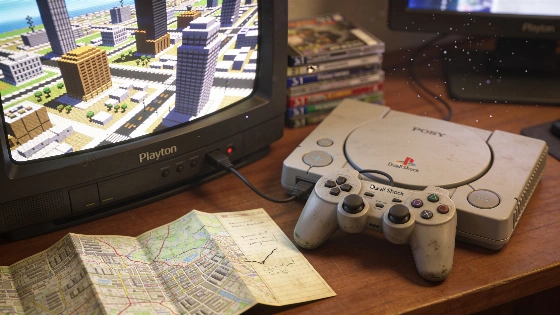
Despite these challenges, GTA's open-world freedom was unprecedented. Players could choose how to approach objectives, ignore missions entirely, or simply cause chaos in the city. The absence of an in-game map meant that navigation often relied on physical fold-out maps, a detail that now serves as a reminder of the era's reliance on physical media. The game's difficulty was further heightened by unforgiving combat, where a single hit could be fatal and body armour offered only minimal protection.
Gameplay Mechanics and Player Agency
Driving in the original GTA remains a divisive topic. The top-down perspective, reminiscent of Codemasters' Micro Machines, provided a sense of familiarity for some players but could be disorienting for others, especially when vehicles moved towards the bottom of the screen. The camera's limited ability to zoom out made high-speed chases unpredictable, and certain vehicles, such as motorbikes, were notably difficult to control. Nevertheless, the variety of vehicles and the ability to commandeer any car on the road contributed to the game's enduring appeal.
On-foot gameplay, however, has aged less gracefully. The lack of fluid movement and the difficulty of aiming during combat make these sections particularly punishing. The pistol is largely ineffective, while the machine gun and flamethrower offer more reliable options-though the latter is rarely available without cheats. Cheats themselves became a defining feature of the early GTA experience, offering players a way to experiment with the game's systems and push its boundaries in ways that have become less common in recent entries.
Visuals, Soundtrack and Cultural Impact
Visually, the original GTA used 2D sprites for vehicles and pedestrians, with cities rendered in a basic 3D style. Each city featured unique vehicles and police cars, and many of the car designs were clearly inspired by real-world diecast models from the 1980s. The soundtrack, delivered through in-game radio stations, was notable for its effort and variety, and players could even play the PlayStation disc as a music CD outside the game.
The game's embrace of controversy also played a role in its legacy. GTA's depiction of violence and its willingness to provoke mainstream outrage set it apart from contemporaries, even as other titles like Carmageddon and Die Hard Trilogy pushed similar boundaries. The low-fidelity visuals made much of the violence feel cartoonish, but some scenarios-such as targeting groups of pedestrians or high-profile characters-would likely be considered too extreme for the series' modern satirical tone.
Legacy and Relevance Today
While the original Grand Theft Auto is undeniably a product of its time, its influence on open-world design and player agency remains clear. The game's three maps, limited weapon selection and lack of narrative depth are offset by the sheer freedom it offered, laying the groundwork for the sandbox experiences that define the series today. Its reliance on physical maps and media is a reminder of how much the industry has changed, especially as future releases like GTA 6 move towards digital-only distribution-a shift discussed in detail in coverage of GTA 6's physical edition limitations in Japan.
For players revisiting the original, patience and adaptability are essential. The game's demanding controls and harsh difficulty curve may deter those without nostalgia for the era, but its historical significance and the foundations it laid for the franchise are difficult to overstate. The original GTA remains a challenging but fascinating artefact, best appreciated with an understanding of its context and the evolution that followed.
Understanding the difference between remasters and remakes is key when revisiting classic games. A remaster typically updates visuals and performance for modern hardware while retaining the original game's structure and mechanics. A remake, by contrast, rebuilds the game from the ground up, often reimagining gameplay, visuals and sometimes even narrative. The original Grand Theft Auto has not received a full remake, so its quirks and limitations remain intact, offering a direct window into late-1990s game design and the early days of open-world experimentation.