
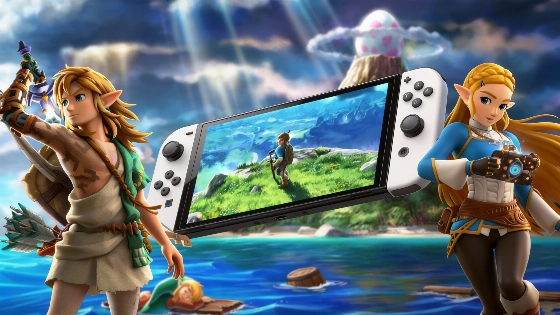
Nintendo has detailed the full line-up of The Legend of Zelda games available on Nintendo Switch, with new entries and upgrades confirmed for Switch 2, plus a major remake and a live-action film adaptation on the horizon
The Legend of Zelda franchise has seen a significant expansion on Nintendo Switch, with both mainline entries and spin-offs arriving since the console's launch in 2017. As Nintendo transitions to Switch 2, the company has confirmed that all existing Zelda titles will remain playable, while new releases and upgrades are set to arrive over the next two years. This article breaks down the current and upcoming Zelda catalogue for both platforms, including details on legacy titles and the latest announcements.
Current Zelda Line-up on Switch
Since 2017, Nintendo Switch has received five mainline The Legend of Zelda games, three Hyrule Warriors titles, and one spin-off, Cadence of Hyrule. The line-up includes The Legend of Zelda: Breath of the Wild (2017), Hyrule Warriors: Definitive Edition (2018), Cadence of Hyrule (2019), The Legend of Zelda: Link's Awakening (2019), Hyrule Warriors: Age of Calamity (2020), The Legend of Zelda: Skyward Sword HD (2021), The Legend of Zelda: Tears of the Kingdom (2023), The Legend of Zelda: Echoes of Wisdom (2024), and Hyrule Warriors: Age of Imprisonment (2025). All of these are confirmed to be compatible with Switch 2, ensuring continuity for players upgrading to the new hardware.
In addition to these releases, Nintendo Switch Online + Expansion Pack subscribers have access to a substantial library of classic Zelda titles from previous Nintendo systems. This includes The Legend of Zelda, Zelda II: The Adventure of Link, The Legend of Zelda: A Link to the Past, The Legend of Zelda: Ocarina of Time, The Legend of Zelda: Majora's Mask, The Legend of Zelda: The Minish Cap, The Legend of Zelda: Oracle of Ages, The Legend of Zelda: Oracle of Seasons, and others. Notably, The Legend of Zelda: The Wind Waker is available exclusively through the GameCube library on Switch 2.
Upcoming Releases and Remakes
Nintendo has confirmed that a full remake of The Legend of Zelda: Ocarina of Time is in development for Switch 2, with a release window set for 2026. This project follows a series of remakes and remasters that have brought classic Zelda experiences to modern hardware. While no new mainline Zelda game has been officially announced beyond Echoes of Wisdom, the Ocarina of Time remake is positioned as a major release for the next generation of Nintendo hardware.
Alongside the games, Nintendo is also preparing a live-action adaptation of The Legend of Zelda, scheduled for theatrical release on 26 March 2027. The film is directed by Wes Ball and will feature officially confirmed actors for both Link and Zelda. The adaptation aims for a grounded approach, with the director referencing a style reminiscent of live-action Miyazaki films.
Technical and Platform Details
All Zelda titles released on Switch are confirmed to be playable on Switch 2, either natively or via backwards compatibility. Nintendo has not detailed specific technical upgrades for each title, but previous Switch 2 editions of major games have included higher resolution, improved frame rates, and faster loading times. The Ocarina of Time remake is expected to take advantage of Switch 2's hardware, though precise performance targets have not been disclosed.
For players interested in older entries, the Nintendo Switch Online + Expansion Pack service remains the primary route for accessing legacy Zelda games. Access to the GameCube library, including The Legend of Zelda: The Wind Waker, is exclusive to Switch 2, reflecting Nintendo's ongoing strategy of expanding its subscription-based retro catalogue.
Franchise Context and Player Impact
The Legend of Zelda's presence on Switch and Switch 2 reflects Nintendo's commitment to both new and returning players. The franchise's expansion across mainline entries, spin-offs, and remakes ensures a broad range of experiences, from open-world exploration in Breath of the Wild and Tears of the Kingdom to rhythm-based gameplay in Cadence of Hyrule. The addition of a live-action film further extends the series' reach beyond games.
For those tracking major franchise developments, it is worth noting that Nintendo's approach to remakes and legacy content mirrors trends seen elsewhere in the industry. For example, Bethesda's recent engagement with player feedback on The Elder Scrolls IV: Oblivion Remastered, as covered in our report on Bethesda's Oblivion patch discussions, highlights the growing importance of maintaining and updating classic titles for new hardware generations.
Remakes and remasters differ in scope and ambition. A remake typically involves rebuilding a game from the ground up, often with new assets, updated mechanics, and modernised visuals, while a remaster usually focuses on enhancing resolution, frame rate, and minor quality-of-life improvements without fundamentally altering the original design. For The Legend of Zelda: Ocarina of Time, Nintendo's decision to pursue a full remake for Switch 2 suggests a significant technical and creative investment, aiming to deliver a version that meets contemporary expectations while respecting the legacy of the original release.