

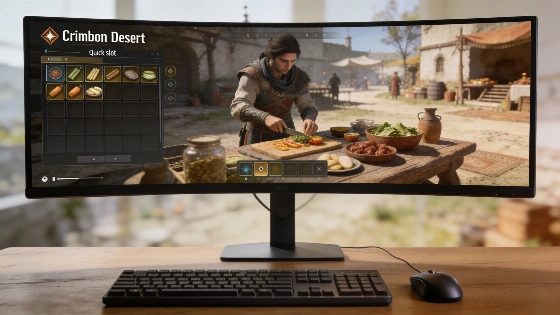
Pearl Abyss has released a patch for Crimson Desert that addresses a persistent inventory bug, finally correcting how food items are assigned to the quick slot and responding to weeks of player frustration
Pearl Abyss has issued a new update for Crimson Desert, targeting a long-standing inventory issue that has drawn sustained criticism from players since launch. The patch, now live, specifically addresses the way food items are automatically assigned to the quick slot, a system that previously prioritised low-grade consumables over more beneficial meals. This behaviour forced players to manually reassign their preferred food during critical moments, undermining the intended flow of combat and exploration.
Patch details and player impact
The update corrects a bug where, after consuming all assigned food, the game would automatically place an unintended item-often a basic or less useful consumable-into the quick slot. This meant that after using a high-value meal for a health or stat boost, players would frequently find their next quick-use item downgraded to something with little practical benefit. The fix ensures that the quick slot now respects player intent, reducing the need for constant manual adjustment during boss fights and other demanding encounters.
Community feedback on the patch has been swift, with many players expressing relief that a widely reported frustration has finally been addressed. The issue had become a recurring topic across official forums and social platforms, with some users noting that the bug had persisted through several previous updates. The developer's decision to prioritise this fix reflects the scale of the complaint and the importance of responsive inventory management in Crimson Desert's real-time combat system.
Technical context and remaining issues
According to the official patch notes, the update is designed to prevent unintended items from being assigned to the quick slot once all previously selected food has been consumed. While the patch is intended to resolve the core problem, Pearl Abyss has not detailed whether additional inventory or quality-of-life improvements are planned for future updates. As with any live-service title, further player feedback and post-patch testing will determine if the fix fully eliminates the issue or if edge cases remain.
Crimson Desert's inventory system has been a focal point for player discussion since release, with the quick slot mechanic in particular drawing scrutiny for its impact on moment-to-moment gameplay. The latest patch aims to restore confidence in the system, but the developer's ongoing responsiveness will be key to maintaining player trust as the game evolves.
Broader context within live-service updates
This patch arrives as part of a wider trend in live-service and open-world games, where rapid response to player-reported bugs is increasingly seen as essential to long-term engagement. The Crimson Desert update follows a series of recent fixes and adjustments across the genre, as developers seek to balance complex systems and player expectations in real time. For those interested in how studios manage ongoing support and community feedback, the recent coverage of Marvel's Wolverine's SDCC panel and its approach to player communication offers further insight into industry best practices-see the discussion of new trailer reveals and crossover announcements in our analysis of Marvel's Wolverine's SDCC presentation.
Inventory management is a core element of many action RPGs and open-world adventures, directly affecting player agency and combat readiness. In Crimson Desert, the quick slot system is designed to provide immediate access to consumables without interrupting gameplay flow. When this system fails to prioritise player-selected items, it can disrupt strategy and increase frustration, especially during high-pressure encounters. Effective inventory design requires not only technical reliability but also a clear understanding of player priorities and in-game context, making responsive patching a critical part of live-service game development.