
Remedy's sequel moves seven years beyond Control, puts Dylan Faden at the centre and opens up a much larger Manhattan. Its melee combat is fast and forceful, but uneven enemy balance and thinner side content still need work.
CONTROL Resonant makes Remedy Entertainment's biggest gamble easy to see. It changes the protagonist, setting and combat style of Control while opening up a much larger world. The review is still in progress because of the game's size. So far, the result looks bold rather than safe.
Remedy has confirmed a worldwide launch for CONTROL Resonant on September 24, 2026, for PlayStation 5, Xbox Series X|S and PC. The PlayStation Blog also lists physical console editions for October 15. The Mac version is expected later in 2026. The PS5 Digital Deluxe Edition is reported to include 48-hour early access from September 22. That is one of the few exact pre-release timings confirmed so far.
A sequel built around change
The game takes place seven years after Control. Dylan Faden wakes from a coma and finds the Federal Bureau of Control facing a new crisis. The Hiss and Mold have escaped containment. Jesse Faden is missing. The Board selects Dylan to deal with the fallout.
That setup lets Remedy return to the Faden family without repeating the first game's structure. Official launch material presents Dylan as the new central character. It ties the story to his return after years of confinement and to the crisis inside the FBC.
The PlayStation Blog describes the sequel as a move beyond the Oldest House into a distorted urban setting filled with new supernatural threats. This is a structural change, not a simple continuation of Jesse's campaign.
Dylan's progress is tied to the story. Closing dimensional Faults gives him new abilities and reveals more about the shared history between him and Jesse. Exploration and character development move together. Manhattan is not just a space between missions.
The scale is the clearest break from the original. CONTROL Resonant presents a large open-world Manhattan filled with secrets and puzzles. Players are asked to search rather than move through a tightly controlled chain of supernatural spaces.
That creates a stronger sense of discovery. It is still unclear whether the wider world can match the quality of the central story. Sony's official description calls the sequel "bigger and weirder." That is a useful summary of how far it moves from the enclosed structure of the original.
Combat trades safety for speed
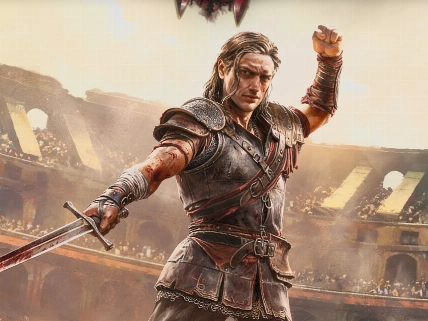
Remedy has moved away from the original game's focus on ranged combat. CONTROL Resonant instead builds its fights around fast, aggressive melee attacks. Dylan uses the Aberrant weapon, which has selectable forms. His paranatural abilities are powered by melee attacks.
The system clearly draws on Capcom's Devil May Cry. It does more than extend Control's existing formula.
The change gives the sequel a more physical rhythm. Dylan is pushed to keep moving forward, and close-range pressure shapes each fight. This is a real redesign, not a cosmetic change. It gives the game a sharper place within the action genre.
There is a cost. Some enemies have large health pools. Fights that should feel quick and energetic can turn into endurance tests. The combat still has force, but the balance can slow down the system's intended speed.
The larger exploration model needs to work on its own terms. As the earlier exploration preview shows in a different setting, a bigger space only matters when its activities make the search worthwhile. CONTROL Resonant has secrets and puzzles across Manhattan. So far, its side content and secondary characters have made less of an impression than the main idea.
What the build shows
This assessment comes from an unfinished review, not a completed playthrough. That matters. The game's size means the final judgement has to wait until its campaign, exploration systems and wider cast can be considered together.
For now, the strongest evidence concerns the central design change rather than the full value of the open world.
Remedy's Northlight Engine produces striking visuals on PC, especially with path tracing enabled. It gives Manhattan and the supernatural spaces real visual weight. Image quality does not guarantee consistent performance, though. Frame pacing still needs work, and uneven gaps between frames can make motion feel less smooth even when the headline frame rate looks acceptable.
The available material contains no verified frame-rate measurements, resolution figures or platform comparison. It is too early to call the PC version technically resolved.
The more precise conclusion is this: Northlight produces an impressive image, while frame pacing remains a visible technical concern in the build being assessed.
The numerical context is limited but useful. Control launched in 2019, and CONTROL Resonant takes place seven years after those events. The sequel also changes three major pillars at once: the protagonist, the scenery and the genre emphasis. Those figures and design choices show why this is not a routine continuation of the original game.
The risk has paid off so far
Remedy's commercial position makes the experiment more consequential. The studio is known for excellent games without a major commercial breakthrough. A smaller-budget sequel with a much larger world is an unusual mix of restraint and expansion.
CONTROL Resonant is trying to increase its scope without relying on the structure that established the series.
That tension is clear in the current build. The combat redesign is confident. Manhattan gives exploration a strong setting. The link between Dylan and Jesse gives the sequel a clear emotional drive.
There are weak spots too. Inflated enemy health and less memorable side content show how a larger game can become diluted instead of deeper.
Early reviews and first-impression coverage appeared before the September 24 launch. They show strong interest in Remedy's genre gamble, but the final verdict still depends on the complete experience. The National News and Gagadget covered the pre-release response. Those reports do not remove the need to separate early impressions from a finished assessment.
CONTROL Resonant is succeeding at the hardest part so far. It has made itself distinct from Control without dropping the supernatural identity that connects the two games.
The open question is whether its balance and supporting content can carry that idea through the full experience. For now, the sequel looks like a worthwhile reinvention with technical and structural weaknesses. A final recommendation will have to wait until the review is complete.
Frame pacing is separate from average frame rate. It describes how evenly individual frames arrive. A game can report a high frame rate and still produce uneven motion when frame delivery fluctuates.
That difference matters in a visually demanding PC game with path tracing. Rendering complexity can expose timing problems that a simple frame-rate figure would hide.