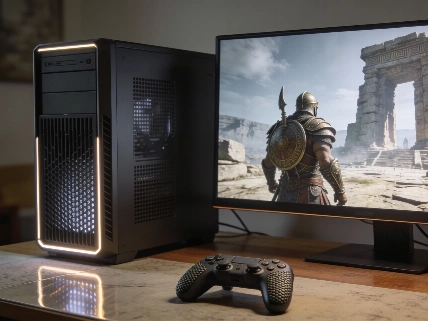

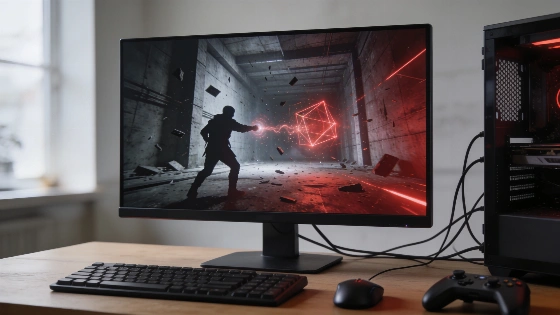
Our CONTROL Resonant hub brings together practical help with combat, progression, farming and accessibility, alongside a review of Remedy Entertainment's latest release.
CONTROL Resonant does more than extend the formula set by its predecessor. Remedy Entertainment's latest game keeps the Metroidvania structure of its warped Manhattan, but its combat moves closer to a fast character action style. The campaign is built around movement, choices and progression. This hub collects the main guidance in one place, helping players make better early decisions and see which systems need attention first.
Remedy's official PlayStation Blog feature describes the sequel as "going bigger and weirder" than the 2019 original. CONTROL Resonant is a direct sequel scheduled for 24 September 2026 on PS5, Xbox Series X|S and PC. It takes the series beyond the Oldest House and into a distorted Manhattan, while keeping its paranatural world-building. The story centers on Jesse Faden's disappearance and her brother Dylan awakening after the Hiss breaks out of the Oldest House. Several reviews also identify Remedy Entertainment as both developer and publisher, making this a self-published release.
Starting strong
The first major decision is which Aberrant Form to choose. It has its own guide because it shows how CONTROL Resonant links character development with combat identity. Players who want a confident start can check the breakdown before choosing a form and setting their early approach.
The hub is meant to answer practical questions, not repeat the game's premise. It starts with the first major progression choice, then moves into combat options that shape how encounters play out. That gives new players a clear route through the systems most likely to affect the opening stages.
Combat and progression
Combat is the biggest mechanical shift in CONTROL Resonant. The game keeps the series' exploration framework, but its battles move at a faster pace closer to character action games. The first combat guide looks at the best combo finisher to unlock. It gives players a clear upgrade target instead of leaving the early ability choices completely open.
Progression also depends on the resources used to strengthen a character. The hub covers farming Source and upgrade materials. It has a separate guide for obtaining Living Shards. These entries should help players improve their options without wasting time looking for the systems that support upgrades.
The available information does not list every farming location or explain every build interaction in the hub overview. It does set out the subjects covered: Source, upgrade materials, Living Shards, forms and combo finishers. That matters because these pages are presented as practical guides to specific mechanics, not as a claim that every combat or progression question has been documented.
Readers looking at the gap between technical targets and observed results in games coverage can also consult this earlier breakdown. CONTROL Resonant's hub is not a performance investigation. It makes no frame-rate or resolution claims.
Reported pricing puts the game within a fairly simple launch structure. Coverage lists the standard edition at about $59.99 in the United States and between £49 and £50 in the United Kingdom. Some outlets report a steelbook edition at around $69. These figures can help with launch planning, but they do not change the hub's focus on the systems players meet after starting the game.
Assist settings and review
Accessibility is covered through a guide to the best Assist Mode settings for a balanced playthrough. The wording points to a middle ground rather than an extreme difficulty choice. Players can adjust the experience while keeping the game's intended structure. The source does not list every setting or prescribe one configuration for everyone, so the guide is best treated as a starting point for personal adjustments.
Traversal and puzzle coverage is not complete. The hub lists both areas as forthcoming. Players should not treat the current material as a finished walkthrough for every part of the game. The existing guides focus on the opening choice, combat, progression and Assist Mode.
The accompanying review presents CONTROL Resonant as a risky sequel. Remedy Entertainment changed the genre, introduced a new protagonist and moved the action to a new setting. Alessio Palumbo's assessment is positive overall. He argues that most of those changes work and that the game is worth considering for fans of the studio and the series. That conclusion belongs to the review, not to any individual guide recommendation.
Early reviews published between 18 and 22 September 2026 show that the game had reached review stage before its 24 September launch. Those reports describe it as playable on PS5, PC and Xbox Series X/S. The guide and review material therefore comes from a pre-launch period, not from a post-release technical survey.
The evidence behind the hub is also clearly defined. The guides are based on a full playthrough completed on PC using version 1.00. The screenshots came from that same version. The measurable scope is one platform and one game version. The source does not claim testing across consoles, later patches or different hardware configurations.
That gives the hub a useful but limited role. It is a player-facing reference for the systems covered so far, not a universal technical report or a complete walkthrough. Combat and progression guides are available, while traversal and puzzle entries are still pending. For now, the strongest support is aimed at the choices that shape how the new combat system feels. Players starting on PC version 1.00 can use the collection early. The missing traversal and puzzle coverage also shows that the resource is still expanding.
Version numbers matter. A guide tied to version 1.00 may not describe later balance changes or system adjustments. A patch can change resource availability, enemy behaviour or the value of an upgrade without changing the guide's original wording. Players should treat the version reference as part of the evidence rather than assuming every recommendation will stay the same after an update.