
Burnout Revenge continues to stand out for its inventive Crash Mode and traffic checking mechanics, offering a distinct experience from Burnout 3: Takedown and influencing later racing games in the genre
Burnout Revenge remains a defining entry in Criterion's acclaimed racing series, with its unique blend of high-speed competition and destructive gameplay mechanics. While Burnout 3: Takedown is often credited for introducing the takedown system that redefined the franchise, Burnout Revenge's innovations have left a lasting mark on how arcade racers approach both chaos and strategy.
Crash Mode's Enduring Appeal
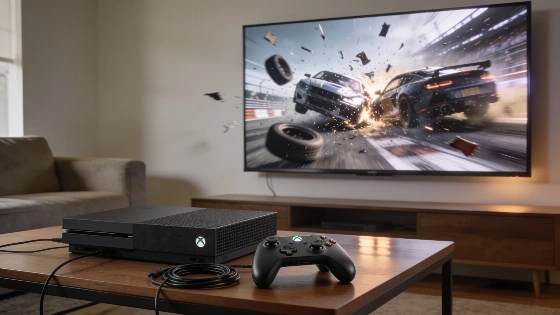
Central to Burnout Revenge's identity is its Crash Mode, which transforms traditional racing into a series of explosive, score-chasing challenges. Unlike standard time trials or lap-based events, Crash Mode tasks players with orchestrating the most spectacular pile-ups possible, rewarding both creativity and precision. Each scenario presents a puzzle-like environment, where understanding traffic flow and vehicle placement is as important as raw speed. The result is a mode that feels as much about tactical planning as it does about reflexes, and it remains a highlight for players seeking replayability and mastery.
Crash Mode's influence can be seen in later titles that attempted to recapture its blend of action and strategy, but few have matched the balance Burnout Revenge achieved. The mode's structure-short, repeatable bursts of gameplay with escalating rewards-helped define a subgenre of racing challenges that prioritise experimentation and high-score chasing over traditional racing lines.
Traffic Checking and Race Dynamics
Burnout Revenge introduced traffic checking, a mechanic that fundamentally altered the flow of its standard races. By allowing players to slam into vehicles travelling in the same direction without penalty, the game encouraged aggressive driving and constant risk-taking. This system not only kept the boost meter filled but also added a layer of resource management, as players weighed the benefits of maintaining momentum against the dangers of overcommitting.
The addition of traffic checking distinguished Burnout Revenge from its predecessor, making its race events more dynamic and unpredictable. The mechanic's impact is still felt in the genre, with later arcade racers adopting similar systems to encourage player creativity and sustained action. For those who prefer a more cerebral approach, the ability to progress through the career mode by excelling in Crash Mode rather than traditional races offers a rare degree of flexibility.
Legacy and Franchise Context
Burnout Revenge launched in 2005 for PlayStation 2 and Xbox, later arriving on Xbox 360 with enhanced visuals. Its soundtrack, featuring post-hardcore and alternative rock, remains closely associated with the game's relentless pace and destructive energy. While Burnout Paradise would later take the series in an open-world direction, many players continue to regard Revenge as the high point for structured, event-based gameplay.
The game's enduring reputation is reflected in ongoing discussions about its influence on the genre. Titles such as Dangerous Driving and Dangerous Golf have attempted to revive elements of Burnout's formula, but the consensus among long-time fans is that Burnout Revenge's combination of inventive mechanics and tight design remains unmatched. For those interested in how racing games have evolved, it is instructive to compare Burnout Revenge's approach to the more recent innovations seen in the Forza Horizon series, which has also embraced variety and experimentation within its event structure.
Comparisons and Ongoing Influence
Burnout Revenge's design choices continue to inform the development of modern arcade racers. Its focus on short, impactful events and the integration of puzzle-like elements into racing have become touchstones for developers seeking to expand the genre's appeal. The game's legacy is not only visible in its direct successors but also in the broader trend towards hybrid gameplay experiences that blend action, strategy, and spectacle.
For a look at how other genres have drawn on historical context to shape gameplay, readers may be interested in NGB's coverage of story-driven shooters such as The Defiant's campaign set during the Second Sino-Japanese War, which similarly blends established mechanics with new perspectives.
Understanding Burnout Revenge's place in the racing genre requires recognising how its core systems-Crash Mode and traffic checking-redefined what players could expect from an arcade racer. These mechanics not only provided immediate thrills but also encouraged experimentation and long-term engagement, setting a benchmark that remains relevant more than two decades after release.
Crash Mode in Burnout Revenge exemplifies how a single feature can reshape a genre. By turning collisions into a strategic objective rather than a failure state, the mode challenged traditional racing conventions and rewarded players for creative problem-solving. This approach has influenced the design of subsequent racing games, demonstrating the value of integrating puzzle elements and high-score systems into action-oriented gameplay.