
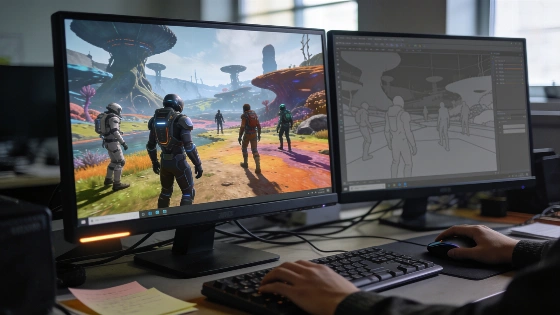
Jason Schreier has shared new details about Payback, the cancelled Destiny project built to attract younger players with a hero-focused third-person format inspired by Zelda and Genshin Impact.
Bungie cancelled a project it once saw as Destiny's future after failing to solve one of the franchise's biggest problems: bringing in players who had not already spent years in its universe. Codenamed Payback, the game would have moved Destiny into a more accessible third-person format. It was built around individual heroes rather than a standard sequel structure.
Payback's intended role
According to Jason Schreier's latest YouTube report, Luke Smith and Mark Noseworthy were leading Payback. They were the senior figures overseeing the Destiny franchise. Bungie had not decided whether to call it Destiny 3 or give it another name. The plan itself was clear. This was not meant to be a conventional continuation of Destiny 2.
The project was cancelled in summer 2024, after Destiny 2: The Final Shape launched. Until then, Bungie viewed Payback as a possible long-term successor to the existing game. Its structure would have taken the series well beyond its established first-person format.
Players would have controlled different characters from the Destiny universe. The project was described as more hero-focused. Genshin Impact was used as a comparison for that character-led approach, while Zelda was another reported source of inspiration. The comparison referred to how players might use different heroes, not to Genshin Impact's monetisation model.
The new player problem
Payback was tied to a shift in Destiny's audience. The average age of Destiny players had continued to rise. Bungie wanted a project that could reach younger audiences and people outside the existing community.
Destiny 2's treatment of older content made that harder. When Bungie vaulted older material, newcomers had fewer ways to understand the game's story. Key events and characters were no longer readily available. A new player could enter the game without the context that long-term players had built over years. That made the franchise harder to approach from the outside.
That was the main reason Payback mattered. It was more than a camera change or a new group of playable characters. Bungie was trying to lower the barrier around a live Destiny universe that increasingly relied on players knowing its history.
What the report shows
The available information describes a cancelled plan, not a released prototype that players can assess. The supplied report contains no confirmed platform list, release window, gameplay footage or pricing information. Payback's proposed third-person design and hero structure remain descriptions of Bungie's intentions. They were never delivered to the public.
The timeline is clearer. Payback was cancelled in summer 2024 after the release of Destiny 2: The Final Shape. Schreier's account also places Luke Smith and Mark Noseworthy at the centre of the project's direction. The report gives no evidence that the game reached an announced production milestone or was ready to replace Destiny 2.
Schreier is also sceptical that Bungie will make a conventional Destiny 3. His reasoning is linked to the cost of modern blockbuster development. A project of that size could cost roughly $500 to $600 million. That figure is a possible development cost, not a confirmed budget for Payback or any future Destiny project.
Destiny's reversal
The more encouraging news for existing players is Bungie's reported decision to unvault Destiny 2 content. In an official statement on 17 September 2026, Bungie said that Destiny remains "fundamental" to the studio's future. It also confirmed that work had begun to bring vaulted campaigns, locations and raids back to Destiny 2. The company said it is planning new games set in the Destiny universe. That makes clear that Bungie still treats the franchise as an ongoing foundation.
Restoring older material could address the same access problem that Payback was meant to bypass. Newcomers would get more of the franchise's history instead of finding major parts of it unavailable. Bungie also framed the reversal around its need to "earn back your trust" after years of criticism over the shrinking amount of accessible Destiny 2 content and the Destiny Content Vault.
The restoration will not be a simple technical rollback. Video Games Chronicle reported that Bungie described the process as "not as simple as restoring old files." Bringing back vaulted campaigns, locations and raids will require more than switching old assets back on. That matters when comparing the plan with Payback. Bungie is trying to make the existing game more complete while adapting older material for the current live service.
This does not recreate Payback, and it does not show that a traditional Destiny 3 is in development. It does point to a less fragmented way to maintain Destiny 2. Reintroducing content may help the live game explain its own history better than asking new players to begin after years of missing story context.
The timing also gives the reversal a clear place in Destiny 2's timeline. Bungie previously said that the Monument of Triumph update, released on 9 June 2026, was the final major content update after a nine-year cycle of regular updates. The later plan to restore vaulted material therefore changes how Bungie intends to preserve and reopen the existing game. It is not a promise of another conventional expansion schedule.
Payback's cancellation says more than a simple lost project. Bungie saw an ageing audience and a back catalogue that had become harder to enter. It explored a major redesign, then abandoned it. Destiny's next challenge is not only making more content. The studio also has to make the content it already created understandable and available. Restoring vaulted material is the more credible response because it tackles the access problem without the enormous financial risk of a new $500 to $600 million sequel.
Content vaulting removes or restricts older areas and story material from a live game. That can leave new players with less information about the world they are entering. Unvaulting reverses that effect by returning parts of the existing experience instead of replacing them with a separate release. In Destiny's case, the difference matters. Payback was a proposed structural reset, while restored Destiny 2 content is a direct attempt to make the current game easier to enter. PC Gamer also noted that the move answered player demands to bring back content that had been removed, including content players had paid for.