
Avatar Legends: The Fighting Game introduces a highly flexible combat system and a diverse character roster, but its single-player features and online lobbies reveal notable limitations that may affect long-term appeal
Avatar Legends: The Fighting Game has arrived with a bold promise: to deliver a fighting experience that captures the spirit of Avatar: The Last Airbender and The Legend of Korra, while appealing to dedicated genre fans. The result is a title that stands out for its inventive combat mechanics and character variety, but also exposes a range of surprising omissions and rough edges that hold it back from true greatness.
Combat System and Character Design
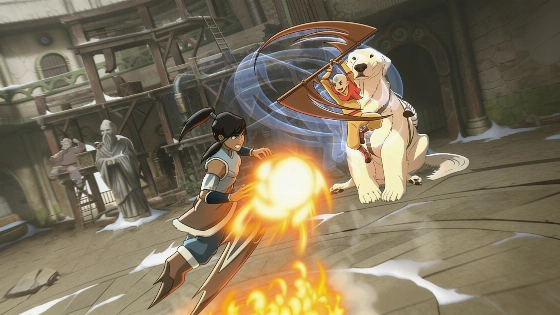
The core of Avatar Legends is its fast-paced, mobility-driven 1v1 fighting system. Players have access to three attack buttons-light, medium, and heavy-alongside a unique "Flow" button that unlocks each character's signature movement options. This system encourages creative combo expression and rewards high execution, making it one of the more demanding fighters to master. The Flow mechanic is particularly notable, as it allows characters to break conventional movement rules and chain together unpredictable attacks. For example, Aang can use his glider to attack from unusual angles, while Azula can air dash in multiple directions, and Toph manipulates the battlefield with earthbending. Each of the 12 playable fighters offers a distinct approach, ensuring that learning a new character feels genuinely fresh.
Resource management is central to the experience. The Flow meter governs advanced movement, while a segmented energy meter controls EX specials and supers. Unlike traditional fighting games where energy builds through damage, Avatar Legends limits energy gain to one point per combo, with additional points earned through character-specific feats. This design forces players to make tactical decisions about when to spend or conserve resources, adding a layer of depth to every match.
Single-Player and Story Mode
Despite its strengths in combat, Avatar Legends struggles to deliver a compelling single-player experience. The story mode, crafted by series creator Michael Dante DiMartino and writer Tim Hedrick, presents an original narrative set in an alternate universe. While the campaign features some entertaining callbacks and competent voice acting, it quickly devolves into what feels like non-canonical fan fiction, with characters behaving out of character and timelines colliding. The campaign stretches across 27 chapters, but the lack of narrative momentum means it can feel repetitive well before the halfway point.
Outside the story, single-player options are limited. The arcade mode does not allow players to adjust AI difficulty, which can make matches either trivial or frustrating depending on skill level. Training mode includes useful features such as a frame meter and hitbox display, but suffers from a cumbersome interface and lacks basic options like random block settings for practice. Combo trials and character-specific tutorials are present and do a reasonable job of teaching practical skills, but the overall package feels incomplete compared to genre standards.
Online Play and Technical Limitations
Online play benefits from smooth rollback netcode, quick rematches, and fast load times, providing a responsive experience for competitive players. However, the online suite is missing several features expected in modern fighting games. Most notably, lobbies are restricted to just two players, preventing groups from rotating matches or spectating while waiting for their turn. The absence of replay search and replay takeover further limits the ability to study high-level play or practice specific scenarios. While the developers have indicated that expanded lobby support is planned for a future update, these omissions are significant at launch.
For those interested in the technical side, Avatar Legends supports a roster of 12 main fighters, each with three selectable support characters that modify their move sets. This system, reminiscent of Mortal Kombat X's variations, adds strategic depth and replayability. However, the game's overall content offering remains modest, and the lack of robust single-player and online features may impact its longevity for players not focused on competitive play.
Character Identity and Franchise Context
One of Avatar Legends' most successful elements is its commitment to reflecting the personalities and fighting styles of its source material. Characters like Korra and Azula are designed to mirror their narrative arcs, with mechanics that reward risk-taking or precision depending on their canonical traits. This attention to detail will appeal to fans of the series, even if the story mode itself falls short of expectations. The inclusion of support characters and unique movement options ensures that each fighter feels distinct, and the game's animation quality helps bring the world of Avatar to life in a way that previous adaptations have struggled to achieve.
For those interested in the broader culture of gaming collectables and franchise crossovers, it's worth noting that the appetite for Avatar-related games remains strong. This is reflected in the enthusiasm seen at events such as Fanatics Fest, where rare items like sealed copies of Modern Warfare 2 have sparked discussion among dedicated fans-an example highlighted in our coverage of Inde Navarrette's memorable moment with a classic shooter.
Avatar Legends: The Fighting Game is available now, with its initial release focusing on delivering a technically ambitious combat system and a faithful, if limited, roster. The game's future will depend on how quickly its developers can address missing features and expand its content offering to match the expectations set by its inventive mechanics.
Understanding rollback netcode is essential for appreciating modern fighting games. Rollback netcode predicts player inputs to minimise the impact of network latency, allowing matches to feel responsive even when players are geographically distant. This technology has become a standard for competitive fighters, as it helps maintain consistent gameplay quality and reduces the frustration of input delay. However, robust netcode alone cannot compensate for missing features such as lobby support or replay tools, which are increasingly expected by the fighting game community.