
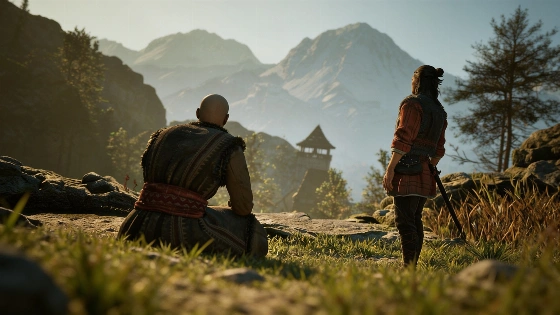
Rebel Wolves has detailed how The Blood of Dawnwalker's open world is designed to avoid filler content, focusing on meaningful activities, deep lore and handcrafted experiences that connect gameplay and narrative in new ways
The Blood of Dawnwalker, the upcoming open world RPG from Rebel Wolves, is being shaped by a clear design philosophy: every activity and location should serve a purpose beyond simply filling space. Drawing on experience from previous projects, the development team is intent on ensuring that exploration, questing and world-building are all tightly interwoven, with a focus on meaningful player engagement rather than repetitive tasks.
Designing for Meaningful Exploration
Rebel Wolves has emphasised that The Blood of Dawnwalker's open world is not intended as a checklist of generic objectives. Instead, the studio is building on the approach seen in The Witcher 3, aiming for a world where every region, quest and activity is connected to the game's lore and systems. Players are encouraged to explore not just for rewards, but to uncover stories, secrets and cultural details unique to each area. The team has stated that activities are designed to reveal new information or narrative branches, with the intention that no content feels like filler.
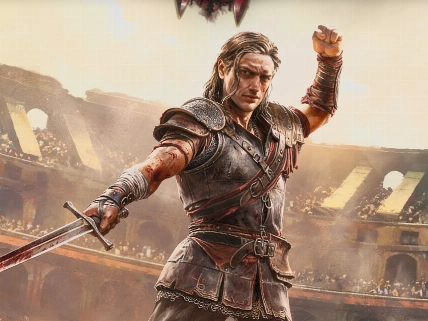
This approach is supported by a collaborative process between gameplay and narrative teams. The world of Vale Sangora, inspired by Eastern European history and folklore, is constructed to reflect a sense of place and conflict, with locations and characters shaped by the region's dark past. The protagonist, Coen, is drawn into the valley's mysteries after his family is abducted, providing a personal motivation for exploration that ties directly into the broader narrative.
Handcrafted Content and Cultural Depth
One of the standout features of The Blood of Dawnwalker is its commitment to handcrafted content. The developers have avoided reusing environmental assets such as frescoes and artworks, instead creating unique pieces for each location to reinforce immersion and authenticity. This extends to the sentient monster races, each of which has its own distinct artistic style and cultural markers. Engaging with these elements is intended to help players better understand the world and its inhabitants, and may even influence dialogue and quest outcomes.
The game's Gothic atmosphere is not limited to visual design. The day-night cycle introduces a duality to gameplay, with different opportunities and challenges available depending on whether Coen is human or vampire. At night, new areas and stories become accessible, while daytime exploration requires a different approach. This system is designed to encourage players to consider timing and strategy, rather than simply following a linear path.
Progression, Challenge and Player Choice
Rebel Wolves has clarified that The Blood of Dawnwalker will not use full auto-scaling for enemy difficulty. While some regions will present greater challenges, players are not locked out of exploring high-level areas early, provided they are willing to accept the risks. This decision is intended to preserve a sense of progression and reward for gaining experience and gear, rather than flattening difficulty across the map. The RPG structure allows for multiple approaches to quests and exploration, with player choice affecting both narrative and gameplay outcomes.
Every region is designed to have its own culture and history, informed by real-world archaeological research. The developers have drawn inspiration from ancient art and architecture, aiming to create a world that feels lived-in and layered with meaning. Environmental storytelling is supported by unique mini-boss encounters, hidden items and environmental cues such as glowing wisps, which guide players to points of interest without relying on formulaic objectives.
Release Status and Remaining Questions
The Blood of Dawnwalker is currently in development at Rebel Wolves, with no confirmed release date or final platform list at the time of writing. The studio has indicated that the game will feature a substantial open world, but has not provided specific figures for map size, quest count or total playtime. As a smaller studio, Rebel Wolves is not aiming to match the simulation scale of titles like Red Dead Redemption 2, but is instead focusing on depth and connection within its world. For those interested in how other major games have approached world-building and narrative integration, a recent analysis of Marvel's Wolverine's story and crossover design can be found in this feature on Marvel's Wolverine's SDCC panel reveals.
As development continues, further details on technical performance, platform support and release timing are expected to be announced. Until then, the available evidence suggests that The Blood of Dawnwalker is positioning itself as an open world RPG where every element is designed to matter, both narratively and mechanically.
Understanding the difference between handcrafted and procedural content is key to appreciating the design choices in The Blood of Dawnwalker. Handcrafted content refers to assets, quests and environments created individually by developers, often resulting in greater narrative depth and unique experiences. Procedural content, by contrast, is generated algorithmically, which can increase variety but may reduce the sense of intentionality and connection. In open world games, the balance between these approaches can significantly affect immersion, replayability and the overall quality of exploration.