
Saber Interactive has updated the Steam page for Rideshare "Stimulator" to include an AI disclosure, following a public disagreement between CEO Matt Karch and former lead writer Stella Sacco over the extent of AI-generated content in the game
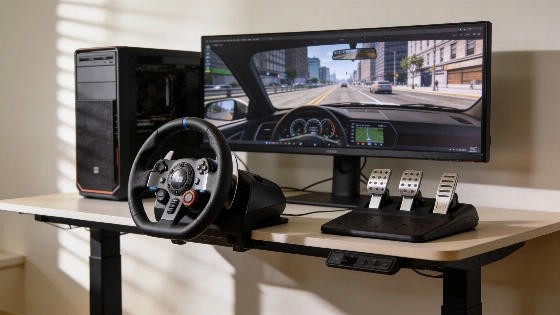
Saber Interactive has formally updated the Steam listing for its upcoming driving simulation, Rideshare "Stimulator", to clarify the extent of artificial intelligence involvement in the game's development. This move follows a public dispute between CEO Matt Karch and former lead writer Stella Sacco, who alleged she was dismissed and replaced by generative AI tools partway through the project. The controversy has drawn attention to the transparency of AI use in game production, particularly as player scrutiny of generative content continues to intensify.
AI Disclosure and Game Content
The revised Steam page now specifies that the main Campaign's story, characters, and dialogue are written by a human team, while AI tools are used for voice generation and some localisation tasks. Notably, the optional Free Ride mode is described as including AI-generated passenger missions and dialogue, with this content clearly separated from the main narrative. The disclosure also confirms a mix of radio stations in the game, some featuring human-composed music and others using AI-generated tracks, with in-game labelling to distinguish between the two.
This clarification aligns with statements from Saber Interactive representatives, who maintain that the core narrative remains human-written, while AI is used to support content that would otherwise be impractical to scale, such as the infinite passenger scenarios in Free Ride mode. The update comes after Karch initially suggested that disclosure would only be added once the AI features were finalised, but the developer has now opted for earlier transparency.
Industry Context and Player Concerns
The debate over AI-generated content in games has become increasingly prominent, with players and critics questioning the creative and legal implications of such tools. Recent examples, such as the retraction of Indie Game Awards from Clair Obscur: Expedition 33 due to AI-created textures, have heightened industry sensitivity. Legal experts have also warned studios about the potential risks of generative AI, citing unresolved questions around copyright and liability.
Within this context, Saber Interactive's decision to disclose its AI usage is likely a response to both internal and external pressures. The company has emphasised that the use of AI in Rideshare "Stimulator" was not intended to reduce staff or cut costs, but rather to enable features that would be unfeasible with human resources alone. However, the timing and scope of the disclosure have fuelled ongoing debate about best practices for transparency in game development.
Ongoing Dispute and Community Reaction
Stella Sacco, who served as lead writer before her departure, has continued to assert that her replacement by AI was not properly communicated and that the extent of generative content is greater than initially suggested. She argues that the combination of AI use and the tone of public statements from Saber Interactive's leadership could have a lasting impact on the studio's reputation. Meanwhile, CEO Matt Karch has insisted that the company is not attempting to hide its use of AI and that the integration of these tools required additional human effort rather than staff reductions.
Player reaction remains mixed, with some expressing concern over the growing presence of AI-generated assets in commercial releases. The situation echoes broader industry debates, as seen when Burnout Revenge's innovative mechanics were compared to later racing games that have experimented with procedural and AI-driven systems. The Rideshare "Stimulator" case highlights the need for clear communication about the role of AI in shaping player experiences.
Generative AI in games refers to the use of machine-learning models to create content such as dialogue, missions, voices, or music, often at a scale or speed that would be difficult for human teams to match. While these tools can expand the variety and volume of in-game material, they also raise questions about authorship, quality control, and legal ownership. As more studios experiment with AI-driven features, transparent disclosure and clear separation between human and AI-generated content are becoming essential for maintaining player trust and meeting evolving platform requirements.