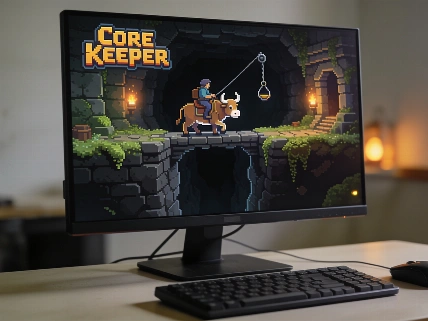

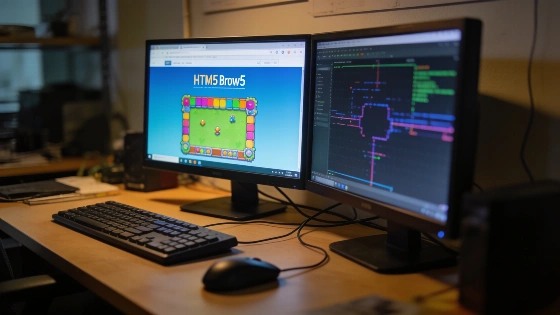
Playgama's Sandbox lets developers publish HTML5 games from Claude Code or Codex, then use player data to guide agent-led revisions. Its discovery tools put those builds in front of players.
On October 14, 2026, Playgama launched new tools that let AI-built games reach players and bring gameplay data back into development. The release includes Playgama MCP and Sandbox. Playgama also updated its Bridge SDK. Together, they connect HTML5 game uploads from compatible agents such as Claude Code and Codex with player discovery, analytics and revised builds. Playgama founder Dmitry Kachmar says the opportunity lies in improving the second version of a game and those that follow, as agents get faster at producing an initial build.
From prompt to players
Developers can ask an AI agent to publish a game through Playgama MCP, the company's integration for tools that support the Model Context Protocol. The agent uploads the build to Playgama Sandbox and returns a shareable link. Developers can use it to push revised builds, too. GamesBeat described the process as taking minutes, with no manual file upload.
Sandbox is meant to help games find players, not simply host them. Titles appear across Playgama's network. The company says games that hold players' attention and bring them back can earn more recommendations and visibility, with successful projects potentially moving to broader distribution through Playgama.com. Developers get built-in analytics, while advertising monetization is available from launch. Paid user acquisition is another option.
A listing does not prove a game can attract or keep an audience.
Playgama says its recommendations depend on engagement. The launch announcement offers no results showing how many players Sandbox games reach, or how well its discovery system performs.
Analytics drive revisions
The feedback loop goes beyond basic traffic figures. The latest Playgama Bridge SDK update adds event-level analytics. It also tracks playtime, performance and retention. Developers can mark specific moments, such as the start and finish of a tutorial, to see where players make progress or drop out.
An agent can retrieve those events through MCP and analyse the results. It can then revise the game and publish another build. Players generate fresh data on that version, which can inform the next revision. The process gives agents evidence from actual play instead of relying only on a developer's prompt or the model's assumptions.
Kachmar has pointed to the second version of a game and later releases as the bigger opportunity. Agents need real players and information about their behaviour to make better iteration decisions. The announced tools provide a way to collect that information, but Playgama has supplied no independent tests or examples quantifying whether agent-led changes improve retention.
Distribution beyond Sandbox
Playgama says successful Sandbox games can move to playgama.com and tap its broader distribution network. The company cites potential reach of up to 450 million players per month across more than 15 instant-play platforms, including YouTube Playables. That figure describes the network's potential audience, not a guaranteed audience for any individual game. Playgama also says more than 4,000 game developers use its services. Its Bridge SDK offers a single integration for distributing HTML5 games across dozens of web gaming platforms.
Discovery challenges games beyond AI-led development, too. NGB has covered the pre-launch audience around Demon Bluff. Playgama's approach brings early player access and engagement data into the development cycle.
Sandbox already offers ratings and leaderboards. Social features are also available, with more tools planned over the coming months. Playgama has not specified which services are next or when they will arrive. The announcement also gives no details on how the company handles player data.
MCP, or Model Context Protocol, lets compatible AI agents connect to external tools and services. Here, Playgama MCP gives an agent access to publishing tools and gameplay-event data. The agent still has to interpret that data and choose what to change.