
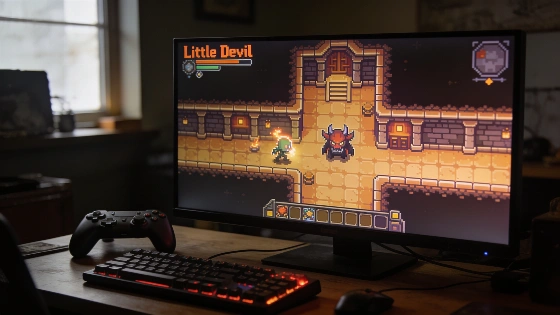
Little Devil's Steam Playtest will open to more players on 10 September 2026, offering a chance to test weapon builds and procedural dungeons in Mike "MI Pixel" Armstrong-Ingram's darkly comic roguelike
Access to Little Devil's Steam Playtest is about to widen, with developer Mike "MI Pixel" Armstrong-Ingram confirming that more players will be admitted from 10 September 2026. This move puts the spotlight on player-driven feedback as the Essex-based indie pushes for a more robust test of its pixel-art roguelike's core systems ahead of a planned October demo.
Expanded Playtest and What's Included
The upcoming wave of Steam Playtest invites will allow a broader group of players to experience the first procedurally generated dungeon and a boss fight against Gluttony. Each run is designed to last between 10 and 20 minutes, with layouts, enemy placements and build options changing on every attempt. The current build features a primary-and-secondary weapon system, a three-slot Boon mechanic that levels up with duplicates, and a mix of Soul abilities, Curses and status effects to deepen combat choices.
Players can expect puzzle rooms, a blood-sacrifice trial, and procedurally placed traps that alter the route and risk of each run. Penny's shop offers weapons, health upgrades, Boons and Soul abilities, but attacking the shopkeeper will see prices rise. Full controller support is already implemented, and content creators are encouraged to record and share gameplay from the Playtest.
Feedback Focus and Development Goals
Armstrong-Ingram is actively seeking feedback on combat balance, weapon and equipment variety, the Gluttony boss encounter, and the clarity of the Vestibule's guidance. Additional input on puzzle and trial rooms, their rewards, Penny's shop, Curses and Soul abilities will inform the next development phase. The Playtest is limited to the first level and boss, with most music and sound effects still in a non-final state. Players can request access via the Little Devil Steam page, while press and creators may apply for private keys through Fix Access.
This approach mirrors the hands-on testing seen in other indie projects, such as the recent playtest coverage of Hordeguard: Winds of the North, where early player input shaped the final gameplay loop. Here, the emphasis is on actionable feedback rather than marketing spectacle.
Procedural Design and Replayability
Little Devil's procedural generation is central to its replay value. Each run reshuffles dungeon layouts, enemy spawns and available upgrades, ensuring that no two sessions are identical. The Boon system, which allows duplicate Boons to level up, adds a layer of build experimentation, while Curses and Soul abilities introduce risk-reward decisions that can alter the flow of a run. Puzzle rooms and trial chambers further break up the action, offering rewards for those willing to engage with non-combat challenges.
While the Playtest is currently restricted to a single dungeon and boss, the developer has signalled that the full game will expand on these systems, with more content and refined mechanics expected in the October demo. For now, the focus remains on stress-testing the core loop and gathering targeted feedback from a wider player base.
Access Details and Remaining Uncertainty
Players interested in joining the Playtest can request access directly through the Little Devil Steam page, with approvals set to increase from 10 September. Content creators and press can apply for private keys, and all participants are encouraged to share gameplay footage. The Playtest does not represent the final game-music, sound effects and additional content are still in development, and only the first dungeon and boss are available at this stage.
There is no confirmed release date for the full version of Little Devil, and the October demo remains a target rather than a guarantee. The developer's willingness to open the Playtest to more players signals a commitment to iterative improvement, but the final scope and polish will depend on the quality and breadth of feedback received in the coming weeks.
Procedural generation in roguelike games refers to the use of algorithms to create levels, enemy placements and item distributions that change with every playthrough. This approach is designed to maximise replayability and keep each run unpredictable, but it also introduces challenges for balance and player guidance. Developers must ensure that randomisation does not produce unfair or unplayable scenarios, and that core systems remain accessible to both new and returning players. In Little Devil, the procedural structure is paired with build customisation and risk-reward mechanics, making player feedback on difficulty and clarity especially valuable during the Playtest phase.