
Bark Bark Games and Glowstick Entertainment have confirmed House 2 will launch on Steam this August, with console and mobile versions following in September. The sequel introduces a new art style and expanded gameplay features
Bark Bark Games and Glowstick Entertainment have officially announced that House 2, the sequel to their cult horror adventure House, will be released on Steam on 28 August 2026. The announcement confirms that players on PC will be the first to experience the next chapter in the series, while console and mobile versions are scheduled to follow one month later. The news was accompanied by a new trailer, offering a first look at the game's updated visual direction and expanded mechanics.
Release Timing and Platform Details
House 2 is set to arrive on Steam for PC players on 28 August 2026, with console and mobile editions planned for release on 26 September 2026. This staggered launch means that those on PlayStation, Xbox, Nintendo Switch, and mobile devices will need to wait an additional month after the initial PC debut. The developers have not specified whether the console and mobile versions will launch simultaneously across all platforms, nor have they detailed any platform-specific features or enhancements at this stage.
The announcement did not mention any early access period, pre-order bonuses, or special editions. Players interested in the Steam release can add House 2 to their wishlist now, but pricing and system requirements have not yet been disclosed. The game's release schedule suggests that certification and platform approval processes are still ongoing for the non-PC versions.
Gameplay and Visual Changes
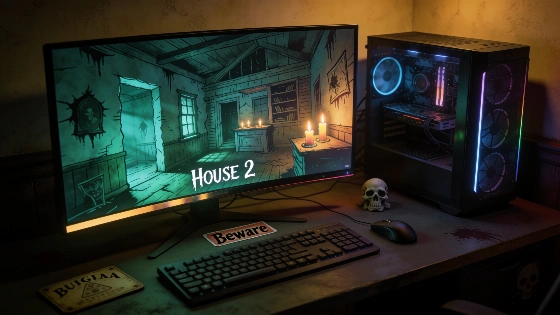
House 2 departs from the original's retro pixel art, adopting a hand-drawn storybook style that is prominently featured in the new trailer. The sequel continues the series' focus on survival horror, with players once again guiding Tabby as she attempts to escape a cursed, ever-changing house. The developers highlight that the environment will react in real time to player decisions, introducing new layers of unpredictability and replayability.
Key gameplay features include a non-linear structure with multiple endings, a variety of tools and items to experiment with, and the return of companion character Marty the snail. The game also introduces minigames inspired by classic PS1-era titles, accessible via an in-game console called the BarkStation. Death animations have been reworked to showcase elaborate, hand-drawn sequences whenever Tabby fails to survive the house's threats.
Trailer Evidence and Remaining Questions
The latest trailer, available on YouTube, provides a glimpse of the new art direction and hints at the expanded gameplay systems. However, the footage appears to be a mix of in-engine sequences and edited gameplay, rather than unbroken playthroughs. As such, it is not yet possible to assess final performance, interface design, or the full range of player choices from the trailer alone.
No information has been provided regarding frame-rate targets, resolution options, or platform-specific technical features. It also remains unclear whether the game will support accessibility options, modding, or cross-save functionality between platforms. The developers have not announced any plans for a public demo or beta ahead of launch.
Franchise and Studio Context
House 2 is developed by Bark Bark Games, the duo behind the original House, and published by Glowstick Entertainment, known for the Dark Deception series. The first House gained a following for its unpredictable horror mechanics and distinctive visual style. With the sequel, the studios are aiming to expand the formula while introducing a new aesthetic and additional gameplay systems. The release of House 2 marks the first major update to the series since the original's debut, and its staggered platform rollout reflects the increasing complexity of multi-platform certification and development in the current gaming landscape.
When a game launches on different platforms at separate times, the process is often shaped by platform-holder certification, technical optimisation, and the need to meet varying hardware requirements. Certification involves a series of checks by each platform's owner-such as Sony, Microsoft, or Nintendo-to ensure the game meets technical, content, and policy standards. This can lead to staggered releases, as developers may need to address platform-specific issues or wait for approval before launching outside PC storefronts like Steam.