
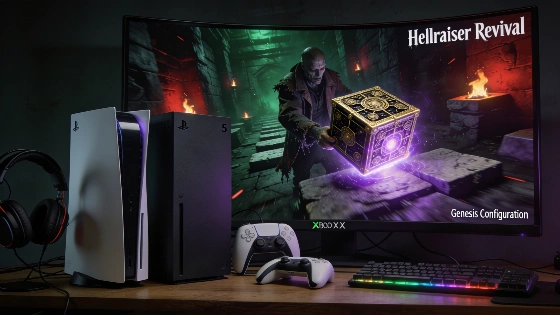
Clive Barker's Hellraiser Revival is confirmed for release on 8 October for PC PlayStation 5 Xbox Series X and Xbox Series S with Saber Interactive showcasing its Genesis Configuration mechanic and a blend of survival horror and puzzle-driven gameplay
Clive Barker's Hellraiser: Revival is now officially scheduled to launch on 8 October 2026 for PC, PlayStation 5, Xbox Series X, Xbox Series S, and, as confirmed in recent updates, Nintendo Switch 2. This expanded platform list was verified by multiple independent sources and reflects Saber Interactive's commitment to a broad release. According to Deadline, the release date was chosen to coincide with the Halloween season, with Saber Interactive's creative team describing 8 October as the "safest" slot in their calendar. The game is positioned as a survival-horror experience that refuses to dilute its source material, and retail listings already reflect the confirmed launch date, further supporting the studio's statements.
Genesis Configuration and Combat
The Genesis Configuration is not just a narrative device but a core gameplay system, allowing players to manipulate the environment in ways that go beyond standard weapon use. In combat, this means enemies can be dispatched not only with firearms but also by harnessing environmental hazards-such as drawing fire from candles and lamps to launch as projectiles. This approach is designed to compensate for enemies that can absorb significant damage from conventional weapons, making creative use of the Genesis Configuration essential for survival. Independent reports, including those cited by Deadline, highlight that the game features first-person shooter combat with a strong emphasis on the Hellraiser universe's signature atmosphere, and Clive Barker himself is directly involved in the project, ensuring it serves as a canonical extension of the franchise.
While the gunplay itself follows familiar first-person conventions, the interplay between traditional combat and environmental manipulation is what distinguishes Hellraiser: Revival from its survival-horror peers. The result is a more dynamic and unpredictable encounter design, with the Genesis Configuration acting as both a puzzle and a weapon.
Puzzles and Exploration
Exploration in Hellraiser: Revival draws clear inspiration from the Resident Evil series, with moderately intricate locations controlled by cultists, locked rooms, and item-based progression. According to Shacknews, the game incorporates elements typical of Resident Evil-style survival horror: searching for keys, unlocking new areas, and advancing the story through item-based puzzles. Players are required to search for keys and objects to unlock new areas, with the setting itself maintaining the franchise's signature blend of pleasure, pain, and depravity. The game's puzzles, while reminiscent of established survival-horror templates, are elevated by the otherworldly environments and the need to manipulate platforms or configurations to progress.
One notable sequence in the Labyrinth replaces the typical chase with a platform-manipulation puzzle, requiring several attempts to find the correct path across a chasm. This design choice reinforces the game's commitment to integrating its unique setting into core gameplay, rather than relying solely on genre conventions.
Release Timing and Platform Details
Hellraiser: Revival is confirmed for release on 8 October 2026, targeting PC, PlayStation 5, Xbox Series X, Xbox Series S, and Nintendo Switch 2. The addition of Nintendo Switch 2 was confirmed after the initial announcement, broadening the game's reach beyond the originally mentioned platforms, as reported by Explosion Network. The demo content shown at gamescom 2026 was drawn from a different section of the game than previous showings, offering a broader look at both combat and puzzle mechanics. Saber Interactive has made it clear, in interviews with Deadline and GamesBeat, that the game will not be toned down to appeal to a wider audience, instead embracing the extremes of the Hellraiser universe. Retail calendars and product listings, such as those on idealo, already display the 8 October 2026 release date, further corroborating the studio's plans.
For players tracking the evolution of survival-horror mechanics, the Genesis Configuration stands out as a meaningful addition. The game's approach to environmental interaction and puzzle integration is consistent with trends seen in other recent genre entries, as reported earlier in the context of Cronos Lazarus's combat upgrades.
What Sets Hellraiser Revival Apart
Unlike many licensed horror games that soften their tone for broader appeal, Hellraiser: Revival appears determined to deliver an uncompromising vision. According to Deadline, the project is positioned as a canonical expansion of the Hellraiser franchise, with Clive Barker's direct involvement ensuring authenticity. The combination of Resident Evil-inspired exploration, inventive environmental combat, and the Genesis Configuration's puzzle mechanics positions the game as a distinctive entry in the survival-horror landscape. The refusal to dilute the franchise's core themes is likely to resonate with long-time fans and genre enthusiasts alike.
With the release date now locked in and gameplay systems demonstrated in public builds, Hellraiser: Revival is shaping up to be a rare example of a licensed horror game that prioritises mechanical ambition over safe design. Saber Interactive's willingness to embrace the darker, more challenging aspects of the source material is a welcome change in a market often dominated by risk-averse adaptations.
Environmental interaction in survival-horror games has evolved from simple item use to complex systems that reward creative problem-solving. The Genesis Configuration in Hellraiser: Revival exemplifies this trend, acting as both a puzzle device and a combat tool. By allowing players to manipulate hazards and alter the environment, the game encourages experimentation and strategic thinking, moving beyond the static puzzles and scripted encounters that once defined the genre. This shift reflects a broader industry movement towards more interactive and player-driven horror experiences, where mastery of the environment is as crucial as combat proficiency.