
Solo developer Prof. Scherer has officially announced Game Shelver 99, a PC title combining Steam library organisation with FPS elements, scheduled to launch on Steam on 17 November 2026
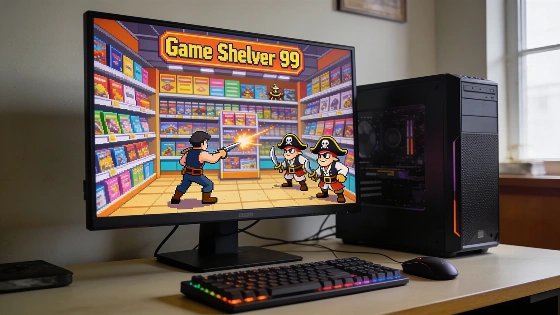
Game Shelver 99 has been officially announced by solo indie developer Prof. Scherer, targeting a PC release via Steam on 17 November 2026. The game aims to blend the satisfaction of organising a personal Steam library with the intensity of first-person shooter mechanics, all set against a nostalgic 1999 backdrop. Players will take on the role of a PC game store owner, tasked with arranging physical game boxes that correspond to their own Steam collection, while simultaneously defending the store from waves of software pirates intent on disrupting their efforts.
Gameplay Structure and Features
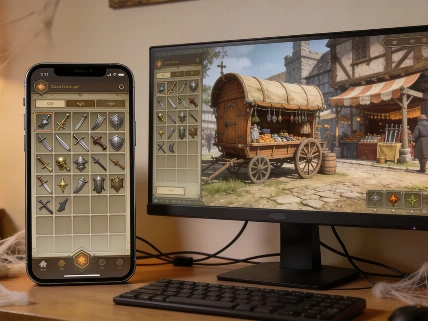
Game Shelver 99 is designed to offer a mix of peaceful organisation and action-driven defence. The core gameplay loop involves sorting and shelving games owned on Steam, with procedural store layouts and categorisation challenges that adapt to each player's unique collection. Multiple correct solutions are possible, encouraging replayability and experimentation. Players can categorise their games by genre, tags, year, developer, title, or price, and choose between a relaxed mode focused solely on organisation or a more chaotic mode where pirates invade in waves, requiring players to fend them off using FPS mechanics.
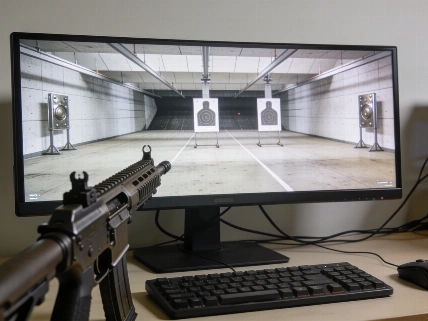
Additional features include adjustable difficulty settings, such as the number of games to shelve and the frequency of pirate attacks, as well as FPS-style power-ups like increased carry capacity, highlighting, and auto-shelving. The game supports both single-player and online co-op for up to four players, broadening its appeal to those who enjoy collaborative play or solo challenges.
Development Status and Release Details
Prof. Scherer, who has previously released two titles on Steam, is developing Game Shelver 99 as his third commercial project. The game is currently in active development, with a confirmed release date of 17 November 2026 for PC via Steam. No information has been provided regarding potential console versions or early access plans. The announcement was accompanied by a trailer and a press kit, offering a first look at the game's visual style and mechanics, though the footage primarily serves as an introduction rather than a comprehensive gameplay demonstration.
Players interested in the game's unique blend of genres can wishlist Game Shelver 99 on Steam. The developer has not yet disclosed pricing, minimum or recommended PC specifications, or details about post-launch support. The inclusion of online co-op and procedural elements suggests a focus on replayability, but the extent of content at launch remains to be clarified as development progresses.
Genre Context and Player Impact
Game Shelver 99 stands out for its unusual combination of library management and first-person shooter action, a pairing rarely seen in the current indie landscape. The procedural generation of store layouts and categorisation tasks means that each player's experience will be shaped by their own Steam library, offering a degree of personalisation uncommon in most management or FPS titles. Adjustable difficulty and the option to play in peaceful or action modes further broaden the game's accessibility.
This announcement follows a period of increased experimentation in indie game design, where developers are blending genres and mechanics in unexpected ways. For players seeking more traditional action or RPG experiences, recent updates to titles such as Solo Leveling: ARISE-highlighted in our coverage of new character additions and combat updates at our recent feature-demonstrate the breadth of options currently available on PC and other platforms.
While Game Shelver 99's premise may appear niche, its focus on personal game collections and flexible play modes could appeal to a wide range of players, from those who enjoy methodical organisation to fans of fast-paced action. The final scope of the game, including its content volume and technical performance, will become clearer as the release date approaches and more gameplay footage is made available.
Game Shelver 99's approach to procedural generation is central to its replayability. Procedural generation refers to the use of algorithms to create game content-such as store layouts and categorisation challenges-dynamically, rather than relying on fixed, hand-crafted levels. This technique allows each playthrough to feel distinct, as the game adapts to the player's own Steam library and chosen difficulty settings. While procedural systems can enhance variety and longevity, they also present challenges in ensuring that generated content remains engaging and balanced. For players, this means that no two sessions are likely to be identical, but the quality of the experience will depend on how well the procedural algorithms are tuned during development.