
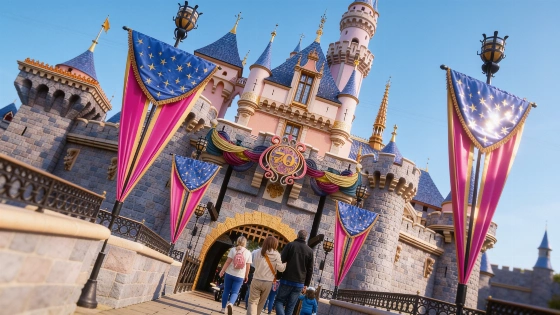
Frontier Developments, known for Planet Coaster and Jurassic World Evolution, has signed an agreement with Disney to develop a new creative management simulation game. Details remain limited, but the project could bring players closer to building their own Disney parks
Frontier Developments has secured a major partnership with Disney, setting the stage for what could become the most high-profile theme park simulation in years. The studio, already recognised for its work on Planet Coaster and Jurassic World Evolution, will now apply its management-sim expertise to a Disney-branded project. While the announcement stops short of confirming a full Disneyland park creator, the implications are clear: Frontier is being trusted with one of the world's most valuable entertainment brands, and expectations for player-driven creativity are high.
What Has Been Announced
The official statement confirms that Frontier Developments is developing a new game in collaboration with Disney. The project is described as building on Frontier's "extensive experience and proven capabilities" in the creative management simulation genre. No title, platforms, or release window have been disclosed, and the announcement does not specify whether the game will focus exclusively on Disneyland, the wider Disney Parks portfolio, or a broader Disney universe.
Frontier's track record with licensed properties is well established. The studio previously delivered Jurassic World Evolution, which allowed players to construct and manage their own dinosaur parks under the Jurassic World licence. The company also developed Kinect: Disneyland Adventures in 2011, later remastered for play without Kinect hardware. This history suggests a strong foundation for handling Disney's requirements, but the new project is being positioned as a fresh creative management experience rather than a direct sequel or remaster.
Development Context and Studio Plans
Frontier's Disney deal arrives as the studio continues to expand its portfolio. Alongside the Disney project, Frontier has confirmed that Planet Zoo 2 is scheduled for release in October, and another unannounced Planet sim game is in development. The studio is also set to publish Warhammer 40,000: Chaos Gate - Deathwatch, further diversifying its output across strategy and simulation genres.
Financial terms of the Disney agreement have not been disclosed, and there is no indication yet of the intended platforms or monetisation model. The announcement comes at a time when simulation games are enjoying renewed popularity, with player demand for creative tools and user-generated content at an all-time high. For context, the recent surge in remasters and franchise revivals-such as those reported earlier-demonstrates the commercial appetite for established brands reimagined through modern gameplay systems.
What Remains Unclear
Despite the high-profile nature of the partnership, Frontier and Disney have kept most details under wraps. There is no confirmation of gameplay footage, in-engine demonstrations, or even a working title. It is not yet known whether the game will offer a single-player experience, online sharing, or live-service elements. The absence of platform information leaves open the possibility of a multi-platform release, but this remains speculative until further announcements are made.
Players hoping for a Disneyland park creator will need to wait for concrete evidence. While Frontier's previous work suggests a focus on creative management and park-building, the scope and mechanics of the Disney project have not been detailed. The studio's statement emphasises connecting a "passionate creative community" with the Disney brand, but stops short of outlining specific features or modes.
Industry Impact and Editorial Analysis
Handing the Disney licence to Frontier Developments is a calculated move that signals Disney's willingness to trust external studios with its most recognisable assets. For Frontier, this is both an endorsement of its simulation pedigree and a test of its ability to deliver under the scrutiny that comes with a Disney partnership. The lack of hard details is notable, but the studio's history with complex management sims and licensed properties gives the announcement more weight than a typical brand collaboration.
Until gameplay is shown and platforms are confirmed, the project remains defined by its potential rather than its specifics. However, the combination of Disney's global reach and Frontier's technical expertise could set a new standard for creative management games-if the execution matches the promise. For now, the move is a clear statement of intent from both companies: Disney wants to expand its interactive footprint, and Frontier is betting that its formula can scale to the world's most iconic theme parks.
Management simulation games allow players to design, build, and operate complex systems-often theme parks, zoos, or cities-by balancing resources, guest satisfaction, and creative freedom. The genre's appeal lies in its blend of strategic planning and hands-on customisation, with modern titles increasingly supporting user-generated content and online sharing. When a major brand like Disney enters the space, the challenge is to deliver both authenticity and flexibility without sacrificing depth or accessibility. The success of such projects depends not just on brand recognition, but on the quality of the underlying simulation and the tools provided to players.