
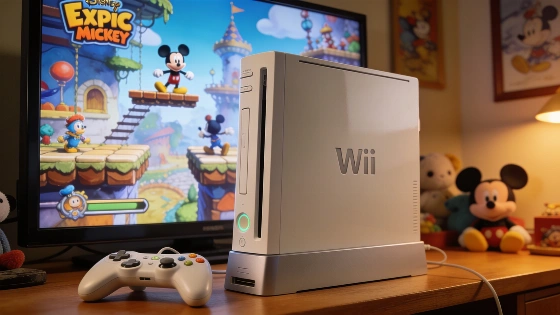
Warren Spector, director of Epic Mickey, has voiced frustration that the new Disney Plus Oswald series does not acknowledge the game or its developers for reviving the character after decades of absence
Disney's latest move to bring Oswald the Lucky Rabbit back to screens has reignited debate over the character's modern legacy. At the recent D23 event, Jon Favreau introduced a first look at his upcoming Disney Plus series blending animation and live action, with Oswald at its centre. While the series marks Oswald's highest-profile return in years, it has also prompted renewed discussion about the character's journey back into Disney's fold and the creative teams responsible for his revival.
Epic Mickey's Influence on Oswald's Return
Oswald the Lucky Rabbit, originally created by Walt Disney before the advent of Mickey Mouse, was out of Disney's hands for decades due to rights held by Universal. In 2006, then-Disney president Bob Iger led negotiations to reacquire Oswald, paving the way for his reintroduction in video games. This culminated in Epic Mickey, directed by Warren Spector and developed by Junction Point, which gave Oswald his first Disney role since 1928. The game not only re-established Oswald as a central character but also introduced new elements, such as giving Ortensia her name and personality, and allowed Oswald to speak for the first time in 2012's Epic Mickey 2: The Power of Two.
Concerns Over Creative Recognition
Following the reveal of the Disney Plus series, Warren Spector expressed disappointment on LinkedIn that the new show appears to treat Oswald's appearance as a debut, overlooking the significant role Epic Mickey played in reviving the character. Spector highlighted that his team's work at Junction Point was instrumental in shaping Oswald's modern identity, including narrative developments and character relationships that did not exist in earlier Disney material. He argued that the creative contributions of the game's developers deserve recognition before the character's history is rewritten by new adaptations.
Series Plot and Franchise Context
Early reports suggest the Disney Plus series will explore themes similar to those in Epic Mickey, with Oswald confronting his long absence and the rise of Mickey Mouse. However, the new series is said to reverse the dynamic, placing Oswald in the real world rather than Mickey entering Oswald's domain. This approach echoes the narrative tension found in the games, but it remains unclear whether the series will directly reference the events or creative groundwork established by Epic Mickey. The situation is reminiscent of how comic creators have sometimes gone uncredited in major adaptations, as discussed in NGB's coverage of the impact of Batman: Arkham Asylum on licensed games.
Oswald's journey from forgotten mascot to a central figure in both games and now streaming television highlights the complex relationship between original creators, modern developers, and new adaptations. The debate over credit is not unique to Disney or Oswald, but reflects broader industry questions about how creative contributions are acknowledged as franchises evolve across media.
Understanding the distinction between a character's original creation and their modern reinvention is essential in gaming and entertainment. Remakes, reboots and adaptations often rely on the groundwork laid by earlier teams, yet credit can be inconsistently assigned. For players and viewers, recognising these layers of creative input helps clarify how beloved characters are shaped by both history and contemporary development.