
Remedy Entertainment's CONTROL Resonant overhauls the franchise with a new protagonist, a melee-driven combat system and a sprawling open-world Manhattan but faces balancing and content quality challenges in its current review-in-progress state
Remedy Entertainment has thrown out the rulebook for its latest sequel, CONTROL Resonant, opting for a radical overhaul that trades the original's contained, supernatural corridors for a sprawling open-world Manhattan and a protagonist switch that puts Dylan Faden at the centre of the action. This is not a safe sequel. Instead, it's a high-stakes gamble that redefines the series' genre, scale and combat philosophy in one move. According to official trailer materials and the PlayStation Blog Japan, CONTROL Resonant is developed and published by Remedy Entertainment, with its global release set for September 24, 2026 on PS5, Xbox Series X|S, and PC, and a physical edition for Japan following on October 15, 2026.
Major Changes to Gameplay and Structure
CONTROL Resonant is set seven years after the events of Control, with Dylan Faden awakening from a coma to find the Federal Bureau of Control in disarray. The extradimensional threats known as the Hiss and Mold have broken free, and Jesse Faden-previously the player's avatar and now the missing Director-has vanished. The Board appoints Dylan to close dimensional Faults, granting him new abilities and forcing him to confront the fractured relationship with his sister. As confirmed by IGN and the PC Gaming Show documentary, the narrative specifically centers on Dylan's emergence from a seven-year coma, marking a significant shift in focus from Jesse to her brother.
The most immediate shift is the move to a large open-world Manhattan, a setting packed with secrets and puzzles that encourage exploration far beyond the original's labyrinthine Oldest House. This new structure is designed to reward curiosity, but it also raises the stakes for content quality and pacing, especially as the game's side content and supporting characters have yet to stand out in the current review-in-progress. PC Gamer and Kotaku both highlight that the action now unfolds in a distorted version of Manhattan, confirming the departure from the Oldest House's closed environments to a more open or semi-open world structure.
Melee-Focused Combat and Technical Ambition
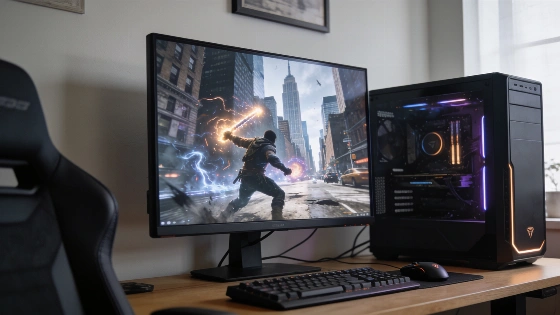
Remedy has abandoned the original's telekinetic gunplay in favour of a melee-centric combat system inspired by the likes of Devil May Cry. Players wield the Aberrant weapon, which can be customised with different forms, and unleash paranatural abilities that are fuelled by aggressive close-quarters attacks. The result is a faster, more relentless combat loop that demands constant movement and precision. Multiple independent reviews and official video materials, including those from PC Gamer and Polygon, describe CONTROL Resonant as an action RPG with a strong emphasis on melee combat and paranatural abilities, rather than the telekinetic shooting of the first game.
However, this new approach is not without its drawbacks. Some enemy encounters are drawn out by large health pools, leading to pacing issues and a sense that the game's balancing is still in flux. The technical ambition is clear: CONTROL Resonant runs on Remedy's Northlight Engine and delivers impressive visuals on PC, especially with path tracing enabled. Yet, technical issues such as inconsistent frame pacing remain unresolved, highlighting the risks of pushing the engine to its limits. According to early reviews and developer documentaries released during the final media cycle before launch, these technical and balancing challenges are a key focus for critics as the game approaches release.
Narrative Direction and Content Quality
The narrative pivots around Dylan's attempt to repair the Bureau and uncover the truth behind Jesse's disappearance. As Dylan closes Faults and unlocks new powers, the story delves into the siblings' shared past and the consequences of their choices. While the main plot is ambitious, the supporting cast and side activities have yet to reach the same level of intrigue or polish, leaving the open world feeling uneven in places. As reported by Kotaku and IGN, the game's story is tightly linked to Dylan's personal journey and the aftermath of his long absence, reinforcing the sequel's new narrative direction.
Remedy's decision to focus on Dylan rather than Jesse marks a significant tonal shift, and the success of this gamble will depend on whether the game can sustain its momentum and deliver meaningful content across its expanded world. The review remains in progress due to the sheer scale of the game, with further updates planned as more of the experience is completed. Official launch trailer materials and Remedy's statements confirm that CONTROL Resonant is strictly a single-player experience, with no multiplayer focus, underscoring the studio's commitment to narrative-driven design.
Evidence and Remaining Uncertainty
CONTROL Resonant is built on a smaller budget than its predecessor but attempts to compensate with a much larger world and a complete genre shift. The game's technical strengths are most visible on PC, where path tracing showcases the Northlight Engine's capabilities, though frame pacing issues persist. The combat overhaul is bold, but the current enemy balancing and lack of standout side content suggest that further refinement is needed before a final verdict can be reached. PC Gaming Show documentary and major review outlets confirm that, as of September 18, 2026, the game was in its final media cycle, with launch trailers, developer documentaries, and early reviews available, indicating the imminent release and broad industry attention.
For players tracking the evolution of ambitious sequels, the risks Remedy has taken here are reminiscent of the creative swings seen in other recent projects, such as those reported earlier in the indie space. CONTROL Resonant's willingness to disrupt its own formula is clear, but whether this will translate into lasting success remains an open question until the review is complete. Remedy's transformation of the series is both its greatest strength and its most significant risk, and the coming weeks will determine if this gamble pays off for players and the studio alike.
Understanding frame pacing is crucial when evaluating CONTROL Resonant's technical performance. Frame pacing refers to the consistency of time intervals between each rendered frame. Even if a game achieves a high average frame rate, uneven frame pacing can cause visible stutter and disrupt the sense of smoothness, especially during fast-paced combat. Remedy's Northlight Engine delivers impressive visuals, but unresolved frame pacing issues can undermine the experience, making technical optimisation as important as raw graphical fidelity for players seeking a responsive and immersive game world.