
Former Naughty Dog director Bruce Straley named God of War Laufey while criticising repetitive AAA design. He later apologised to Sony Santa Monica and said his comments had been taken out of context.
Bruce Straley has apologised to the God of War Laufey team after naming Sony Santa Monica's upcoming PlayStation 5 game in a wider criticism of AAA design. His argument was aimed at the limited range of actions in many games, not at the developers themselves. Still, the example pulled one of PlayStation's biggest upcoming releases into an unwanted controversy.
Why Straley apologised
Speaking to EDGE, Straley said modern triple-A games often feel boring to him despite their remarkable visual quality. He called God of War Laufey technically astonishing, but said its moment-to-moment activity did not excite him.
He was not judging the game's final quality. The title has not been released. Instead, he used it to support his concern that large productions are struggling to introduce genuinely fresh ideas.
Straley later addressed the developers directly on X. He said he did not want to drag the Santa Monica Studio team into "unnecessary negative attention". He also acknowledged that his example had been used out of context for clickbait.
In the same clarification, he wrote, "I was trying to illustrate an industry concern." He made clear that he meant to discuss a problem affecting the wider AAA sector, not pass judgment on one unreleased game. Push Square reported that the apology was aimed at the team whose work had become tied to the controversy.
The reaction also reflected Straley's connection to PlayStation's development culture. He is a former Naughty Dog veteran best known for directing Uncharted 2, Uncharted 4 and The Last of Us. He left Naughty Dog nine years ago and now works on an indie puzzle platformer called Coven of the Chicken Foot.
That reputation helped amplify the response. GamesRadar+ also pointed to the difference between Straley's criticism of the industry and any judgment of Santa Monica Studio's specific work.
A wider industry argument
EDGE's interview was a group discussion about what is wrong with the games industry and how it might be repaired. Straley's comments were part of a broader conversation about design priorities, production scale and the risks of repeating familiar formulas.
The God of War example became the headline because it gave the argument a recognisable target. His point was meant to cover the AAA sector as a whole.
His distinction between visual achievement and interactive variety is the most useful part of the exchange. A game can involve enormous artistic and technical effort while still relying on familiar actions such as moving through spaces or fighting enemies during a cinematic adventure.
Straley did not say visual fidelity has no value. He said it cannot, on its own, provide the new forms of interaction he believes major productions are missing.
That is a legitimate design criticism. Tying it to an unreleased game makes the evidence incomplete, though. The available material establishes Straley's opinion and his later apology. It does not establish that God of War Laufey is mechanically repetitive, that its campaign lacks innovation or that Sony Santa Monica has failed to answer the criticism.
As PC Gamer reported, the discussion remained focused on Straley's apology and his broader concern about stagnation in the AAA segment.
Why Laufey became the example
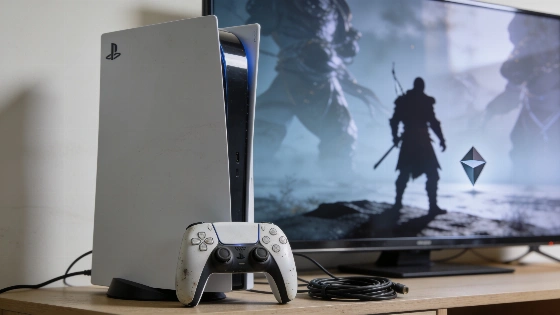
God of War Laufey was already drawing attention because of its reported creative direction before Straley mentioned it. The source identifies controversy around the change from Kratos to Laufey as protagonist and the presence of a cosmic cube companion.
Those details made the game an easy subject for discussion. They do not show how the final game will play or whether its design will justify concerns raised before launch.
Straley's intervention added pressure without providing usable evidence about the game itself. The supplied material does not describe a response from Sony Santa Monica. It also contains no gameplay testing, review access or independent performance measurements.
Public reporting available at the time recorded no response from Sony Santa Monica. Readers can judge Straley's comments as an industry critique. They cannot treat them as a review of God of War Laufey.
The release information is clear. God of War Laufey is scheduled for 16 February 2027 and will launch exclusively on Sony's PlayStation 5 consoles. The source provides no price, editions, technical modes, frame-rate targets, resolution targets or confirmed details about the game's core systems.
What players can actually assess
For now, players can assess the public discussion and any official material released before launch. Straley's credentials explain why his comments attracted attention. His apology also makes clear that he did not intend to make Sony Santa Monica the target of a personal attack.
Neither point changes the game's status as an unreleased project.
The stronger conclusion is that the dispute shows a weakness in the way AAA design is discussed. Visual polish is easy to show in a screenshot. The quality of a game's actions depends on sustained interaction across a complete build.
Straley is right to separate those questions. Naming God of War Laufey before its systems could be properly examined turned a useful industry criticism into an avoidable distraction.
In game design, "verbs" means the actions available to the player and the ways those actions combine into meaningful experiences. That distinction is central here. Spectacular pixels can show rendering work, but they cannot prove inventive play on their own.
Straley's apology was justified. His underlying criticism deserves a broader target. God of War Laufey should be judged on its finished interaction, not used as evidence for a problem that has not yet been tested against it.