
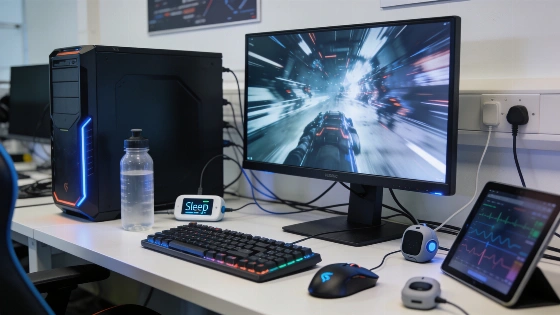
British Esports has signed a Memorandum of Understanding with Cellular Fitness. The partnership will support athlete education, planned trials and events at the National Esports Performance Campus in Sunderland.
British Esports is adding cellular fitness and health tracking to its player development work through a new partnership with Cellular Fitness. The UK-based company is now the official cellular fitness, hydration and recovery partner of British Esports. Team players will have access to education, training and sports science support.
British Esports describes itself as the UK's national esports federation. That makes this a federation-level player performance initiative, not a club-only sponsorship. The arrangement is a Memorandum of Understanding, not a completed commercial performance programme.
What the agreement covers
The two organisations plan to develop education and training programmes for esports athletes around the world. The subjects will include the Cellular Fitness protocol, performance, wellbeing, fitness longevity, hydration, recovery, sleep, travel and brain fitness.
The scope goes beyond hydration. It covers the daily factors that can affect preparation, concentration and recovery during an esports schedule.
The partnership is not being presented as a completed performance programme with proven esports outcomes. It also includes planned trials to gather data from gamers and professional esports athletes. The announcement does not report esports-specific trial results. Any performance claims will depend on the findings of that future work.
The programme will include webinars and events at the National Esports Performance Campus in Sunderland. Planned topics include focus, brain fitness, cellular hydration, travel, sleep, recovery and the demands of maintaining performance over time. The Sunderland campus gives the partnership a physical base instead of making it an online education project alone.
What players may gain
Cellular Fitness already works with professional footballers and other athletes. British Esports says the company also works with athletes in football, rugby, cycling and boxing. That positions its protocol as a cross-sport performance product before any esports-specific results are available.
The protocols are described as potentially supporting focus, brain function, stamina, strength, hydration, deep sleep, repair and brain fitness. The supplied announcement does not provide measured results from esports players.
That distinction matters. Esports performance can involve rapid visual processing, fine motor control, hand-eye co-ordination, reaction time and sustained concentration. A claim that a hydration or recovery protocol improves those skills needs sport-specific evidence, not just a list of intended benefits.
British Esports President Chester King said the partnership aims to "strengthen our approach to player performance, health and wellbeing". He also said it should improve understanding of esports skills such as hand-eye co-ordination, fine motor skills, reflexes, reaction times and cognitive focus.
British Esports says health tracking and trials could help it study physical and cognitive development alongside reflexes, reaction times, focus, telemetry and fine motor control. The stated aim is to use that information to support players more effectively and track how performance changes over time.
Campus and research plan
The Sunderland campus gives the partnership a base for events and training. British Esports already lets teams use the National Esports Performance Campus for bootcamps. It also offers a range of esports qualifications. The new programme can therefore feed into existing education and preparation work instead of operating as a standalone brand exercise.
The announcement follows a separate agreement signed in March 2026 between British Esports and Loughborough University. That partnership is intended to strengthen UK esports research insight, education, training, sports science, high-performance programmes and professional standards across the esports ecosystem.
British Esports has also stated an ambition to create an elite player and team development programme using performance science, coaching and technology. Its wider objective is to help Great Britain become one of the leading esports nations and compete successfully on the world stage.
The announcement gives only two dates. One is the March 2026 Loughborough University agreement. The other is the October 1st 2026 Cellular Fitness announcement. No trial sample size, performance benchmark, publication date or player outcome has been supplied.
Eyedrate GG and the evidence gap
Cellular Fitness is also preparing to launch Eyedrate GG for esports athletes. The company's stated focus is the visual demands of competitive gaming and the need to maintain concentration from the start of a match to its finish.
That product shows why the partnership should be read as a research and education initiative, not a guaranteed competitive advantage. The announcement explains the intended use but does not disclose trial findings, independent testing, product specifications or evidence showing how it changes match performance.
For players and teams, the value will depend on what the planned trials measure and whether the findings are published in a form that can be assessed. British Esports has facilities and partnerships that could make performance support more systematic. The hard proof is still ahead.
Cellular fitness describes an approach that starts with the condition of cells and links it to energy production, hydration, repair and recovery. Health tracking can record changes in selected measures. It cannot, by itself, prove that one protocol caused a better reaction time or a stronger competitive result.
This partnership is a step towards evidence-led esports preparation. Its credibility will depend on transparent trials and usable data, not on claims about cellular performance.