

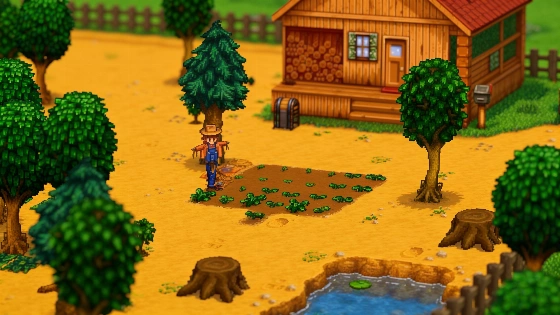
IGN has launched The Long Game, a new series spotlighting early investments in popular titles. The debut entry focuses on Stardew Valley, breaking down which spring crops offer the strongest returns for new players aiming to build wealth efficiently
Stardew Valley has marked its tenth anniversary, and its enduring popularity continues to attract new players to its blend of farming, life simulation and gentle progression. For those just starting out, the early game can feel overwhelming, especially when it comes to choosing which crops to plant for the best financial return. With limited funds and time, making the right decisions in your first spring can set the tone for your entire playthrough.
Understanding Stardew Valley's Early Economy
Stardew Valley begins with players inheriting a neglected farm and a handful of parsnip seeds. The game's economy is built around earning gold to upgrade tools, expand your home and unlock new features. While fishing and mining offer alternative income streams, crop selection remains the most reliable way to generate steady profits in the opening weeks. Each crop has its own cost, growth time and selling price, and most are tied to specific seasons-meaning poor planning can leave you with withered plants and wasted investment when the calendar turns.
Spring is the starting season, lasting 28 in-game days. Most crops will only grow during their designated season, so timing is critical. Players are encouraged to check the in-game TV for weather forecasts, as rain can save time on watering, and to craft scarecrows and sprinklers as soon as possible to protect and automate their fields. These small optimisations can make a significant difference in your first month.
Top Four Crops for Early Investment
Among the available spring crops, four stand out for their cost-effectiveness and potential to accelerate your farm's growth. Parsnips are the default starter, with seeds provided for free and additional packets available for 20 gold each. They mature in four days and sell for 35 gold, offering a quick turnaround and a near-doubling of your initial outlay. Their short growth cycle makes them ideal for maintaining a consistent cash flow while you experiment with other options.
Potatoes require a higher upfront investment at 50 gold per seed but sell for 80 gold, and each harvest has a 20% chance to yield an extra potato. This bonus can add up quickly, especially when planted in bulk. Cauliflower seeds cost 80 gold and take 12 days to mature, but the payoff is substantial: each head sells for 175 gold, making it one of the most lucrative spring crops if you plan your planting schedule carefully. Finally, strawberries are only available during the Egg Festival on the 13th day of spring, costing 100 gold per seed. While expensive, they regrow every four days after their initial eight-day growth, allowing for multiple harvests before the season ends and even greater returns in subsequent years if you save seeds for the next spring.
Practical Tips for Maximising Returns
To get the most out of these crops, players should stagger plantings and diversify their fields. Planting parsnips alongside slower-growing crops like cauliflower ensures a steady income while waiting for larger paydays. Potatoes' chance for double harvests can be further exploited by planting as many as your budget allows. For strawberries, it's wise to save some seeds for the following year, as planting them on the first day of spring allows for up to six harvests with Speed-Gro fertiliser, dramatically increasing profits.
It's also important to remember that most crops will die when the season changes, so avoid planting seeds that won't mature before the end of spring. Efficient use of scarecrows and sprinklers can reduce losses and free up time for other activities, such as fishing or mining, which can supplement your income. For those interested in broader strategies for optimising play, NGB's coverage of streamlined board game adaptations, such as the recent Diplomacy: The Golden Blade card game, offers further insight into balancing risk and reward in gaming systems.
What Remains Uncertain
While these four crops are widely regarded as the most efficient for early-game profit, player experience may vary depending on playstyle, weather patterns and random events. The precise number of harvests achievable for strawberries, for example, depends on planting date and fertiliser use. Additionally, the value of crops can shift if players choose to process them into artisan goods later in the game, though this requires further investment in equipment and time. As with many systems in Stardew Valley, experimentation and adaptation remain key to long-term success.
Seasonal crop planning is central to Stardew Valley's gameplay loop. Each crop's growth time, cost and selling price must be weighed against the risk of withering at the season's end. Players who master this balance can accelerate their farm's development, while those who misjudge timing may face setbacks. Understanding these mechanics is essential for anyone aiming to build a thriving farm from humble beginnings.