
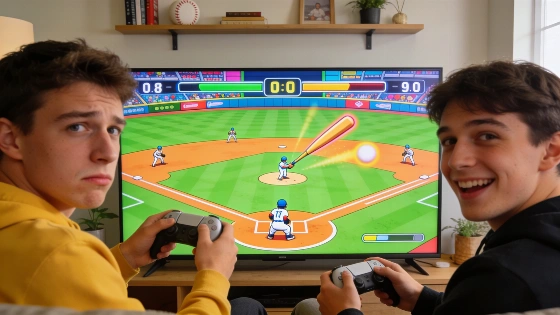
Mega Cat Studios' reboot of Backyard Baseball brings back the classic cast and visual charm, but its reworked mechanics have led to a lopsided experience, with offence dominating and defensive play left underdeveloped
The return of Backyard Baseball under Mega Cat Studios has generated considerable interest, promising a modern take on a much-loved series. While the game's presentation and roster pay clear homage to the originals, the reboot's core gameplay changes have introduced significant balance issues. The result is a nostalgic package that struggles to deliver the satisfying back-and-forth that defined earlier entries.
Gameplay Changes and Their Impact
Backyard Baseball's new mechanics have shifted the balance of play, making batting far easier than in previous versions. The swing spot assist now reveals the exact location where the ball will cross the plate, removing much of the guesswork and challenge that once made successful hits rewarding. This adjustment has led to a surge in home runs and line-drive singles, with matches frequently devolving into high-scoring affairs. The difficulty spike at the highest setting, Backyard Legend, is largely negated by switching to mouse and keyboard controls, which allow players to keep up with faster pitches. Disabling the swing assist, meanwhile, makes hitting breaking balls nearly impossible, leaving players to choose between an overly forgiving or punishing experience.
Pitching has also been overhauled, with a new release-timing system that, once mastered, allows even average pitchers to dominate. This has resulted in frequent blowouts, with scores such as 26-0 or 19-3 not uncommon. The absence of a mercy rule means matches can drag on long after the outcome is clear, undermining the competitive tension that should drive each game. Fielding, meanwhile, has been simplified to the point where defensive play feels sluggish and unresponsive, with slow throws and limited player control making it difficult to execute outs or turn double plays.
Defensive Limitations and AI Issues
Defensive play in the reboot is notably underdeveloped. Players cannot manually chase down line drives or pop flies, and fielders are slow to react, often lobbing the ball rather than making decisive throws. Even with errors disabled, the defensive side of the game feels passive, with little opportunity for highlight-reel plays or tactical decision-making. This imbalance is compounded by AI that fails to adapt to the player's strategies, resulting in matches that lack the competitive edge found in local multiplayer. The delayed online PvP mode, which was not available at launch, further limits the game's ability to offer a dynamic challenge for solo players.
Over the course of a season, the lack of defensive highlights and the predictability of high-scoring games can make League Play feel repetitive. The absence of a mercy rule or more nuanced difficulty settings means that matches often become one-sided, with little incentive to engage deeply with the defensive systems.
Roster, Unlocks and New Features
Despite its gameplay shortcomings, Backyard Baseball's roster is a clear strength. All 30 original kids return, alongside a selection of MLB legends and generic players from earlier entries. The Card Shop feature allows players to unlock new characters, items and offensive moves using in-game Tokens, with no real-money microtransactions present. Special characters require specific in-game achievements to unlock, though the game does not always make these requirements clear from the outset.
The new Wiggle Ball mode introduces a fast-paced 4v4 variant using a wiffle ball, offering a change of pace from standard matches. However, the same issues with hitting and pitching balance persist, making outcomes predictable once players adjust to the new mechanics. The improved art and animations are a notable upgrade, and the REMIX Cards, featuring unique character artwork, add a layer of collectability for long-time fans.
What Remains Uncertain
At present, the most significant unknown is how the delayed online PvP mode will affect the game's long-term appeal. If competitive online play can introduce more varied and adaptive opposition, some of the balance issues may be mitigated. However, until this feature is released and tested, the solo experience remains limited by AI shortcomings and a lack of defensive depth. It is also unclear whether future patches will address the absence of a mercy rule or introduce more granular difficulty options to bridge the gap between the current extremes.
Backyard Baseball's reboot demonstrates the risks of over-optimising classic mechanics without preserving the balance that made the originals enduring. While the game's visual presentation and roster are strong, the core gameplay loop is undermined by systems that favour offence at the expense of meaningful defence, leaving the experience feeling incomplete for both returning fans and new players.
Understanding the difference between gameplay balance and mechanical optimisation is crucial in sports games. Balance ensures that offence and defence offer equally rewarding and challenging experiences, while optimisation can sometimes tip the scales too far in one direction. In Backyard Baseball's case, the pursuit of streamlined mechanics has led to a loss of competitive tension, highlighting the importance of careful tuning and player feedback in modern reboots.