
Ubisoft developers have revealed the technical and design challenges behind Assassin's Creed Black Flag's seamless naval gameplay, explaining why the transition from mission-based sailing in Assassin's Creed 3 was far from straightforward
Assassin's Creed IV: Black Flag is widely recognised for its ambitious open-world sailing, but the journey to deliver a seamless naval experience was anything but smooth. Ubisoft developers have now detailed the significant technical and design obstacles encountered as they moved beyond the more contained naval missions of Assassin's Creed 3. The transition required not only reusing existing systems but also expanding them to support a much larger, uninterrupted Caribbean world, which introduced a host of new complications for the development team.
From Mission-Based to Open Seas
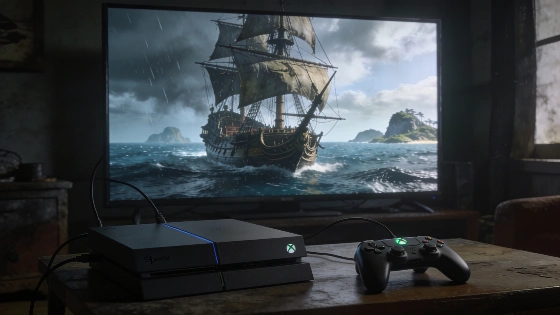
While Assassin's Creed 3 introduced players to naval combat through structured missions, Black Flag aimed to make sailing a core, continuous part of the experience. This shift meant that systems originally designed for isolated encounters had to be reworked to function across a persistent, explorable ocean. Developers faced early setbacks as they attempted to adapt the previous game's mechanics to a far more ambitious scale, revealing that the process was far more complex than simply porting over existing code or assets.
The scale of Black Flag's world required new solutions for streaming environments, managing ship AI, and ensuring smooth transitions between land and sea. These technical demands led to what the team described as 'teething difficulties', with numerous iterations needed before the seamless sailing vision could be realised. The result was a game that allowed players to move freely between islands, engage in ship battles, and explore without loading screens-a feature that set a new standard for the series at the time.
Technical and Design Challenges
One of the most significant hurdles was ensuring that the expanded sailing mechanics did not compromise performance or player immersion. The development team had to address issues such as dynamic weather, ocean simulation, and the integration of ship combat with on-foot exploration. Balancing these elements required extensive testing and optimisation, particularly as the game targeted both previous-generation and then-current hardware.
Ubisoft's approach involved reusing as much of the existing technology as possible, but the sheer increase in world size and complexity meant that many systems had to be rebuilt or heavily modified. The seamless transition between ship and land, in particular, demanded careful attention to loading and memory management. These efforts ultimately contributed to Black Flag's reputation for technical achievement, even as the process exposed the limitations of the tools and hardware available at the time.
Legacy and Franchise Impact
The innovations and lessons from Black Flag's development have continued to influence Ubisoft's approach to open-world design. The game's seamless sailing mechanics laid the groundwork for future projects, including the long-delayed Skull and Bones, which spent nearly a decade in development before its eventual release. More recently, the technical foundation established by Black Flag has informed the creation of Assassin's Creed Black Flag Resynced, demonstrating the enduring appeal of piracy and naval exploration within the franchise.
Black Flag's distinct identity within the Assassin's Creed series is often cited as a reason for its lasting popularity. Its focus on pirate fantasy and open-ended exploration set it apart from other entries, attracting players who might not have been drawn to the series' traditional stealth and historical intrigue. The game's success also contributed to a renewed interest in the franchise, as seen when player numbers surged for Assassin's Creed Odyssey following the release of The Odyssey film, a trend discussed in our coverage of Odyssey's player resurgence.
Delivering a seamless open-world experience in a game like Assassin's Creed IV: Black Flag required more than just technical ambition. The process involved overcoming hardware limitations, rethinking how environments are streamed, and ensuring that gameplay systems could operate continuously without interruption. In open-world games, seamless transitions between different gameplay states-such as sailing, combat, and exploration-depend on efficient memory management and dynamic loading. These challenges are magnified when targeting multiple console generations, making Black Flag's achievement a notable milestone in the evolution of large-scale game design.