
The Tetris Company has issued a public response after the Trump administration launched a government-hosted clone game called Build the Wall, distancing itself from the project and warning of copyright concerns
The Tetris Company has moved swiftly to distance itself from a new government-hosted game, Build the Wall, after the Trump administration published the title on its official Arcade.Gov website. The company's response was unambiguous: it does not endorse the game, has no involvement in its creation, and is now reviewing the situation for potential copyright infringement.
Arcade.Gov and the Build the Wall Game
Arcade.Gov, a new website launched by the Trump White House, features a collection of browser-based minigames. Among these is Build the Wall, which presents players with the task of defending a border from an incoming "horde"-a premise that has drawn immediate criticism for its political messaging and for closely mimicking the mechanics and visual style of Tetris. Other games on the site include Flappy Bill and Rio Run, both of which are thinly veiled clones of established mobile titles.
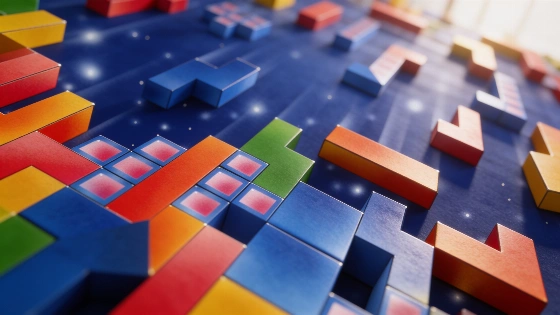
The description for Build the Wall leaves little doubt about its intent, instructing players to "protect the border from the coming horde." The game's mechanics and presentation have been widely recognised as derivative of Tetris, with falling blocks and line-clearing gameplay at the core. The site went live on 3 September 2026 and currently hosts five games, with a promise of more to follow.
Tetris Company's Official Response
Within hours of the site's launch, the Tetris Company issued a statement across its official channels, making clear that it had no role in the development or approval of Build the Wall. The company emphasised its longstanding commitment to bringing people together through play, not dividing them, and highlighted that the core objective of Tetris has always been about clearing lines, not constructing barriers.
In addition to distancing itself from the project, the Tetris Company confirmed it is taking the matter seriously from a copyright perspective. While no legal action has been announced at this stage, the company's public stance signals that it is actively reviewing the situation. The company's head of communications reiterated to industry press that Tetris has always been about connection and community, not exclusion.
Community and Industry Reaction
The launch of Arcade.Gov and its politically charged games has triggered a wave of backlash online. Players and industry observers have called out the use of established intellectual property for partisan messaging, with particular attention on Tetris and Sega, whose games were referenced in the site's promotional material. While Sega has yet to comment, Tetris fans have been vocal in their support for the company's response, noting that the spirit of the original game is fundamentally at odds with the message of Build the Wall.
Other gaming companies have faced similar issues in recent years, with the Trump administration previously referencing the Halo series and Pokémon in official posts. In those cases, Microsoft remained silent, but The Pokémon Company and the actor behind Master Chief both objected publicly. The current situation with Build the Wall has reignited debate over the use of gaming IP in political contexts, especially when the original creators have not given consent.
Copyright and Legal Uncertainty
At present, the Tetris Company has not initiated legal proceedings against the White House or Arcade.Gov, but its statements make clear that copyright infringement is a central concern. The company's review process is ongoing, and it has not ruled out further action. The legal complexities of pursuing a case against a government-hosted project remain significant, particularly given the political context and the potential for claims of fair use or parody.
For now, the Build the Wall game remains live on Arcade.Gov, but its future is uncertain as the Tetris Company weighs its options. The situation is being closely watched by both the gaming industry and legal observers, as it could set a precedent for how intellectual property is treated in politically motivated projects hosted by official government platforms.
Copyright in gaming covers not only the code and assets of a title, but also its core mechanics and distinctive presentation when they are sufficiently original. While many games borrow ideas from predecessors, direct clones that mimic gameplay, visual style, and branding can cross the line into infringement. The outcome of this dispute may hinge on whether Build the Wall is judged to have copied protected elements of Tetris, and whether the government's use of the game is shielded by legal exceptions. For players, the case is a reminder that the boundaries of creative ownership in gaming are still being tested, especially when politics and play collide.