
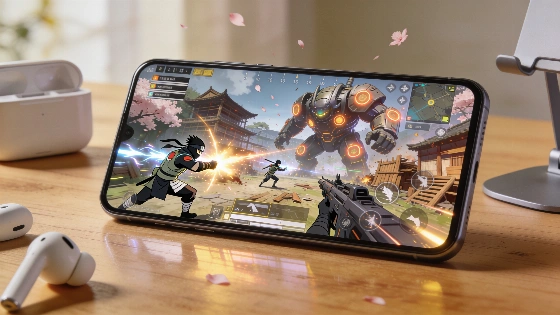
PUBG MOBILE's collaboration with NARUTO SHIPPUDEN introduces playable Ninjutsu, iconic anime locations, and a major PvE event. Tencent and Studio Pierrot detail how the crossover was designed to go beyond cosmetics and engage both fanbases
PUBG MOBILE's latest crossover with NARUTO SHIPPUDEN, launched on 9 July, marks one of the game's most ambitious collaborations to date. The event introduces not only themed cosmetics but also fully explorable NARUTO locations, playable Ninjutsu abilities, and a large-scale PvE encounter featuring the Nine-Tails. The collaboration is further supported by an original animated OVA produced with Studio Pierrot, aiming to blend the two universes in both gameplay and narrative.
Designing a Gameplay-Driven Crossover
The development team at Tencent Games, working closely with the NARUTO production committee, set out to create a crossover that would resonate with both PUBG MOBILE and NARUTO SHIPPUDEN fans. Rather than limiting the event to character skins, the collaboration brings the Hidden Leaf Village and other recognisable landmarks into the game, allowing players to explore and interact with the environment. Ninjutsu abilities such as Rasengan, Chidori, and Flying Raijin have been adapted as active gameplay mechanics, with careful attention paid to balance so that these powers enhance rather than disrupt PUBG MOBILE's core combat systems.
To ensure authenticity, the team incorporated signature hand signs, visual effects, and sound design from the anime. Players can even cast Ninjutsu using voice commands, adding a layer of immersion. The crossover also introduces dynamic PvE elements, including rogue ninja enemies and encounters with Kakashi, culminating in a multi-phase battle against the Nine-Tails. This event temporarily shifts the game from its traditional PvP structure to a co-operative experience, requiring all players to defend the Hidden Leaf Village together.
Expanding Across Modes and Player Creations
The NARUTO SHIPPUDEN event is not confined to a single mode. Alongside Classic Mode and Metro Royale, the crossover extends into World of Wonder, PUBG MOBILE's user-generated content platform. Here, players and creators gain access to a full suite of NARUTO-inspired assets, including environments, characters, and Ninjutsu effects. This approach allows the community to design their own experiences, ensuring the collaboration continues to evolve beyond the initial update.
Environmental storytelling plays a significant role, with locations like Hokage Rock, the village gates, and the Ninja Academy recreated in detail. Interactive elements and narrative points are embedded throughout, encouraging exploration and discovery. The team's goal was to make these environments feel alive, not just as backdrops but as integral parts of the gameplay experience.
Offline Activations and Community Engagement
To reinforce the crossover's impact, Tencent has organised offline events in over 15 countries, attracting more than 130,000 participants in the first week alone. These real-world activations include installations themed around the Nine-Tails and Hidden Leaf Village, offering fans the chance to engage with the collaboration beyond the digital space. Such events are designed to bridge the gap between online and offline communities, allowing relationships formed in-game to extend into physical gatherings.
The original OVA, developed by Studio Pierrot, further cements the partnership. The animation features both NARUTO and PUBG MOBILE characters, with the creative process focused on ensuring that interactions between the two worlds feel natural and meaningful. The studio maintained creative control over storyboarding and animation, while the PUBG MOBILE team ensured that their characters' movements and equipment remained true to the game's identity.
Technical and Collaborative Challenges
Balancing Ninjutsu abilities within PUBG MOBILE's established gameplay required extensive iteration. The team worked to ensure that these powers were neither overpowered nor superficial, aiming for a strategic fit that would encourage teamwork and tactical play. The Nine-Tails encounter, in particular, was designed as a multi-phase boss battle, demanding coordination and timing from all participants.
Previous crossovers informed the approach, with Tencent moving beyond cosmetic tie-ins to deeper gameplay integration. The collaboration's scale and ambition reflect lessons learned from earlier events, focusing on aligning the core values and mechanics of both franchises. For those interested in how other major franchises are adapting to new formats, the recent coverage of Silent Hill: Townfall's gameplay and release details offers further insight into the challenges of blending established worlds with new gameplay structures.
Players can access the PUBG MOBILE x NARUTO SHIPPUDEN event until 7 September, with all major features available across supported mobile platforms. The collaboration stands as a notable example of how live-service games are increasingly leveraging cross-media partnerships to deliver fresh experiences and sustain player engagement.
Live-service collaborations like this rely on a combination of technical integration and community engagement. By distributing themed content across multiple modes and supporting user-generated creations, developers can extend the lifespan of an event and encourage ongoing participation. The shift from cosmetic-only crossovers to gameplay-driven partnerships reflects a broader trend in the industry, where player agency and meaningful interaction are prioritised over surface-level branding.