
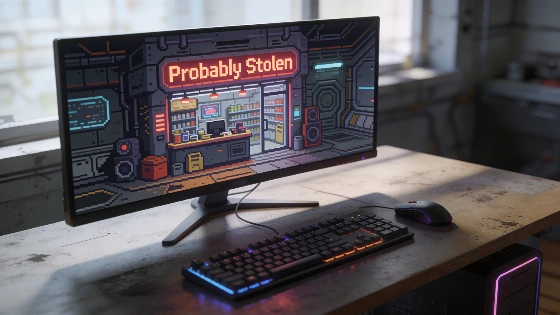
tinyBuild and Questing Goose Studio have announced Probably Stolen, a cyberpunk shop simulator set on a dystopian space station, now available for public playtesting on Steam with a debut trailer and early gameplay details
tinyBuild and Questing Goose Studio have officially unveiled Probably Stolen, a new cyberpunk-themed shopkeeping simulator now available for playtesting on Steam. Set within the crime-ridden Lower Levels of a sprawling space station, the game tasks players with running a shop where the legality of goods is always in question. The announcement was accompanied by a debut trailer, offering a first look at the pixel-art aesthetic and the game's focus on survival, trade, and risk management in a hostile environment.
Gameplay and Core Mechanics
Probably Stolen positions players as shopkeepers navigating a world where profit often trumps legality. At the outset, players can choose from several backgrounds, including gunsmith, chemist, water merchant, fence, or even starting from nothing. Each trade comes with its own set of challenges: weapons are subject to inspections, contraband can trigger raids, and some goods require permits or heavy machinery. The game's systems encourage players to weigh risk against reward, with every transaction potentially attracting the attention of security forces or criminal factions.
Customer interactions are central to the experience. Shoppers may be undercover security, revolutionaries, or individuals with hidden motives, and players must decide whether to approve, refuse, report, or ignore each request. The game also introduces a mechanic where players can cut product quality for extra profit, but this increases the risk of retaliation from authorities or criminal groups. Rent increases over time, forcing difficult decisions about whether to play it safe or take bigger risks to stay afloat.
Setting, Factions and Survival
The dystopian space station setting is divided by wealth and corruption, with the Lower Levels serving as a hub for illicit trade. Faction loyalties play a significant role, as players must navigate relationships with various groups, each with their own interests and methods of enforcement. The presence of rogue AI-augmented individuals adds another layer of danger, requiring players to remain vigilant and, at times, resort to violence to protect their business. The game's pixel-art style reinforces its gritty atmosphere, while the survival elements demand constant attention to both financial and physical threats.
Rent is a persistent pressure, increasing regardless of weekly performance. Falling behind can lead to severe consequences, including the loss of the shop. The game's structure is designed to keep players balancing short-term gains against long-term survival, with one misjudged transaction or failed inspection potentially ending a run.
Release Status and Studio Background
Probably Stolen is currently available for public playtesting on Steam, with players able to wishlist the title and join the ongoing test. The game is developed by Questing Goose Studio, an independent team based in Montreal known for sandbox and simulation experiences. tinyBuild, the publisher behind titles such as Graveyard Keeper and Potion Craft, is handling publishing duties and has a track record of supporting distinctive indie projects. No final release date has been announced, and the current playtest is intended to gather feedback on core systems and balance.
For those interested in other recent indie releases on Steam, solo developer Jeffrey Nordin's dark puzzle adventure also launched a demo recently, offering a different take on atmospheric storytelling and mechanics-details can be found in our coverage of The House Dreams Along With Them's demo launch.
tinyBuild maintains a global presence, with studios across North America and Europe, and continues to focus on long-term partnerships with independent developers. Questing Goose Studio's approach to emergent gameplay and meaningful player choice is evident in Probably Stolen's design, which prioritises player agency and consequence-driven systems.
What Remains Unconfirmed
At this stage, the developers have not detailed the full scope of content planned for the final release, including the number of shop types, faction dynamics, or the extent of narrative branching. Technical performance targets, such as frame rate and resolution, have not been specified, and it is not yet clear whether the game will launch on platforms beyond PC. The current playtest is focused on core mechanics and player feedback, with further updates expected as development progresses. Pricing, edition structure, and post-launch support have not been announced.
As with many indie projects in early playtest, the available build may not represent the final quality or feature set. Players should expect changes to balance, progression, and possibly core systems as feedback is incorporated ahead of a wider release.
Early-access and playtest releases allow developers to gather real-world feedback before committing to a final launch. Unlike finished games, these builds are often incomplete, may lack full optimisation, and can change significantly based on player input. For players, participating in a playtest offers a chance to influence development, but it also means encountering bugs, unfinished features, and evolving systems that may differ from the eventual release version.