
ReRolled Studio has announced that Pardon My French Toast will launch on 29 October 2026 for Nintendo Switch, Nintendo Switch 2 and Steam, with a playable demo and pre-order discount available ahead of release
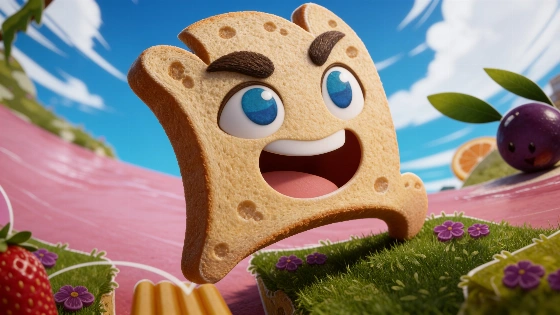
ReRolled Studio has locked in 29 October 2026 as the official release date for Pardon My French Toast, a 3D platformer that puts players in control of a slice of toast with a surprising arsenal of sweet spread abilities. The game will be available on Nintendo Switch, Nintendo Switch 2 and Steam, with a demo already live for those eager to sample its unconventional platforming mechanics. According to ActuGaming, the release date and the opening of pre-orders for the Nintendo Switch version were confirmed in an independent report published on 18 September 2026, which also lists the title among the most anticipated upcoming releases for the platform.
Confirmed launch and pre-order details
Pardon My French Toast will be released simultaneously across Nintendo Switch, Nintendo Switch 2 and Steam. Pre-orders for the Nintendo Switch version are open from 17 September through to launch day, with a 20% discount available throughout the pre-order window. The demo can be downloaded now from the Nintendo eShop in both the EU and US regions, as well as on Steam, giving players a chance to try the game's core mechanics before committing to a purchase. SteamDB data shows that the game already has a dedicated page and identifier in the Steam infrastructure, but as of the latest update, its status remains "prerelease" and the store page lists the release date as "Coming soon," indicating that the public catalog date has not yet been marked as released. This aligns with the official launch window and confirms that the product is being tracked as an upcoming title on Steam.
The game's release date and pre-order structure are clearly defined, with no mention of early access, staggered launches or platform-specific delays. All three platforms are scheduled to receive the game on the same day, and the discount applies only to the Nintendo Switch pre-order period. According to SteamDB and ActuGaming, there is no independent confirmation of a physical edition, early access, or any shift in the launch date; only the release window and the opening of pre-orders are publicly confirmed at this stage.
Gameplay mechanics and abilities
Pardon My French Toast distinguishes itself with a moveset built around sweet spreads. Players can coat their toast hero in honey to climb walls, flex chocolate muscles to smash obstacles, absorb and spit liquids to activate mechanisms or propel across water, and use butter to slide through tight spaces. The game features ten distinct toast abilities, some of which can be combined for more complex manoeuvres-such as sliding with butter while breaking through barriers with chocolate, or using sprinkles to reveal hidden objects before interacting with them using other powers.
The adventure unfolds aboard the Jam Session Cruise, a vessel in questionable condition that serves as the game's hub. The toast protagonist is tasked with exploring a variety of themed levels to collect large candies, which act as fuel for the ship. Along the way, players will encounter other toast characters, each with their own side quests and rewards, including unlockable features like a compass for tracking collectibles and a cookbook for customising the hero's appearance.
Studio philosophy and development context
ReRolled Studio, founded in 2018 by former Little Worlds Studio developers, positions itself as an independent team focused on creative autonomy and player enjoyment. The studio is self-funded and has explicitly rejected external investment to maintain control over its projects. The developers cite concerns about industry trends such as aggressive monetisation, exclusion of creative teams from decision-making, and the use of AI to replace artists, framing Pardon My French Toast as a response to these issues.
This project is described as the studio's most ambitious to date, aiming to appeal to both experienced and younger players without excluding any audience. The emphasis is on delivering a generous, accessible platformer that encourages exploration, experimentation with abilities, and engagement with side content. The studio's approach stands in contrast to some industry practices, as discussed in reported earlier regarding DLC and content delivery models.
Level structure and optional challenges
The Jam Session Cruise acts as the central hub, with dozens of levels branching out into environments ranging from cake-inspired landscapes to haunted floating islands. Each level is packed with collectibles, and the game supports 100% completion for those who want to track down every hidden item. Optional challenges are available for players seeking a higher difficulty, but these are not required to progress through the main story.
Side quests tied to the ship's other toast passengers offer additional rewards and narrative depth, but remain optional. Completing these quests can unlock features that make exploration and collection more efficient, such as the archaeologist's compass or the cook's recipe book for appearance customisation. The game's structure encourages replayability and experimentation with different ability combinations, but does not force players into a single playstyle.
Combining abilities is a core part of the design, with certain puzzles and obstacles requiring creative use of multiple spreads. The demo provides a taste of these mechanics, but the full range of abilities and their interactions will only be available in the complete release.
Combining multiple movement and interaction systems in a 3D platformer often raises questions about input latency and responsiveness. In games where abilities can be chained or combined, the timing of player inputs and the game's ability to register rapid transitions between moves are critical for a satisfying experience. Input latency refers to the delay between a player's action-such as pressing a button-and the corresponding response on screen. High input latency can make platforming feel sluggish or imprecise, especially in games that demand quick reactions or precise timing. Developers typically optimise input handling and animation blending to minimise this delay, but the final experience can vary depending on platform, controller and performance mode. For players interested in mastering advanced movement or tackling optional challenges, low input latency is especially important for maintaining control and flow.