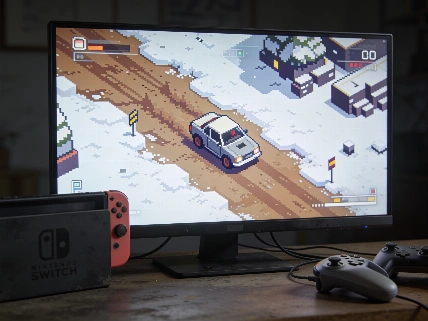

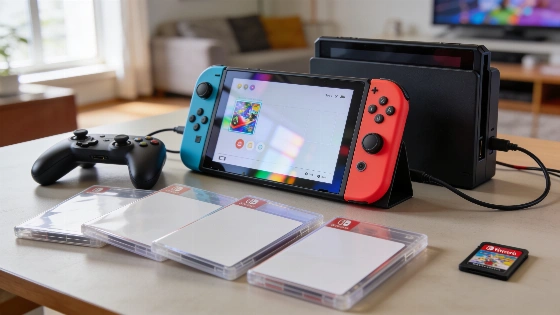
Bill van Zyll says Switch 2 will support digital purchases and physical releases, with Latin American players showing strong demand for games they can collect or share.
Switch 2 releases can still arrive as physical products, even as Sony prepares to stop manufacturing PlayStation discs in January 2028.
Nintendo has no current plan to abandon physical games on Switch 2. Bill van Zyll, the company's VP and general manager for Latin America, said the platform will continue supporting digital purchases and physical releases while Nintendo tracks player preferences.
Nintendo's Physical Commitment
Van Zyll discussed the policy in an interview with Brazilian YouTuber Coelho no Japão. His position was direct: Nintendo intends to keep producing physical games because players still value them, and Switch 2 was designed for both formats.
That does not mean every future release will use a traditional cartridge. Switch 2 already supports Game-Key Card releases, where the physical card authorizes the download and play of a game rather than storing the complete software.
The distinction matters to owners. A Game-Key Card can be lent. It can also be traded or resold without being permanently tied to one Nintendo Account or console.
On the current Switch 2 platform, physical games exist in two forms: full cartridges and Game-Key Cards. Nintendo Everything has reported that upcoming releases include Game-Key Card titles such as Hyrule Warriors: Age of Calamity: Definitive Edition. That makes the format part of the platform's ongoing release plan rather than a one-off experiment.
Nintendo's position is narrower than a blanket defence of fully self-contained software. The company is keeping a physical format and the ownership benefits attached to it, even as some releases use the card mainly as a download key.
Industry data shows why the distinction matters. According to Circana figures reported by GoNintendo, U.S. spending on new physical games rose 5% year over year to $738 million through August 2026. Spending on Game-Key Card releases increased 631%, while spending on other physical formats declined 3%. Circana vice president Matt Piscatella linked the overall growth to the arrival of Switch 2 and publishers' move toward Game-Key Cards. He separately noted the decline in other physical formats.
That 631% increase does not measure demand in isolation. Kotaku, citing Circana, reported that 10 Game-Key Card games had been released in the comparable previous year. Another 54 titles arrived in 2026. The much larger number of available releases is a significant part of the year-over-year change.
Why Latin America Matters
Van Zyll identified Latin America as a particularly strong physical market, including Brazil. He pointed to collectibility and straightforward sharing as practical reasons players continue choosing boxed or card-based games over digital versions. Resale is another factor.
That regional detail gives Nintendo's statement more weight than a generic commitment to consumer choice. Availability can shift the balance between formats. Digital purchases became especially convenient during COVID, when many people were staying at home. Nintendo's Latin American business still sees physical games as important to how players acquire and share software.
The company also offers Game Share on Switch 2 for sharing digital games. Nintendo is therefore not treating physical media as the only route to access between players. Its approach is a dual-format model, with digital convenience serving a different need from physical ownership.
Nintendo's own reporting calls for caution when formats are compared. As noted by Nintendo Life, Nintendo's digital revenue includes downloadable versions. It also includes digital-only games without physical releases. Add-on content and Nintendo Switch Online are counted there as well. The digital share of revenue cannot be read directly as a measure of how many buyers have abandoned physical copies.
Sony's Disc Decision
The backdrop is Sony's reported decision to stop manufacturing PlayStation discs from January 2028. The move has drawn criticism across the games industry, though the supplied information establishes no equivalent policy from Microsoft or Nintendo beyond van Zyll's comments.
Nintendo's timing matters because Switch 2 is still barely over a year into its generation. The console supports digital and physical games today, and van Zyll's comments indicate that Nintendo is not preparing to remove the physical option during the current platform cycle.
The measurable timeline is limited but clear. Sony's disc-manufacturing change is planned for January 2028. Nintendo says there are no plans to ditch physical games, while Switch 2 is only just beyond its first year. No longer-term commitment beyond the Switch 2 generation has been announced.
The Xbox Question
The unresolved part of the wider platform picture is Microsoft. Xbox players may be more accustomed to digital ownership through Game Pass, but the source provides no confirmed policy for future hardware.
A previous rumour suggested that Project Helix could retain a disc drive to rebuild goodwill with dedicated physical-media supporters. That report remains unconfirmed.
Nintendo's statement is useful without becoming a permanent guarantee. The company has acknowledged a strong regional preference and kept both formats available. It has not promised that every game will ship as a complete physical copy, nor that cartridges will continue beyond Switch 2.
For players, the immediate result is clear. Switch 2 remains a platform where digital convenience sits alongside a physical format that can be collected or shared. Those physical games can also be resold. Nintendo is making the player-first choice by keeping both routes open, while Game-Key Cards show how physical media can remain in circulation as software delivery moves further toward downloads.
A Game-Key Card is still a physical object, but it is not the same as a cartridge containing the full game. It contains an authorization key and requires an internet download of the complete software, unlike a conventional cartridge that stores the game itself.
The format preserves some lending and resale benefits associated with boxed software. It also makes the physical product dependent on downloading the playable data. That compromise lets Nintendo defend physical ownership while continuing to use digital distribution. The company's policy remains the strongest confirmed indication that physical games still have a place on a major current console. The complete playable software must be downloaded.