
Nintendo's Customer Appreciation Sale offers 30 percent off Switch games and accessories but is partly funded by tariff refunds the company is fighting in court to keep from players
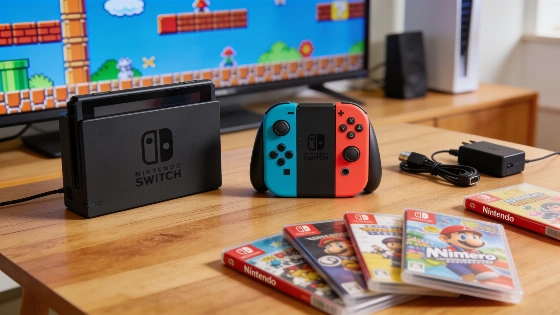
Nintendo's latest Customer Appreciation Sale is not just a marketing event-it is a direct consequence of a $300 million tariff refund the company is actively arguing in court it does not owe to the very customers who paid higher prices during the tariff period. The sale, which runs from 13 to 26 September, delivers 30 percent off a wide range of Nintendo Switch digital and physical products. Yet the source of these discounts is not increased generosity, but a government windfall Nintendo is determined to keep out of players' hands.
Tariff Refunds and the Sale
The sale covers dozens of digital games, bundles, select physical titles, downloadable content, accessories, amiibo and apparel, all available through the Nintendo eShop, Nintendo Store and participating retailers. Nintendo's own announcement admits the promotion is "made possible in part by tariff-related refunds", referencing the substantial sums returned to console makers after the US Supreme Court ruled in February 2026 that tariffs imposed under the Trump administration were unlawful. Nintendo's refund alone is worth around $300 million, with Sony and Microsoft also receiving hundreds of millions each.
During the tariff period, Nintendo, Sony and Microsoft all raised hardware and accessory prices, citing increased import costs. When the tariffs were overturned, the government refunded the money to the companies, not to the consumers who had paid the inflated prices. Now, Nintendo is using a portion of that refund to fund a sale that requires customers to spend more to benefit, rather than issuing direct refunds or price corrections.
Legal Disputes Over Refunds
While the sale is running, Nintendo is simultaneously fighting class-action lawsuits from consumers demanding that the tariff refunds be passed on to those who paid higher prices in 2025. Nintendo, Sony and Microsoft have all taken the same legal stance: the law does not require them to share government refunds with buyers, since the refunds were issued to the importers of record, not to individual customers. Nintendo moved to dismiss a lawsuit in July, arguing that consumers lack legal standing to claim these funds. Sony and Microsoft have echoed this position in their own court filings, with Microsoft also pushing for arbitration instead of a full trial.
None of the companies disputes that they raised prices in response to the tariffs, nor that they are now receiving substantial refunds. Their argument is strictly legal: unless a judge rules otherwise, the companies intend to keep the refunded money, using it as they see fit-including for marketing promotions like the current sale.
Player Impact and Industry Response
For players, the practical effect is clear. Those who paid higher prices during the tariff period will not receive a refund unless the courts force the issue. Instead, Nintendo's sale offers discounts only to those willing to make new purchases, effectively turning a legal windfall into a sales incentive. Sony and Microsoft have not yet announced similar promotions, but their legal arguments mirror Nintendo's, and there is no indication that direct refunds to players are planned by any of the three platform holders.
The scale of the refunds is significant. Sony has already recovered roughly $356 million of an expected $508 million, while Nintendo's $300 million refund was disclosed last month. These sums dwarf the value of any temporary sale, and the companies' refusal to issue direct refunds has become a focal point for consumer lawsuits. The outcome of these cases could set a precedent for how platform holders handle government refunds tied to player purchases in the future.
Marketing Versus Accountability
Nintendo's decision to frame the Customer Appreciation Sale as a gesture of gratitude, while simultaneously arguing in court that it owes players nothing, exposes a sharp divide between public messaging and legal strategy. The company is leveraging refunded money to drive new sales, not to correct past overcharging. This approach may blunt some immediate criticism, but it does not address the underlying complaint: that players who bore the cost of unlawful tariffs are being offered a marketing event instead of restitution. Unless the courts intervene, Nintendo's tactic is likely to become the industry standard, with platform holders prioritising their own bottom line over direct accountability to players.
Understanding the mechanics of government tariffs and refunds is essential here. When tariffs are imposed, companies often pass the cost directly to consumers through higher prices. If those tariffs are later ruled unlawful and the government issues refunds, the money returns to the companies, not the buyers. Unless legislation or a court decision mandates otherwise, there is no automatic mechanism for players to receive compensation, even if they paid more as a result. This legal and financial structure leaves players dependent on the goodwill-or legal defeat-of the companies involved.