

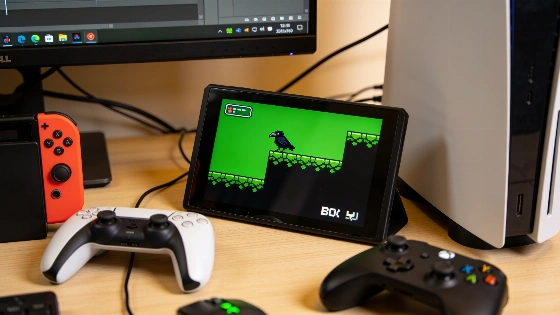
Lillymo Games has announced the Green Series, a new line of Game Boy-inspired titles, starting with Ravenous Greed. The debut game is set for early 2027 on PlayStation, Switch, Xbox and PC, with a Steam demo planned
Players looking for a modern take on classic handheld gaming have a new series to watch. Lillymo Games has officially announced the Green Series, a collection of titles designed to channel the look and feel of the original Game Boy era. The first entry, Ravenous Greed, is scheduled to arrive in early 2027 across PlayStation, Nintendo Switch, Xbox and PC, with a playable demo due soon on Steam.
Game Boy Nostalgia Reimagined
Ravenous Greed is not simply a retro homage. Lillymo Games is building a platformer that fuses shoot 'em up, rhythm and arcade elements, all wrapped in a green-and-black visual style that deliberately echoes the Game Boy's iconic palette. Players take on the role of a cursed hero trapped in a raven's body, navigating a series of varied challenges that include platforming, boss fights, shoot 'em up sequences and even skateboarding stages.
The game's structure is designed to be accessible, with no game-over screens and a progression system that ensures every run moves the player forward. Collecting coins unlocks new abilities and upgrades, while a chiptune soundtrack aims to reinforce the retro atmosphere. The studio claims Ravenous Greed will be one of its most approachable releases to date, targeting players who might have found previous Lillymo titles too punishing.
Features and Platform Details
Ravenous Greed will launch with 21 distinct stages, each offering collecting challenges and hidden unlocks. Between missions, players can access a base area featuring arcade-style mini games such as Caw-chinko, shooting galleries and a claw machine. The upgrade system promises a range of abilities and stat improvements, though the full extent of customisation remains to be detailed.
Confirmed platforms include PlayStation, Nintendo Switch, Xbox and PC, with a Steam demo planned ahead of release. The studio has not yet specified whether all platforms will launch simultaneously or if there will be any timed exclusivity. Pricing and edition details are also unconfirmed at this stage.
Development Context and Series Ambition
Lillymo Games, known for titles like Habroxia and Super Perils of Baking, is positioning the Green Series as a way to reinterpret both its existing catalogue and new intellectual property through a Game Boy-inspired lens. Each planned entry will reportedly explore a different genre or gameplay style, though only Ravenous Greed has been formally announced so far.
The studio's approach mirrors a broader trend among indie developers to revisit classic aesthetics and mechanics, as seen in other recent projects such as the reported earlier Toada Brava demo. However, Lillymo's focus on accessibility and forward-only progression sets Ravenous Greed apart from more punishing retro tributes.
What Remains Unclear
While the announcement outlines the core gameplay and visual direction, several key details are still missing. There is no footage or playable build available to the public yet, and the studio has not confirmed whether the Steam demo will represent the final gameplay experience or an early build. Technical performance targets, such as frame rate or resolution on each platform, have not been disclosed. It is also unclear whether the game will support platform-specific features like adaptive triggers on PlayStation or handheld-optimised controls on Switch.
With a release window set for early 2027, there is ample time for Lillymo Games to clarify these points and demonstrate how Ravenous Greed will play in practice. Until then, the announcement remains a statement of intent rather than a guarantee of final quality or feature set.
When a developer references the Game Boy era, they are invoking a specific set of technical and design constraints: limited colour palettes, simple sound chips and compact level design. Modern retro-inspired games often use these constraints as a creative framework, but they are not bound by the hardware's original limitations. Instead, they can blend nostalgic aesthetics with contemporary mechanics, accessibility options and progression systems that were not possible on the original devices. This approach allows studios like Lillymo Games to appeal to both veteran players and newcomers, but it also means that the final experience will be judged on how well it balances authenticity with modern expectations.