
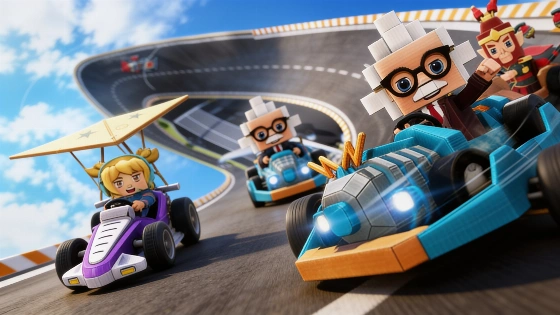
Zatun has released Kartboard Dash, a free-to-play arcade racer for PC, Android and iOS. Power-ups, handmade tracks and final-lap modifiers can turn the order upside down before the finish.
A comfortable lead means little in Kartboard Dash. Zatun's free-to-play arcade racer is now available on PC, Android and iOS. Its rules are built to make the last moments of each race as dangerous as the opening lap.
Three-platform launch
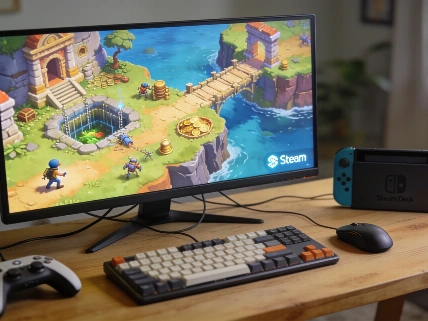
Kartboard Dash was released on 29 September 2026 without an upfront purchase. PC players can get it through Steam. Mobile players can download it through Google Play and the App Store. GamesPress lists 29 September 2026 as the release date and confirms the three-platform launch. The announcement does not give pricing details for optional purchases or explain how the free-to-play model will make money.
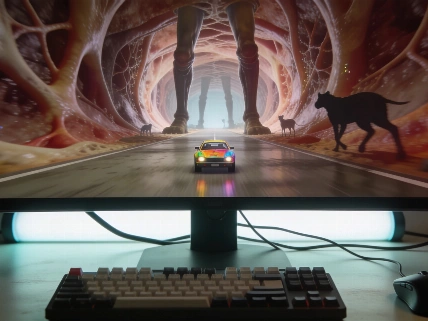
The game takes place in a world made from cardboard, tape and imagination. The idea extends beyond the vehicles. The tracks, scenery and props all use the same handmade look. Zatun is making an accessible arcade racer rather than a simulation. The studio says the controls should be easy to pick up while still leaving room for better driving and smarter power-up choices.
The game launched on all three platforms on the same date. That gives players a simple way to start racing on PC or mobile.
SteamDB also recorded two related Steam infrastructure entries, first seen on 23 September 2026, several days before the stated launch date. The entries are linked to App IDs 5320220 and 5321770. They show that several related objects were present in Steam's backend before release. The available records do not establish what each object was for or add any gameplay details.
Chaos on the track
Races run across handmade courses with tight corners, ramps, obstacles and hazards. Taking the fastest route will not be enough. Players must collect and use power-ups at the right time while dealing with attacks and disruptions from rival racers.
The biggest twist comes during the final two laps. Global modifiers can affect every competitor at once. They can trigger sudden speed surges, bumper-style collisions, hazard trails and other changing conditions. The aim is to turn a safe lead into a weak position without making track knowledge pointless. A player who knows the course still has to adjust when the rules change for everyone.
That gives Kartboard Dash a clear competitive identity. These races are not simple time trials where consistency decides everything. Route knowledge, power-up timing and last-lap reactions all matter at once. The structure should be easy for newcomers to understand. Repeat players also have clear reasons to improve their decisions.
What the launch confirms
Zatun has announced a growing cast of racers and karts with distinct personalities. The studio has not given a total character count or detailed specifications for each vehicle. It also describes the game as built for replayability through dynamic power-ups, changing race conditions and close finishes. Those are stated design goals, not independent proof of long-term player retention.
The studio's wider background adds some context. An independent profile on yam.com describes Zatun as operating since 2007 and having worked on more than 250 games. The same account says the company uses learning through practice, including work with Unity and Unreal Engine. A separate Tech4Gamers profile published on 27 September 2026 also discusses Zatun's educational approach to development and its use of that model to attract aspiring developers. These details describe the studio's working environment. They do not show how Kartboard Dash has performed commercially or how players have received it.
The available information also makes clear what has not been established. There are no supplied performance targets, frame-rate measurements or resolution details. The announcement does not identify controller support, cross-play, cross-progression, offline availability or the exact structure of any live-service content. Those gaps matter because a free-to-play game can differ greatly between its core race rules and the systems around them.
Players who want a wider look at how small studios use early access and testing to shape multiplayer projects can read this earlier coverage of a separate development approach. Kartboard Dash has a different status. It launched as a full free-to-play release rather than opening a closed alpha sign-up period.
What players receive
At launch, Kartboard Dash offers arcade racing across PC, Android and iOS. The package includes handmade tracks, power-ups and modifiers that become especially important during the final two laps. Zatun's growing roster of racers and karts provides the customization layer described by the studio. The announcement does not confirm unlock methods or say whether progression affects competitive balance.
The free entry point is the clearest practical benefit. Players can try the handling and race structure without paying upfront. The bigger test is whether the disruptive systems create real tactical choices or simply replace clean driving with random punishment. The feature list cannot answer that. It will depend on how often modifiers appear and how fairly power-ups are handed out in actual races.
No direct independent confirmation of download totals, revenue, monetization performance or player reviews was available in the authoritative material reviewed at the time of writing. GamesPress confirms the launch. SteamDB records related Steam infrastructure activity. Neither source provides a verified audience-size or financial figure. Without those numbers, the release can be described factually but cannot yet be judged through sales, engagement or reception data.
For now, Kartboard Dash is a clearly defined launch rather than a technically documented one. Its cardboard look gives it an easy-to-recognize identity. The final-lap modifiers give races a reason to stay close. In a crowded free-to-play field, that is a sensible hook. The release earns attention for its accessible idea and competitive structure, not for claims the available evidence cannot support.
Frame pacing describes how consistently a game delivers each frame. It is different from a simple frame-rate figure. Kartboard Dash has no published frame-rate or resolution targets, so players cannot yet judge how smoothly races run on different PC and mobile hardware. That missing technical information does not weaken the launch itself. It limits any serious assessment beyond what is confirmed: Kartboard Dash is available now, and its strongest promise is a race that refuses to stay settled.