
BlackMill Games has released Gallipoli, the latest entry in its WW1 series, bringing new classes, detailed Middle Eastern maps and a focus on teamwork to PC multiplayer shooters
Gallipoli, the fourth title in BlackMill Games' World War 1 series, has launched with a clear ambition: to deliver the most visually and mechanically authentic multiplayer shooter in the franchise to date. Set on the Middle Eastern front-a theatre often overlooked in both games and history lessons-the game introduces players to the brutal realities of the Gallipoli campaign, pitting the Ottoman Empire against the British Empire in a series of meticulously recreated environments. The result is a shooter that not only rewards tactical play and squad coordination, but also encourages players to engage with a lesser-known chapter of the First World War.
Gameplay and Historical Setting
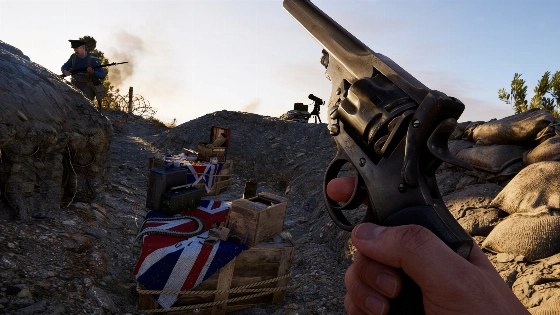
Gallipoli's maps are inspired by real locations, with Anzac Cove standing out as a highlight for its atmospheric design and historical context. Players attacking as the British Empire begin matches in exposed wooden boats, echoing the vulnerability of the original landings. The game's commitment to historical accuracy is evident in its depiction of early 20th-century uniforms and weaponry, as well as the loading screens that provide concise historical background. This approach is reminiscent of how some recent multiplayer releases, such as Blasterbug: Last Bug Standing!, have used setting and mechanics to differentiate themselves in a crowded genre, though Gallipoli's focus remains firmly on realism and teamwork.
The introduction of four new classes-stretcher bearer, heavy machine gunner, ammo bearer, and bomber-adds further depth to the class-based system. Each class has a distinct role, from building med stations and reviving squadmates to constructing machine gun emplacements and providing suppressive fire. The heavy machine gunner, for example, can establish defensive positions, while the bomber uses grenades and improvised explosives to disrupt enemy advances. Class caps prevent teams from stacking powerful roles, ensuring balanced matches and encouraging players to cooperate rather than chase individual kill counts.
Combat Systems and Realism
Gallipoli's weapon handling is deliberately grounded. Rifles and pistols behave according to their real-world limitations, with accuracy and stopping power varying by range. Machine guns, both light and heavy, are most effective when deployed from cover, and attempting to hip-fire results in wild inaccuracy. The suppression and panic mechanics are a notable addition: sustained enemy fire can cause characters to lose composure, blurring vision and making aiming difficult. This system rewards coordinated suppressive fire and adds a psychological layer to engagements, reflecting the chaos and fear of trench warfare.
Environmental effects also play a significant role. Artillery and mortar strikes generate thick dust clouds, obscuring vision and increasing the risk of friendly fire. Team killing is always enabled, and careless use of off-map support or close-quarters confusion can lead to accidental casualties. The game's approach to friendly fire and environmental hazards reinforces the need for communication and discipline, distinguishing Gallipoli from more arcade-style shooters.
Player Community and Match Structure
One of Gallipoli's defining strengths is its player base. The game attracts participants who are invested in objective-based, squad-focused play, rather than treating matches as simple deathmatches. Most players work towards shared goals, whether laying down covering fire, healing teammates, or holding defensive lines. The class system's restrictions further encourage this behaviour, as only one sniper is permitted per team and support roles are limited in number. This structure helps maintain balance and prevents the dominance of any single playstyle.
Matches are often chaotic, with dust, artillery, and close-quarters combat creating unpredictable scenarios. However, the emphasis on teamwork and communication means that even new players can contribute meaningfully by sticking with their squad and focusing on objectives. The community's generally welcoming attitude stands in contrast to the more aggressive environments found in some competitive shooters, making Gallipoli accessible to a wider range of players.
Technical Details and Content Scope
Gallipoli is currently available on PC, with no official confirmation of console versions at this time. The game features multiple historically inspired maps, including Anzac Cove and V Beach, and supports a range of multiplayer modes focused on territory control and objective completion. The class system includes both returning and new roles, with each class limited per team to maintain balance. Environmental effects such as dust and artillery are implemented to enhance immersion and tactical complexity.
While the game does not feature a single-player campaign, its multiplayer offering is substantial, with a focus on historical authenticity and replayability. The player base remains active, and the game's design encourages ongoing engagement through its class system and map variety. As with previous BlackMill Games releases, post-launch updates and community feedback are likely to shape future content and balance adjustments.
Understanding Gallipoli's approach to realism requires some familiarity with the concept of suppression and panic mechanics in shooters. Unlike traditional health or stamina systems, suppression models the psychological impact of sustained enemy fire, causing characters to lose accuracy and composure under pressure. This mechanic, combined with environmental hazards and friendly fire, creates a more demanding and immersive multiplayer experience that rewards communication, discipline, and tactical play over individual reflexes or kill counts.