
Defender of the Crown: The Legend Returns brings a remastered strategy experience to PC, offering three distinct modes and a new dice-and-card battle system. Here's how the classic has been updated for modern players and where it still shows its age
Defender of the Crown: The Legend Returns marks the latest attempt to revive Cinemaware's influential 1986 strategy title for a contemporary audience. This remaster, now available on PC, bundles three modes-Retro, Classic, and Kingdom-each targeting a different balance between nostalgia and modernisation. The release aims to appeal both to long-time fans of the original and to new players seeking accessible, board game-inspired strategy.
Three Modes, Three Approaches
The remaster's structure is built around its three main modes. Retro mode is a direct port of the original Amiga release, with updated controls for modern gamepads but otherwise unchanged mechanics. Classic mode introduces quality-of-life improvements, such as autosaving, manual saves, and the ability to skip turns, while also refining combat and siege mechanics. Kingdom mode, the most substantial reimagining, overhauls the core gameplay loop with a new dice-and-card battle system and a streamlined progression structure.
Each mode offers a distinct experience. Retro preserves the original's obtuse mechanics and limited feedback, which may frustrate newcomers. Classic mode attempts to address these issues with clearer combat cues and additional tactical options, but some systems remain opaque. Kingdom mode stands apart, replacing most minigames with a transparent dice-and-card system that clarifies outcomes and introduces a progression loop where defeat can unlock new advantages for future runs.
Gameplay and System Changes
Set in medieval England, Defender of the Crown: The Legend Returns tasks players with leading a faction to claim the throne after the king's assassination. The core gameplay remains turn-based, with players building armies, capturing territory, and managing resources in a structure reminiscent of classic board games like Risk. Between battles, players can participate in tournaments, raid castles, or attempt rescues, each triggering its own minigame or challenge.
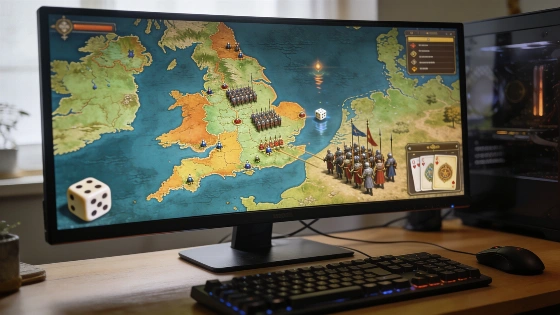
Kingdom mode's most notable innovation is its dice-and-card combat, which replaces traditional battles with a system where leadership and fame determine the points available for card play. Cards can modify dice rolls, add or remove dice, or alter outcomes, making the process more transparent and less reliant on hidden mechanics. This system also replaces jousting and siege minigames, introducing a heart-based retry mechanic that encourages repeated attempts and gradual progression.
Visuals, Audio and Performance
The remaster retains the original's colourful pixel art in Retro mode, while Classic and Kingdom modes expand on this with more detailed character models and enhanced lighting. Animation remains limited, but the overall presentation is consistent and visually distinctive. Audio is understated, with minimal music in Retro and a broader but still restrained soundtrack in the other modes. Sound effects are crisp, though there is no voice acting or vocal feedback during combat.
Performance on PC is stable, with no significant slowdowns reported on Linux or Steam Deck. The game's resolution is flexible, provided text remains legible, and battery life on Steam Deck averages around three hours per charge. There are no major technical barriers to play, though some interface quirks-such as cumbersome troop management in Kingdom mode-persist.
Player Experience and Remaining Limitations
Defender of the Crown: The Legend Returns is likely to divide its audience. Retro mode is best suited to those seeking an authentic recreation of the original, while Classic offers incremental improvements without fully resolving the game's longstanding accessibility issues. Kingdom mode is the most approachable, providing a clear, fast-paced strategy loop that rewards repeated play and makes outcomes easier to understand.
However, the absence of multiplayer-despite the game's board game roots and turn-based structure-limits its appeal for those seeking competitive or cooperative play. Some new features, such as expanded siege tactics, have limited impact on the underlying numbers-driven battles. The remaster's improvements are meaningful but do not fully modernise the experience for all players.
Defender of the Crown: The Legend Returns is available now on PC, with support for Linux and Steam Deck. The game offers three distinct modes, each with its own strengths and weaknesses, and introduces a new dice-and-card system in Kingdom mode. Battery life on Steam Deck is estimated at around three hours per charge, and the game's performance is stable across supported platforms.
Understanding the difference between a remaster and a remake is key to interpreting this release. A remaster typically updates visuals, audio, and interface elements while preserving the original game's core mechanics and structure. In contrast, a remake rebuilds the game from the ground up, often reimagining gameplay systems and content. Defender of the Crown: The Legend Returns sits firmly in the remaster category for Retro and Classic modes, while Kingdom mode introduces more substantial changes without fully departing from the original's foundation.