
Valheim 1.0 has launched on all major platforms, introducing the Deep North endgame region and cross-play. Iron Gate and Coffee Stain confirm the survival hit has sold over 17 million units since its early access debut
After more than five years in early access, Valheim has finally reached its full release, bringing with it the long-awaited Deep North region and cross-play functionality across every major platform. This marks a significant milestone for Iron Gate and publisher Coffee Stain, who have now confirmed that the survival game has surpassed 17 million units sold since its original launch.
Deep North and the endgame
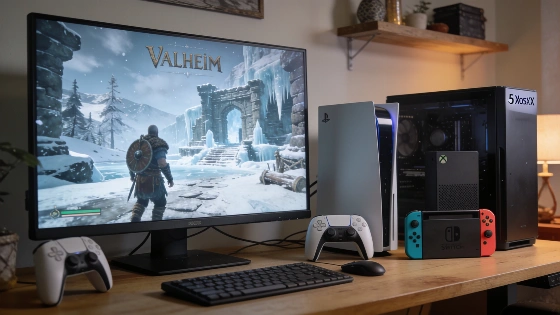
The centrepiece of Valheim 1.0 is the Deep North, a vast arctic biome designed as the game's ultimate endgame challenge. This frozen expanse is not only the largest region yet-measuring roughly 2.5 times the size of previous biomes-but also the most hostile. Players will encounter new threats including the Gammeltroll, Elakingar, Barka, and an unnamed ancient terror lurking beneath the ice. The region's withered ruins and ghost-haunted mysteries are intended to push even experienced survivors to their limits.
To survive the Deep North, players gain access to new crafting recipes, high-tier armour sets, weapons, and specialised tools tailored for the extreme cold. The update also introduces additional story cinematics, including a new intro sequence produced in collaboration with Brikk Animation, and further cutscenes triggered by key boss defeats. There are even rumours of a hidden cinematic somewhere in the arctic winds, though this has not been independently verified.
Full platform rollout and cross-play
Valheim 1.0 is now available on PC, PlayStation, Xbox, Nintendo Switch 2, Linux and Mac, with cross-play enabled across all platforms. This means players can form co-op groups regardless of their chosen hardware, a feature that has become increasingly expected in modern survival and sandbox titles. The simultaneous launch across such a broad range of systems is a notable achievement for an indie studio, especially given the technical challenges of synchronising updates and network features across multiple ecosystems.
Iron Gate and Coffee Stain have also provided a comprehensive recap of the game's early access journey, highlighting major updates such as Hearth & Home, Mistlands, Hildir's Request, The Bog Witch, Ashlands, and Call to Arms. Each of these expansions introduced new biomes, mechanics, and progression systems, culminating in the Deep North as the final chapter of the current roadmap.
Sales figures and development timeline
Valheim's commercial performance has been remarkable for an independent release. The game has now sold over 17 million units worldwide, a figure that places it among the most successful survival games of the past decade. Its early access period lasted more than five and a half years, during which time the development team delivered a steady stream of content updates and technical improvements. The full release arrives at a time when cross-platform support and robust endgame content are increasingly seen as essential for long-term player retention.
For players who stepped away during early access, the 1.0 update represents a substantial overhaul. The addition of new biomes, expanded combat systems, and custom difficulty settings means that returning players will find a game that has evolved far beyond its original scope. This approach mirrors the ongoing trend of major post-launch expansions seen in other successful titles, as discussed in our recent coverage of SpeedRunners 2.
What remains uncertain
While the Deep North is billed as the final biome in the current roadmap, Iron Gate has not ruled out future updates or expansions. The studio has yet to confirm whether additional content, technical improvements, or platform-specific enhancements are planned beyond 1.0. Performance details for each platform, including frame rate targets and stability, have not been independently benchmarked at the time of writing. The presence of a rumoured secret cinematic also remains unverified by external sources.
Valheim's transition from early access to full release highlights the evolving expectations for survival games in 2026. Cross-play, simultaneous multi-platform launches, and substantial endgame content are no longer optional extras-they are baseline requirements for any title hoping to sustain a large, active player base. Iron Gate's willingness to support the game over such an extended period, and to deliver a genuinely challenging final region, sets a standard that other indie developers will struggle to match. The real test will be whether Valheim's new endgame can reignite long-term engagement or if the genre's audience has already moved on to the next survival phenomenon.
Early access is a development model in which a game is released to the public before it is considered feature-complete, allowing players to purchase and play the game while it is still in active development. This approach enables developers to gather feedback, fund ongoing work, and iterate on core systems based on real-world player behaviour. However, it also means that features, performance, and content can change significantly before the final release. Valheim's journey from early access to 1.0 demonstrates both the potential and the risks of this model: while it can lead to a richer, more polished final product, it also requires sustained commitment from both developers and players over a multi-year timeline.