

Halo: Campaign Evolved returns with a full Unreal Engine 5 rebuild, adding new prequel missions and visual upgrades while largely preserving the original's structure and gameplay. Here's how the remake stands up in 2026 and what's actually changed
Halo: Campaign Evolved has been rebuilt for 2026, bringing the original campaign into Unreal Engine 5 with a focus on technical upgrades and a handful of new missions. While the remake offers a modernised look and some additional content, it remains closely tied to the structure and design of the 2001 classic. The result is a campaign that feels both nostalgic and cautious, serving as a technical milestone for Halo Studios rather than a radical reimagining of the series' origins.
Visual Overhaul and Engine Shift
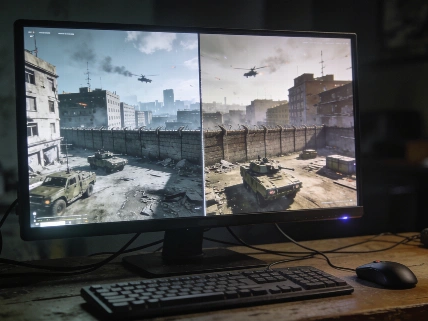
The most immediate change in Halo: Campaign Evolved is its move to Unreal Engine 5, replacing the original engine with a modern toolset. This transition brings higher-fidelity visuals, improved lighting, and more detailed environments. Surfaces now feature a pronounced sheen, and effects like plasma weapon impacts and dynamic lighting are more prominent throughout the campaign. However, the new aesthetic does not always represent a clear improvement in style, with some players likely to notice a persistent film grain and occasional visual distortion around weapon models during movement. The remake does not include the instant visual-swap feature found in Halo: Combat Evolved Anniversary, as the game has been rebuilt from the ground up rather than layered over the original assets.
Despite the technical leap, the core atmosphere and level layouts remain largely unchanged. The campaign's iconic biomes, Forerunner architecture, and enemy encounters are all present, with the graphical overhaul serving to modernise rather than reinvent the experience. The visual update is most effective in moments where lighting and environmental effects heighten the mood, such as the final mission's setting sun or the chaotic battles between Covenant and Flood forces.
Gameplay Structure and New Content
At its core, Halo: Campaign Evolved preserves the original's linear campaign structure, with Master Chief awakening aboard the Pillar of Autumn and fighting through familiar environments. The remake introduces three new prequel missions set a year before the main story, featuring Master Chief and Sergeant Johnson on a rescue operation. These missions add roughly two hours of additional gameplay, offering new combat arenas and a glimpse into Covenant lore, but they largely follow established Halo encounter design and pacing. The inclusion of Brutes as new enemy types introduces a minor tactical twist, as their behaviour changes when targeted, but the overall challenge remains consistent with the series' legacy.
Several gameplay tweaks have been implemented, including the addition of sprinting, regenerative health in place of medkits, and new weapons such as the Fuel Rod and Sentinel Beam. Equipment can now be stored and activated at will, and the Rocket Launcher is able to lock onto vehicles. While these changes introduce some variety, they do not fundamentally alter the campaign's rhythm or difficulty. Skulls-hidden modifiers that alter gameplay-return with new variants, and Remix modifiers allow for randomised enemy and weapon spawns, increasing replay value for those seeking a different challenge.
Technical Performance and Platform Context
The Unreal Engine 5 rebuild is intended as a technical test for Halo Studios, demonstrating the franchise's future direction on modern hardware. The remake targets current-generation platforms, with visual fidelity and performance designed to meet contemporary expectations. However, the absence of a robust multiplayer suite-present in Halo: The Master Chief Collection-means that Campaign Evolved is a single-player and co-op experience only. Co-op play is integrated seamlessly, but players looking for competitive modes will need to look elsewhere.
In terms of measurable content, the campaign includes the full original mission set, three new prequel missions, and an expanded selection of Skulls and modifiers. The technical improvements are most visible in lighting, environmental detail, and effects, but some visual artefacts and stylistic choices may divide opinion. The remake does not introduce new story branches or major structural changes, and the core progression remains faithful to the original release.
What Remains Unchanged and Player Considerations
For players familiar with Halo's history, Campaign Evolved offers a polished but familiar journey. The campaign's story, mission flow, and enemy variety are largely untouched, and the new content is additive rather than transformative. The remake's main value lies in its technical demonstration and the opportunity to revisit a classic with modern visuals and minor gameplay enhancements. However, with Halo: The Master Chief Collection still available and offering a more comprehensive package-including multiplayer-Campaign Evolved is best seen as a focused, nostalgia-driven release rather than a definitive overhaul.
Pricing, edition structure, and platform-specific features have not been detailed in the available material, and there is no indication of exclusive content or timed access. The remake's release in 2026 positions it as both a celebration of Halo's legacy and a testbed for future development on Unreal Engine 5, but it does not attempt to redefine the series or its core mechanics.
Remakes and technical rebuilds such as Halo: Campaign Evolved highlight the distinction between a remaster and a full remake. While remasters typically update visuals and performance on top of existing code, a remake involves rebuilding the game from the ground up, often in a new engine. This process allows for more substantial technical improvements but also introduces the risk of altering the original's atmosphere or feel. In this case, the Unreal Engine 5 rebuild modernises Halo's presentation while largely preserving its gameplay, offering a familiar experience with a contemporary sheen.